Four years ago my tumbler setup was an oven, a roll of shrink film, and a roll of tape. Some cups came out smooth. Some came out with a seam line you could feel with your thumb, and those went straight into the remakes pile. When I finally cleared space on the folding table for an HTVRONT Auto Tumbler Heat Press, the wrap ritual ended inside a week. This is not a settings manual. It is the plain list of reasons the press replaced the oven in my spare bedroom, in the order I would tell a friend who asked.
I press evenings and weekends in Albuquerque, out of the second bedroom, with one long table, a wire shelf of blanks, and a fan in the window. Every reason below comes out of that room. I do not have space for a second oven, and I do not have patience for a process that ruins one cup in eight.
The oven and the wrap are not the only way to do this
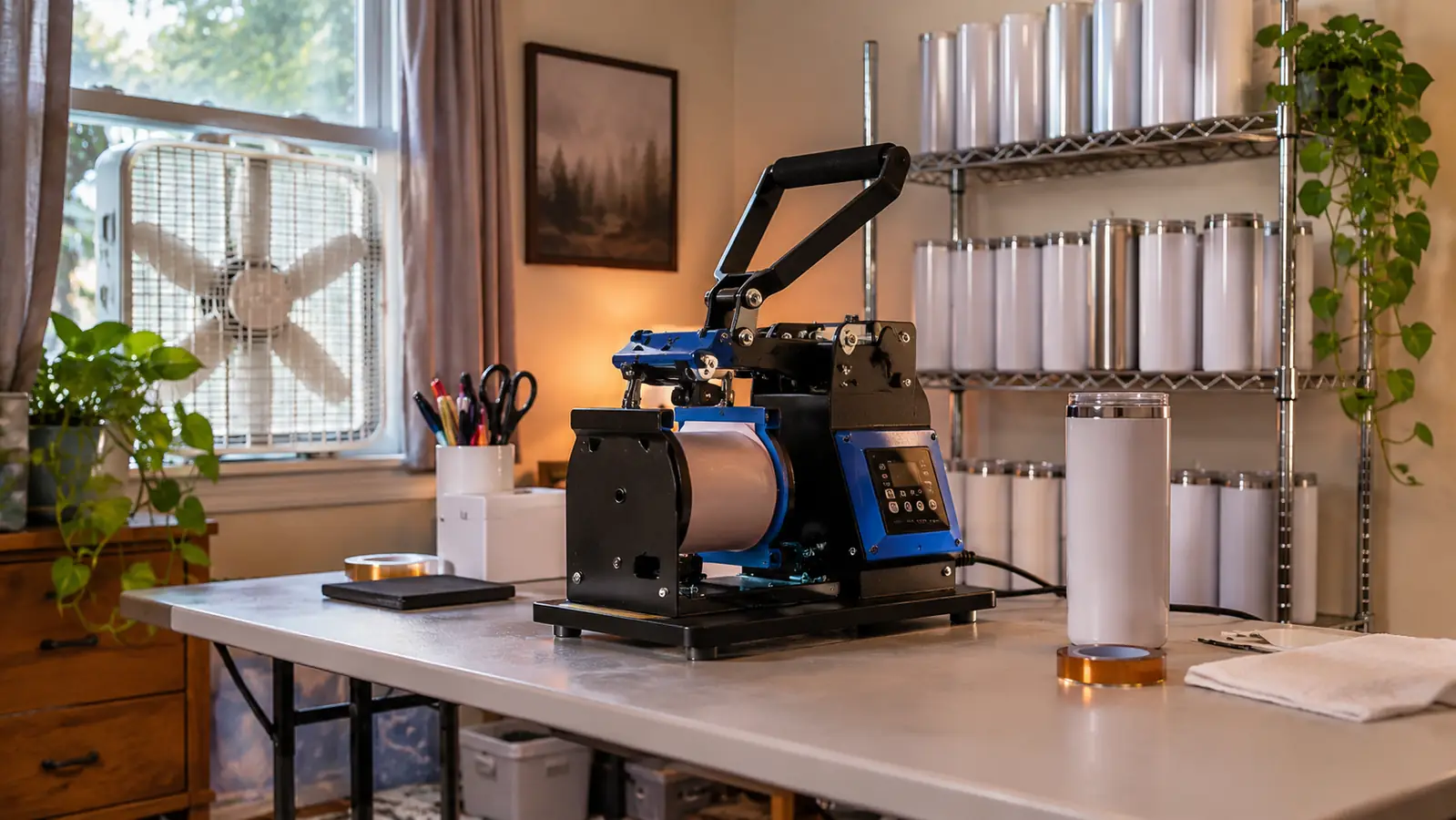
The HTVRONT Auto Tumbler Heat Press closes the heat pad on a single click and takes tumblers from 2.9 to 3.2 inches across, 280ml to 850ml, up to 390 degrees Fahrenheit.
Amazon Check today's price on Amazon →It presses while you do something else
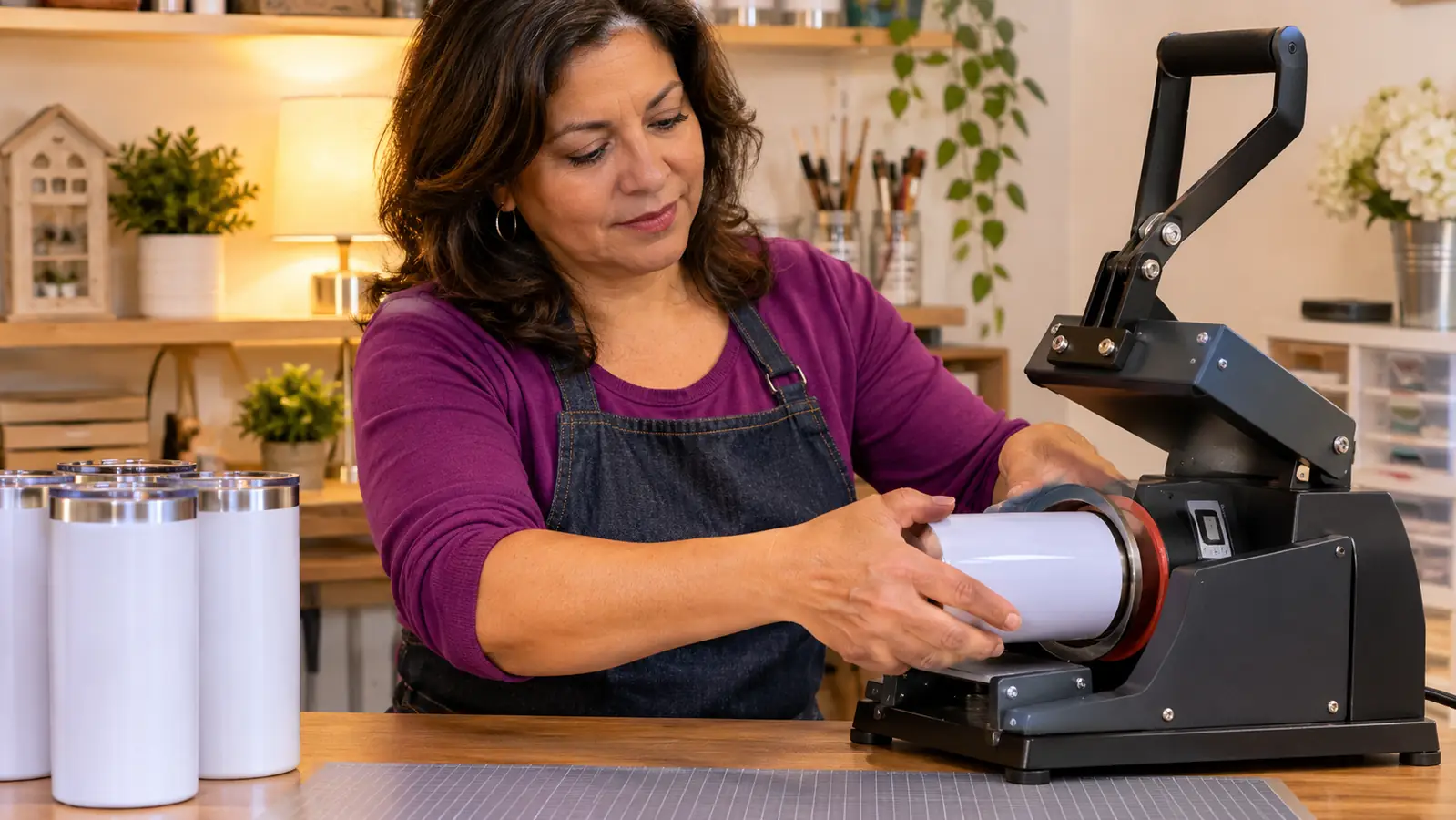
The oven method chains you to the kitchen. You stand at the door with a timer in one hand and a hot pad in the other, and nothing else gets done for eight minutes. The HTVRONT closes the heat pad around the tumbler on a click. I load a cup, click, and walk back to the table to trim the next design, or bag the order I finished ten minutes ago. Ten minutes of standing around per tumbler, gone. That is the whole reason I bought it, and the reason it stayed.
There is no shrink film to fight
If you have wrapped a tumbler, you know the routine. Cut the film, slip it on, chase wrinkles with a heat gun, tape the seam, then hope the tape does not print a ghost line through the design. The press replaces all of that with a pad that comes down around the cup. My bin stopped filling with crumpled film and my fingers stopped smelling like adhesive. Setup per tumbler went from about four minutes of fiddling to a few seconds of lining up the design.
The pressure is even the whole way around
An oven heats air. Air does not push. Whatever pressure you get comes from the wrap shrinking, and the wrap shrinks where it feels like shrinking. The heat pad on this press meets the full circumference at once. On my oven cups, the seam side always came out a shade lighter than the front, and I would sandbag it with extra tape. With the press, the design reads the same at every angle, including the side nobody was supposed to look at.
The R button ends the hot-glove guessing game
The feature I did not expect to care about: press R and the machine stops heating and releases the heat pad right away. No peeling a hot film off with tongs while it sticks to itself. No counting seconds with a glove on and one eye on the clock. When the press opens, the tumbler is done and cool enough to set on the rack. That single button removed the part of the process where I used to burn my knuckles and swear quietly in front of the fan.
The temperature range covers the work I actually do
The machine runs between 210 and 390 degrees Fahrenheit. My sublimation papers want a narrow window near the top of that, and the lower end handles the jobs that would scorch at oven heat. Both live inside the range, so I am not compensating with time the way I did with the oven, which is how you end up with a brown ghost of a design and a blank in the trash. The press stays at the number I set and the cycle repeats the same way.
It fits the cups people actually order
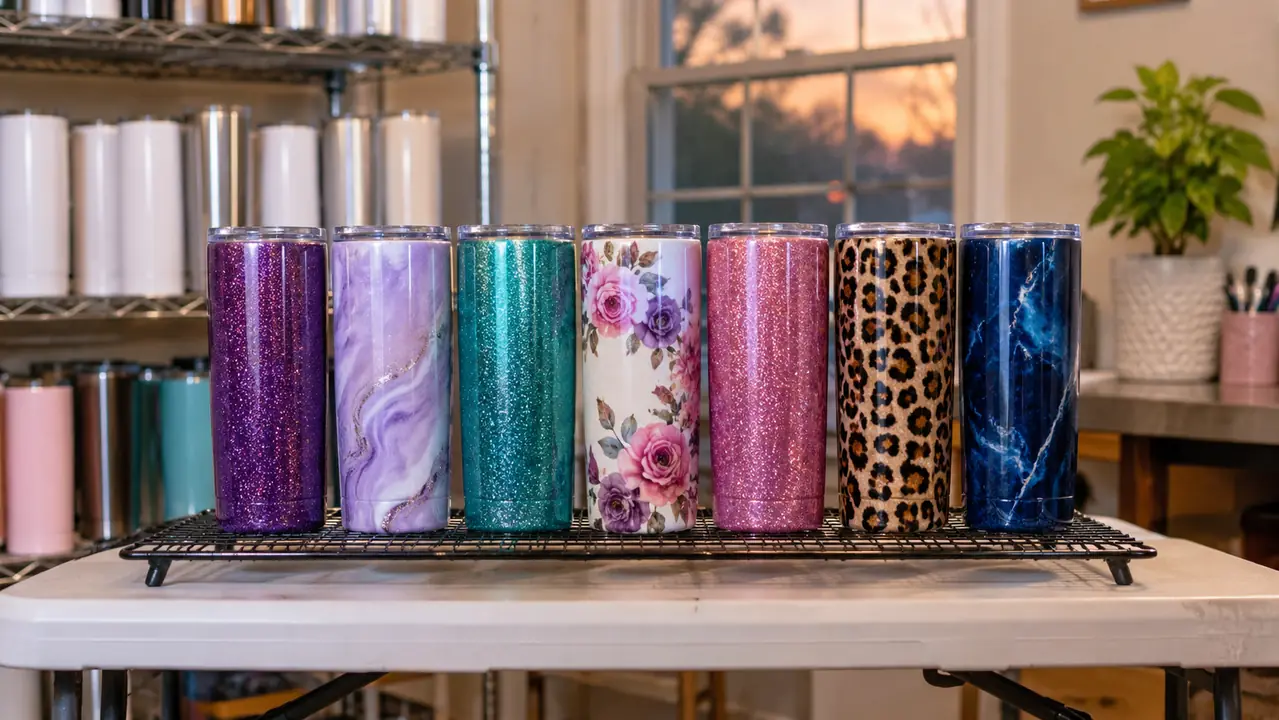
HTVRONT sizes this for tumblers from 2.9 to 3.2 inches in diameter, 280ml to 850ml. That covers the straight 20 ounce and 30 ounce tumblers, the glass cans, and the skinny cups the school staff order in batches of twelve. I do not need an adapter or a second machine for the sizes I sell most. If every blank in your shop is one size and one brand, this is a smaller deal for you than it was for me.
Tumbler forty comes out like tumbler one
The oven and I had good days and bad days. Same wrap, same time on the clock, different result, because the door opened and the heat fell out of it. The press repeats the same motion every cycle. A batch of twelve staff tumblers now looks like a batch instead of twelve cousins at a family reunion. When you are filling an order for a team, matching results matter more than shaving a minute off the cycle.
Fewer remakes means fewer blanks in the trash
Every ruined tumbler is a blank you bought and a design you printed twice. My wrap failure rate was not dramatic, maybe one in eight, but one in eight across a season adds up to a shelf of mistakes I could not sell. Since the press, my remakes are almost always my own fault, a crooked placement or a forgotten lint wipe. The tool stopped being the variable. That alone justified the corner of the table it takes up.
It plugs into the outlet I already have
600 watts on 120 volts, so it runs off a standard household outlet in a spare bedroom, not a shop circuit I would have to pay an electrician to add. I have one room, one table, and one free outlet at the end of it. No rewiring, no dragging a machine into a garage I do not have. It comes up to heat while I lay out the design and tape the transfer, so it is ready before I am.
It earns the counter space it takes
The footprint is 12.9 by 10.9 by 6.3 inches and it weighs 4.92 kg, so it sits at the end of the folding table and moves to the wire shelf when I need the whole surface for folding and bagging. The ABS shell wipes down with a damp cloth after a session, which matters when you press with the window open. It carries a one year warranty. A second oven would have eaten floor space I simply do not have.
What I'd Skip
Two things, plainly. If you press four or five tumblers a year for family gifts, the oven and a roll of film is cheaper, and you will barely notice the difference. And this is not a flat press. It holds tumblers from 2.9 to 3.2 inches in diameter, so a wide handled cup that falls outside that will not fit, and neither will a tote panel or a shirt front. For flat work you still need a flat press, and that has not changed. What I would skip is the idea that you need everything on day one. If tumblers are what you sell, start here and add the flat press when an order actually demands it.
The first tumbler that came out with no film, no tape, and no seam line was the day the oven turned back into a place where I store pans.
If tumblers are what you sell, this is where I would start
600 watts on a standard outlet, 210 to 390 degrees Fahrenheit, tumblers from 2.9 to 3.2 inches and 280ml to 850ml, one year warranty. It fits on a folding table.
Amazon Check today's price on Amazon →