
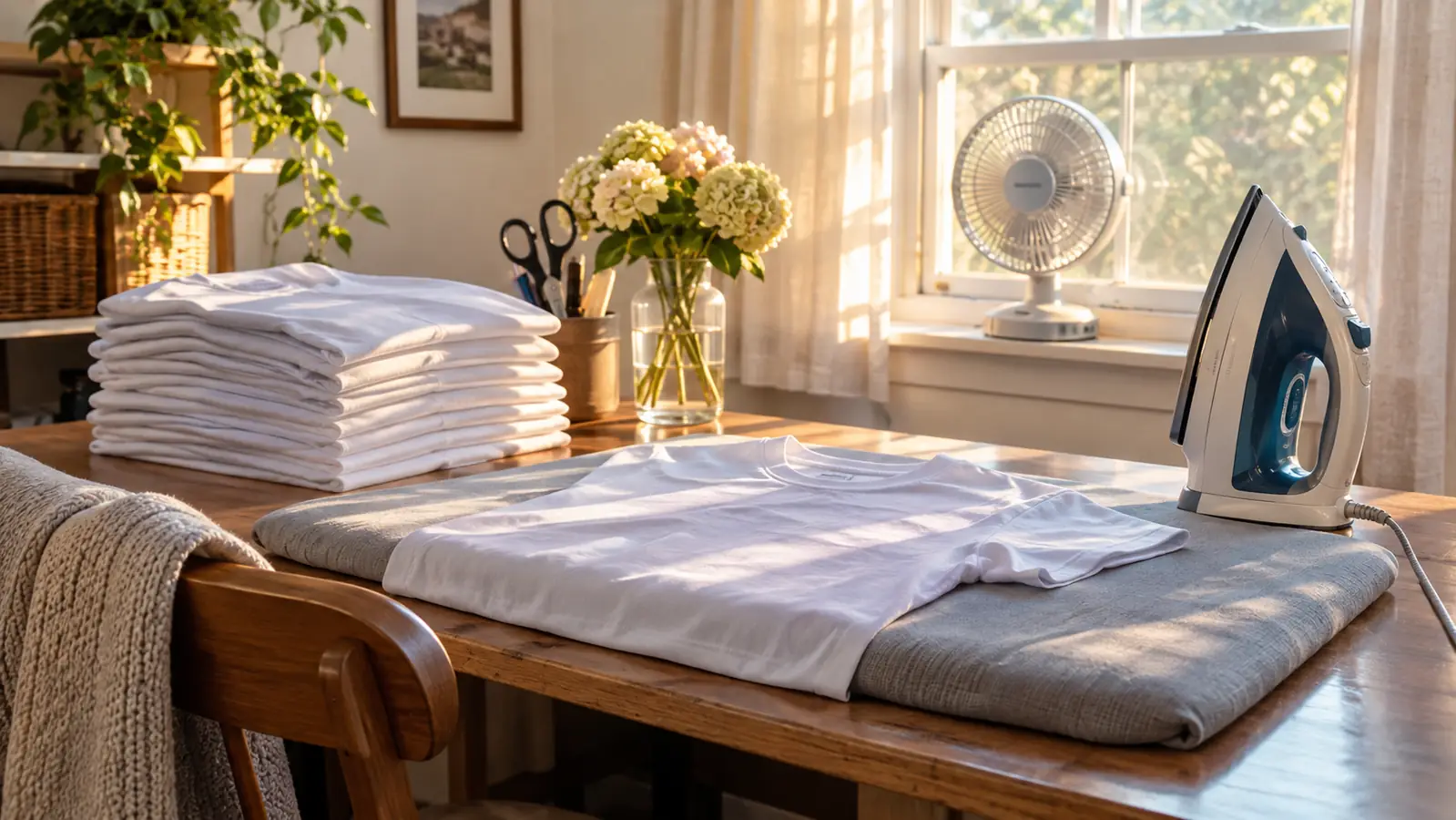
The first shirt I pressed on a real heat press was a youth soccer fundraiser tee, and I pulled the transfer too early because I was afraid of scorching it. Two corners lifted. I handed it to the coach anyway and hoped nobody examined it under good light. That was around four years ago, back when I was working with a household iron and a lot of guessing. The machine on my table now is the Fancierstudio 15 x 15 digital press, and it has been sitting there for nine months.
If you are shopping in this range you have probably read the reviews that go one of two ways: five stars from someone who pressed four shirts, or one star from someone whose unit showed up dented. Neither tells you what the press is like in month six. That is the part I can speak to. I press after work and on weekends for school staff, a church festival booth, two youth teams and a small online shop, all out of one converted bedroom with a folding table, a wire shelf of blanks and a fan in the window.
The Quick Verdict
A 15 x 15 workhorse that holds its set temperature and gives you a full adult front print, if you can live with a three month warranty and learning pressure by feel.
Amazon Check Today's Price →Full front prints out of a spare bedroom. Here is what it runs today.
15 x 15 pressing area, electronic time and heat control, 1800 watts, Teflon coated platen, and a 15 by 15 sheet in the box. Rated 4.6 across more than 9,500 ratings.
Amazon Check Today's Price on Amazon →How I've Used It
The press sits on a long folding table in the spare bedroom. The listed dimensions are 33 inches long, 23 inches wide and 20 inches high, which does not sound like much until you put it next to a wall. It takes most of a six foot table. Blanks live on a wire shelf beside it, the fan sits in the window because hot vinyl smells like a shower curtain, and every order I take happens in that one room.
A normal week is five to fifteen items. School staff shirts around the start of a semester, two youth teams in season, totes for the church festival booth in the fall, and a slow trickle of mouse pads and small bags from the little shop I keep online. My nephew sometimes folds and bags on a Sunday, which is the only help I get. I load, press, peel, stack. On a big week the press sets the pace, not me.
One order sticks in my head from this spring: eighteen canvas totes for the festival booth, the same design on every one, each needing placement within a quarter inch of the last so they would stack neatly on the table. That is the kind of job that exposes a press. It ran clean, one after another, and the stack looked like it came off a machine because it did. I would not have attempted that job with an iron.
I spent my first couple of years pressing with a household iron and a sheet of parchment, and I did it badly. The plate slid, the pressure changed depending on how hard I leaned, and a six shirt order came out as six slightly different shirts. What a real press bought me was repeatability. A shirt I pressed in March looks like the shirt I pressed in August, and that matters when a team orders a set and one kid loses his.
The other thing I did not expect was how much of the job is waiting. You press, then you wait for the platen to come back up to temperature before the next one, especially on thicker canvas. Nine months in, I still stand there with a scrap shirt and a phone timer, doing the math on whether I can squeeze one more blank in before the fan stops helping.
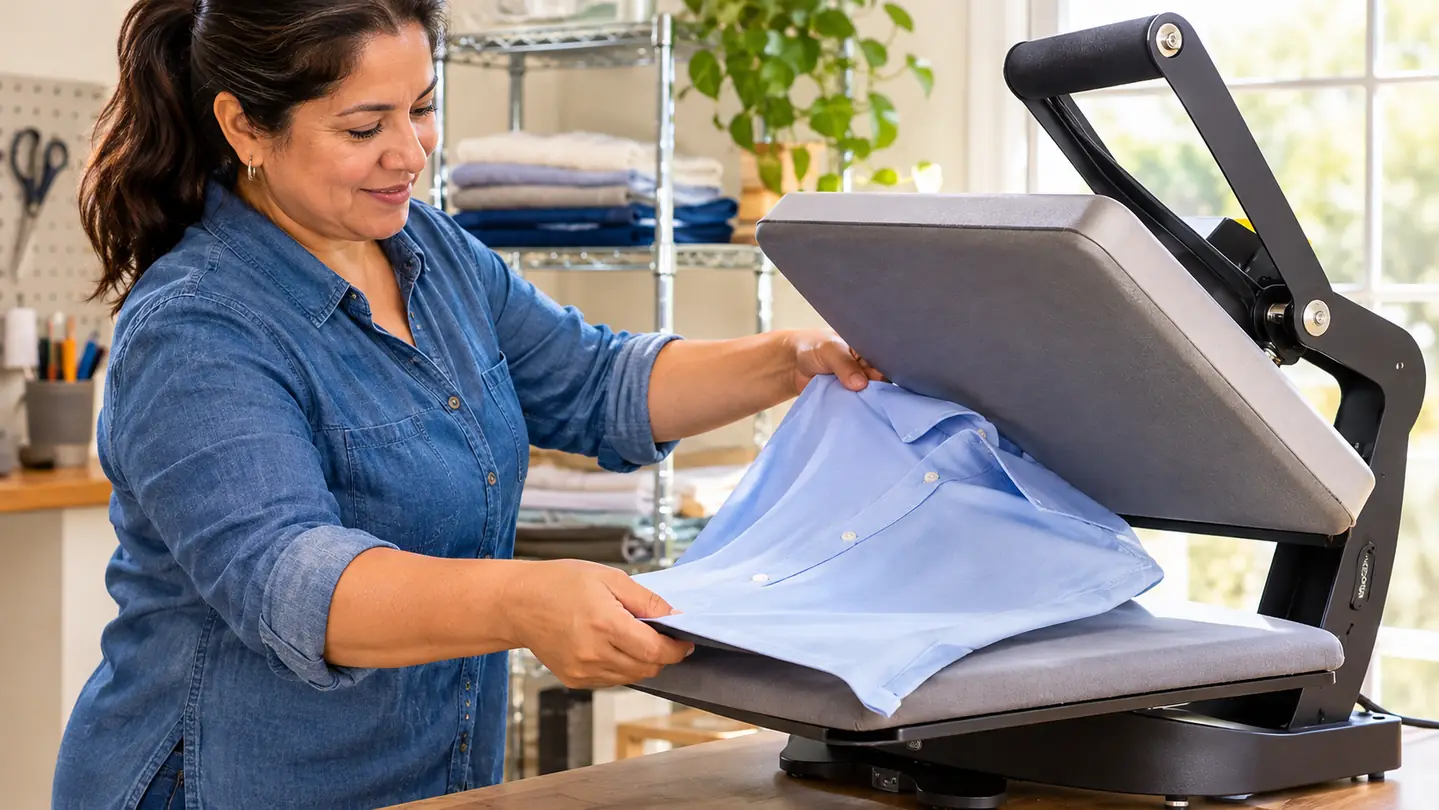
What a 15 x 15 Pressing Area Actually Gets You
Fifteen by fifteen inches is the size that makes a press feel like a tool instead of a gadget. A standard adult front print runs somewhere around ten to twelve inches wide and a few inches tall, so you have room to lay the design, lay the shirt, and not fight the edges of the platen while you do it. A tote panel fits with room to spare. I can lay four mouse pads down and press them in one cycle, which sounds like nothing until you have an order for thirty.
What it will not do is an all over print. Sleeves are awkward at this size, cuffs more so, and a tall design that runs from the collar down past the hem needs two positionings and a steady hand. If your plan is full bleed sublimation on a cut and sew panel, this is the wrong machine for it, not because it is a bad press but because a flat platen that size is the wrong shape for the job.
The listing recommends it for bags, mouse pads and t-shirts, and after nine months that reads about right. Canvas totes are where mine earns the most use. Totes take heat well, hide small registration errors, and sell at a booth to people who do not want to think about sizes. Mouse pads are the other quiet earner, because they press flat, stack, and mail in a padded envelope without any drama.
The catch with a single station press is that everything is one at a time. There is no second platen to load while the first one cools. If you are planning production runs of fifty identical shirts with a deadline, this is not that machine, and no press at this size is. For a side business that runs on evenings and weekends, one at a time has been plenty.
The Settings I Run, and What the Numbers Do and Do Not Tell You
The controller does electronic time and heat control, which is the part that matters. You set a temperature and a time and it holds them. The temperature range is listed at 0 to 699 degrees F with an upper temperature rating of 500 degrees F, and the time runs from 0 to 999 seconds. In practice I live between 305 and 400 degrees and between 12 and 60 seconds, so the range is more than I will ever need and the precision is exactly what I do need.
Garment vinyl goes on at 305 degrees for 12 to 15 seconds, with a second press from the back to lock the edges. Sublimation blanks run hotter, 385 to 400 degrees, for 45 to 60 seconds depending on the substrate, and canvas totes get the longer end of that. The 15 by 15 sheet that comes with the press goes between the platen and the shirt on anything I care about, even with the coating, because a scorched tote is a tote I eat.
1800 watts at 110 volts is a lot of draw for a bedroom circuit. Mine shares a circuit with the hallway and the bathroom, and the first week I tripped the breaker because I had a space heater going on the same line. Now the press gets the circuit to itself and I do not run anything else on it while I am working. If your press room is a spare bedroom, check that before you buy anything, not after.
The other setting nobody mentions is the seconds. Twelve seconds and fifteen seconds are different shirts. On a press that sets time in single seconds, you can chase a stubborn transfer with a four second bump instead of pulling the whole thing and starting over. That sounds like a small thing until you have peeled a cold transfer off a shirt and thrown the shirt in the rag bag.
Where It Fights Back
The warranty is three months. I want to be plain about that, because it is the single biggest thing standing between this press and an easy recommendation. Ninety days covers a dead controller and a bad heating element, which is what you would find out in the first few weeks anyway. It does not cover the month eight failure nobody plans for. For a machine that gets used the way mine does, that is a short window, and you should weigh it before you decide.
There is no pressure number anywhere in the listing, and pressure is half of what makes a transfer stick. You find it by pressing a scrap and looking at the edges of the vinyl, not by reading anything off the machine. I keep a scrap shirt on the shelf and run one before any order I have not pressed in a few weeks. It adds two minutes and it has saved me more times than I can count.
It also does not open itself. Nothing lifts the platen for you, so on a run of twenty items you are watching a clock on every one. I use a phone timer as a backup, because I have absolutely walked away to answer a text and come back to a shirt that had been cooking for a minute and a half. The press will happily let that happen. It is very patient about ruining things.
The room gets hot. Running 1800 watts for three hours in a bedroom raises the temperature enough that I open the window in February and leave the fan on the whole time. That is true of any press this size, but if your workspace is a bedroom with the door shut, plan for it. It is also worth saying the press is not quiet on the way down, and I have learned to warn people on the phone before I close it.
And it takes a whole table. Twenty inches of height with the platen up, thirty three inches long, twenty three inches wide. In a spare bedroom that is the difference between a press room and a room with a press in it. I measured twice before I bought and I still ended up moving the shelf.
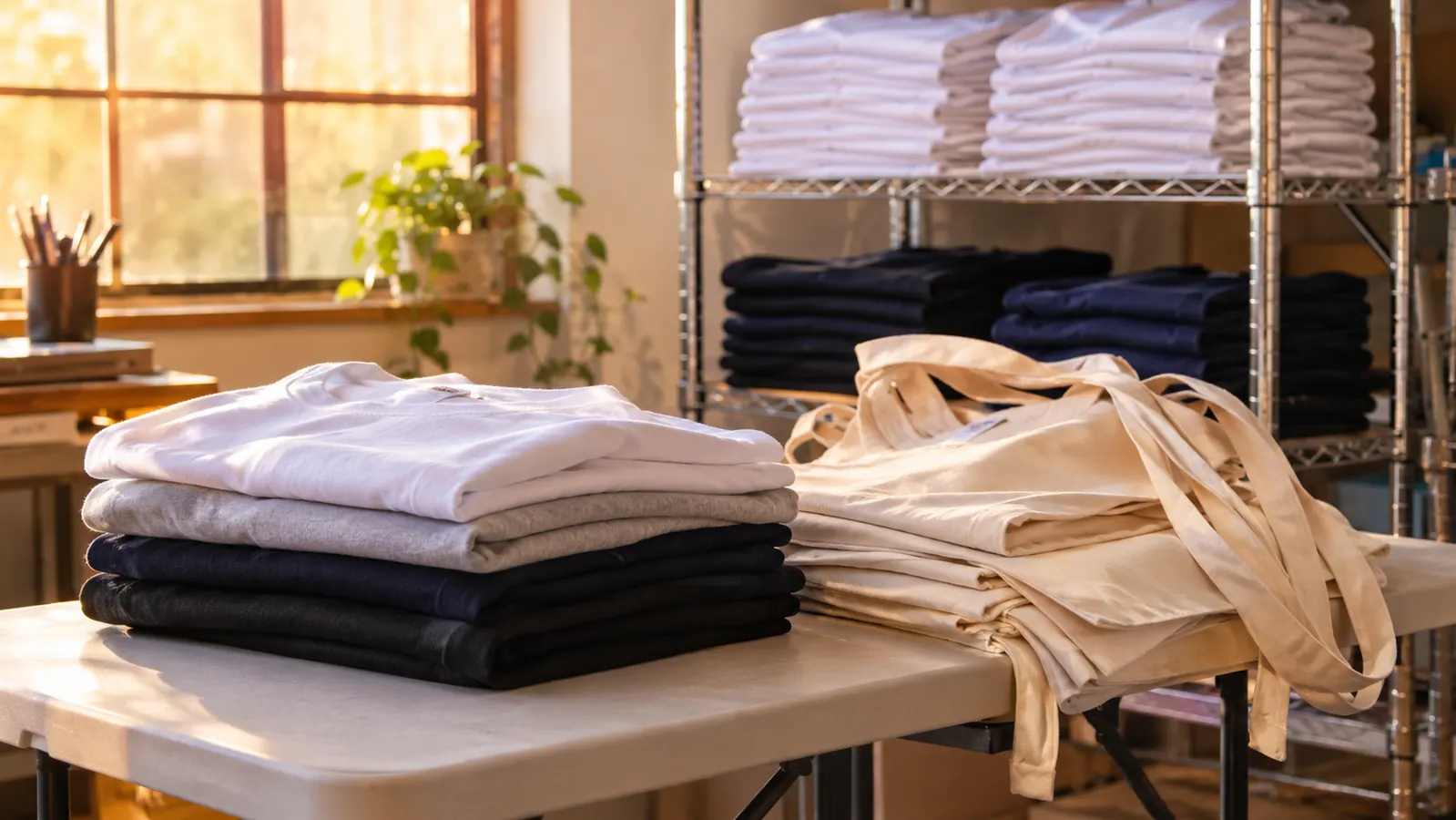
What Months of Pressing Did to It
Nine months in, the Fancierstudio still hits the temperature I set. I check it every couple of months with an infrared thermometer on a scrap of canvas, and the readout and the surface agree closely enough that I stopped worrying about it. The controller has not drifted, and nothing has needed replacing.
The Teflon coating on the platen is the feature I did not know I wanted. Transfers release cleanly, and the residue that builds up on an uncoated platen wipes off with a cloth once the press is cold. I still use the sheet on anything with a visible face, but the coating means I am not scraping adhesive off with my fingernails on a Sunday night while a team parent waits on a reply.
The lower pad has flattened slightly where I always press, which is normal and not a defect. Cosmetically the press has scuffs on the frame from being moved twice and one small mark where a snapped roll of vinyl flicked up. Nothing has loosened, rattled or quit on me.
What has worn is me. Standing at a folding table for three hours is a different experience at forty seven than it was at forty three. That is not the press's fault, and a stool fixed most of it, but if you are planning long evenings, plan for the standing.
What I Liked
- 15 x 15 pressing area fits a full adult front print, a tote panel, or four mouse pads in one cycle
- Electronic time and heat control holds the set temperature instead of drifting across an order
- 1800 watts heats up quickly and recovers between items
- Teflon coated platen releases transfers cleanly and wipes down easily
- Temperature range to 699 degrees F and time to 999 seconds covers both vinyl and sublimation work
- A 15 by 15 sheet comes in the box, so you can press the day it arrives
Where It Falls Short
- Three month warranty is short for anything close to production use
- No pressure specification anywhere, so you learn it from test scraps
- Takes most of a six foot table at 33 by 23 by 20 inches
- 1800 watts wants its own circuit, and a shared bedroom line will trip
- Nothing lifts the platen for you, so long runs need a timer and attention
- The room heats up fast during a multi hour session
A shirt I pressed in March looks like the shirt I pressed in August, and that is the whole reason I stopped pressing with an iron.
Who This Is For
This is for the person with one spare table, a steady trickle of orders and no interest in features they will never touch. If you press shirts for a team, totes for a booth or mouse pads for an online listing, and you want a full adult front print without repositioning, the 15 x 15 platen is the right size and the Fancierstudio holds temperature well enough that your tenth shirt looks like your first. It suits someone who will spend two minutes test pressing a scrap and who reads a warranty before buying rather than after.
Who Should Skip It
Skip it if you need a warranty that covers a year of steady use, because three months is what you get here. Skip it if you are building a two station shop with a production schedule, since one platen means one item at a time. Skip it if your work is all over prints, sleeves or cut and sew panels, because a flat 15 x 15 platen is not the tool for those. And skip it if you cannot give it its own circuit, unless you enjoy resetting a breaker with a hot shirt in your hand.
Nine months, a few hundred shirts, and it still holds the temperature I set.
15 x 15 pressing area, electronic time and heat control from 0 to 699 degrees F and 0 to 999 seconds, 1800 watts, Teflon coated platen, and a 15 by 15 sheet in the box. Read the three month warranty note first, then decide.
Amazon Check Today's Price on Amazon →