
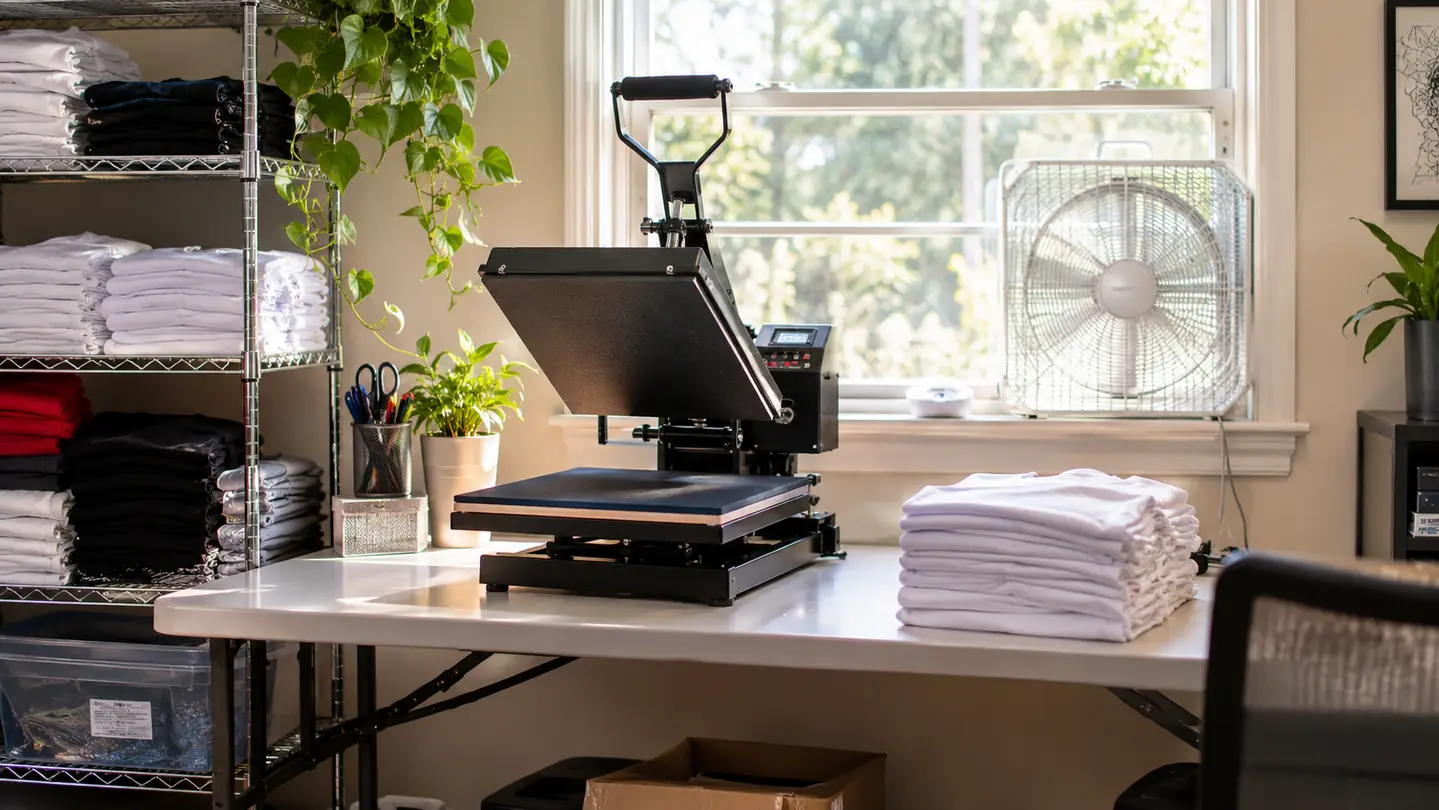
The first heat press I ever bought was the least expensive one I could find, and I do not regret buying it. I regret the fourteen shirts I ruined on it before I understood that the machine was fighting me. That press had a dial instead of a number, a twist timer that drifted, and a platen roughly the size of a paperback book. When I finally moved up to the Fancierstudio 15x15, my designs did not suddenly get better. The machine simply stopped adding variables I could not control. That is the whole comparison in one sentence, but it took me two years and a stack of ruined blanks to learn it, so here is the long version for anyone standing where I was.
So here is the short answer. If you are pressing a handful of shirts for friends and you genuinely do not know whether you will still be doing this in the spring, buy the budget press and put the rest of your money into blanks. If you have already sold something, or you have a wire shelf in the spare bedroom stacked with totes and youth-team jerseys, the Fancierstudio 15x15 is the machine that stops costing you shirts. The budget press is not a bad tool. It is a tool with a narrow job, and that job is smaller than most beginners assume when they order one.
| Fancierstudio 15x15 | Budget heat press | |
|---|---|---|
| Platen size | 15 by 15 inches, which fits an adult back print or a canvas tote laid flat | Around 9 by 12 on the budget units I have used, so a full back print does not fit |
| Temperature control | Electronic heat control with a digital readout you can set and repeat | A dial with tick marks and no number to write down |
| Timer | Electronic time control, settable to the second, across a 0 to 999 second range | A twist timer that drifts and does not repeat |
| Platen surface | Teflon coating on the heat platen, so a pressing sheet is a backup and not a requirement | Bare metal, so every press needs a sheet or the design scorches |
| Footprint | 33 by 23 by 20 inches, so it wants a table it can live on | Small enough to fold away into a closet between sessions |
| Warranty | 3 month warranty from the manufacturer | A return window from the seller, and nothing after it |
| Up-front cost | More money in before your first sale | The least you can spend to find out whether you like pressing |
| Best for | Totes, full back prints and batch work in one spot | A few shirts and small blanks, made now and then |
Where the Fancierstudio 15x15 Wins
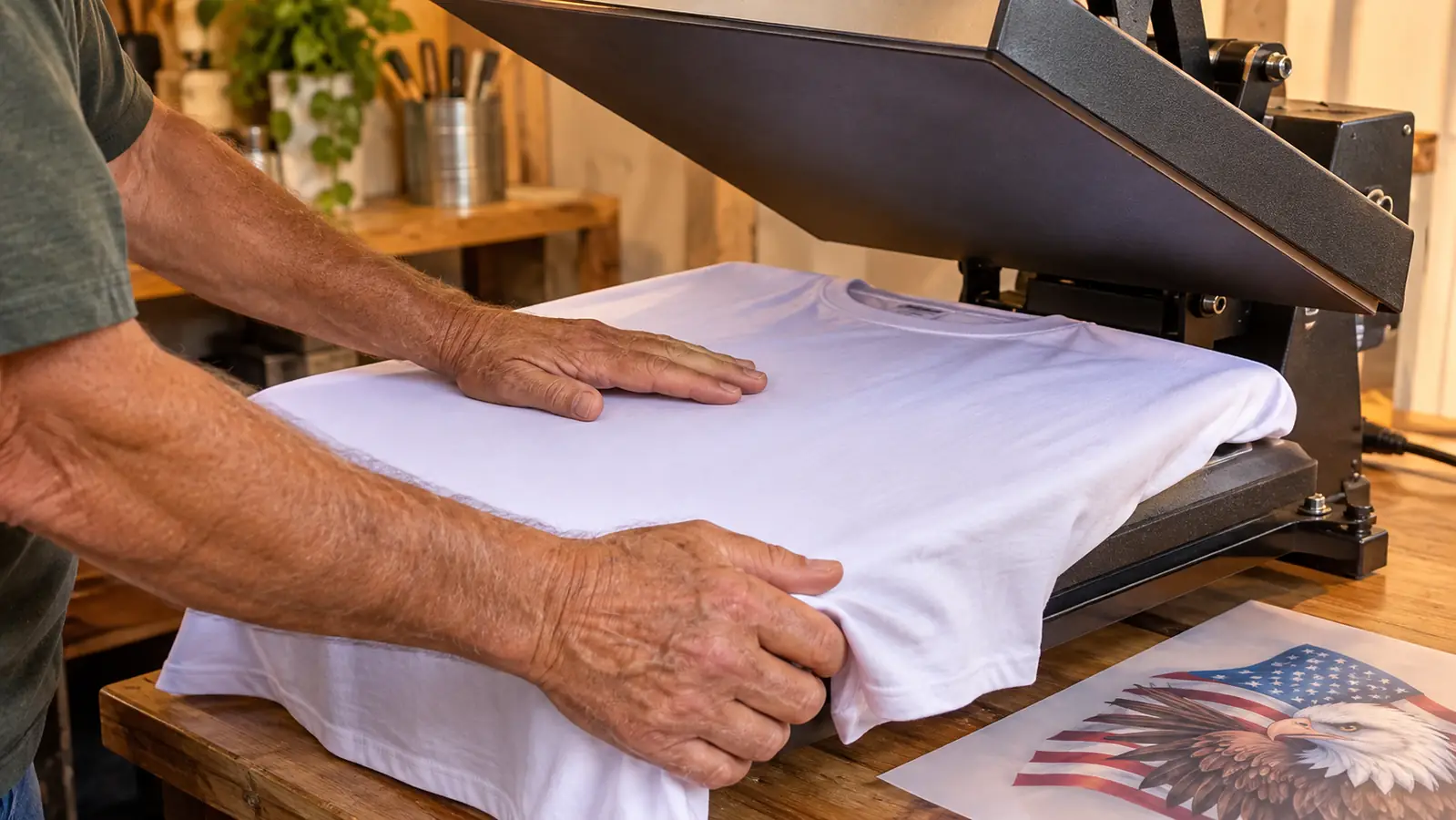
The platen is the first thing, and it is the thing you cannot work around. Fifteen by fifteen inches means an adult back print fits with room to spare and a canvas tote lies flat without folding a corner over on itself. On the budget press I started with, a full back print did not fit at all. I pressed shirts in two passes, overlapping the middle, and every single time there was a faint seam where the passes met. Nobody at a craft fair ever said a word about it. I saw it every time I looked at the shirt, and after a while I stopped offering back prints altogether, which is a strange thing for a piece of equipment to talk you out of.
The second thing is the control. The Fancierstudio runs electronic time and heat control with a digital readout, which sounds like a brochure line until you have worked with the alternative. On a dial, you are matching a needle to a tick mark and hoping your memory of last Tuesday is accurate. On a readout, the number is the number. My whole pressing routine now lives on an index card taped to the wire shelf. This blank, this setting, this many seconds. When a youth-team order lands at nine at night and I am tired, I do not have to be smart. I just have to read the card.
Third is the surface. This press has a Teflon coating on the heat platen, so a pressing sheet is a backup rather than a requirement. On bare metal the sheet is not optional, and forgetting it once means a scorched ghost of your design permanently pressed into a shirt you cannot sell. I have made that mistake exactly once and I can still picture the shirt. The coating is also quicker to wipe down between blanks, which matters more than you would expect when you are pressing twelve shirts in a row for the same team in the same fabric and you do not want to stop and scrub.
The budget press did not make bad shirts. It made the same shirt slightly differently every time, which is a harder problem to see and a more expensive one to have.
Where the Budget Heat Press Wins
Now the honest part, because the budget press does win things. It wins floor space, and in a spare bedroom that is not a small win. The Fancierstudio measures 33 by 23 by 20 inches and it wants a table it can live on permanently. Mine sits on a long folding table by the window and it does not come off that table. The budget press I started with folded down smaller than a sewing machine and lived in the closet between sessions, which meant I could press on a Tuesday night and have the room back by Wednesday morning. If your pressing space has to do double duty, that genuinely matters.
It also wins on what it asks of you before your first sale. It is the smallest amount you can spend to find out whether you actually enjoy heat pressing, and enjoying it is not guaranteed. Plenty of people buy a press, make six shirts, and discover they would rather do almost anything else. Spending the least possible to learn that about yourself is not timid, it is sensible. The budget press is also fine for small blanks. A onesie, a mouse pad, a single koozie. A fifteen-inch platen is far more surface than a small project needs, and there is something to be said for a machine sized to the job in front of you.
How I Ended Up With Both Machines
I did not buy both machines at once. I started with a household iron and a pillowcase on the kitchen table, then bought the least expensive press I could find because I did not yet know what I needed. It did its job for about a year. I made teacher gifts, a few family reunion shirts, a set of onesies for a coworker. Then a friend asked for tote bags for a church festival booth and I said yes before I ever measured a tote bag against a nine by twelve platen. That was the week I learned what the word workaround actually means in practice.
The Fancierstudio came after that, and I kept the small press for about six months thinking I would still use it for little things. I did not. Once the big platen was set up and warm, walking to the closet to unfold a second machine for a onesie felt like wasting a perfectly good Tuesday night. I sold it to a woman who wanted shirts for her grandson's birthday, which was exactly the right job for it, and I have pressed on the fifteen-inch platen ever since. That is not an argument that the budget press is bad. It is an argument about which machine you reach for when both are sitting in the same room.
The Part Nobody Warns You About: Repeatability
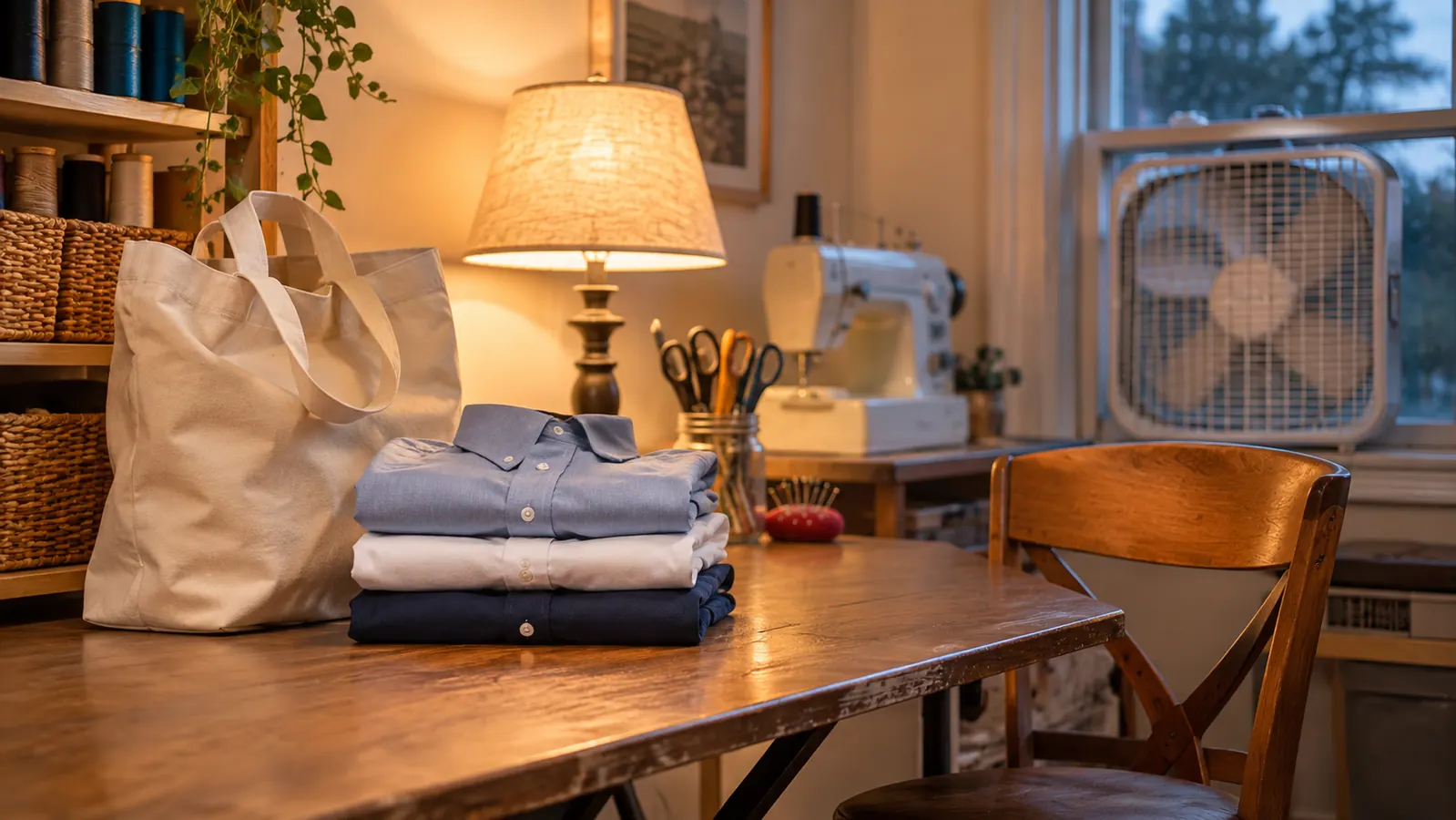
Here is what nobody tells you while you are shopping. The hard part of heat pressing is not the first shirt, it is the eleventh. The first one you check obsessively, peeling the carrier sheet back a half inch at a corner like you are defusing something. The eleventh you press on autopilot at ten at night with the fan running and the radio on, and whatever the machine does on autopilot is what your customer receives. That is the real argument for the Fancierstudio. Not that it presses better on a good day, but that it presses the same way on a bad one. A number you can read back beats a needle you have to trust.
There is a practical side to this too. The press draws 1800 watts on a standard 110 volt household circuit, which is worth knowing before you plug it in next to a space heater or a window air conditioner on that same circuit. I ran an extension cord across the room for the first month, then thought better of it and moved the table closer to the wall outlet. The machine also needs a moment to come back up between presses, so I stack my blanks in order of fabric weight and work heaviest to lightest instead of jumping around. Small habits, but they are the difference between a clean batch and a redo.
The press that repeats itself at ten at night when you are tired
Fancierstudio 15x15: a 15 by 15 inch platen, electronic time and heat control with a digital readout, and a Teflon coated plate. Rated 4.6 from 9,551 ratings, with a 3 month warranty.
Amazon See the Fancierstudio 15x15 on Amazon →What I Would Check Before Buying Either One
Whatever you buy, check three things before you order. First, the platen size against the largest thing you actually plan to make, not the average thing. If you want to sell totes, measure a tote. Second, whether temperature and time are set with real numbers or with a dial, because you will repeat those settings hundreds of times and memory is a poor instrument. Third, what the warranty covers and for how long, since a press is a heating element with a handle on top, and the heating element is the part that eventually fails. The Fancierstudio carries a 3 month warranty, which is not generous by any standard, but it exists in writing.
One more thing, and this is the one I would underline twice. Buy the press that matches the work you already have, not the work you hope to have. If a friend has asked for four shirts for a family reunion, a budget press will do those four shirts beautifully and you will never notice its limits. If the church festival booth is already on the calendar and you have promised forty totes, get the fifteen-inch platen and save yourself the overlapping. Buying for the fantasy version of your business is how equipment ends up in a closet. Buying for the real version is how you end up with a stack of finished shirts and a clean table.
Who Should Buy Which
Buy the budget press if you are testing the water, if your pressing space has to fold away into a closet, or if your projects are small and occasional. Buy it knowing what it is. A machine that will teach you heat, pressure and time while quietly asking you to work around its limits. Do not buy it expecting to grow into full back prints and canvas totes, because it will not grow with you, and the workaround will get old faster than you think.
Buy the Fancierstudio 15x15 if you have already sold something, if your blanks are bigger than a youth small, or if you are tired of a seam running down the middle of a two-pass press. It is the machine for someone who has decided this is a real thing they do on Tuesday nights. Four years in, mine is still on the same folding table by the same window, and the index card taped to the shelf has grown into four index cards. That is the most honest endorsement I can give any piece of equipment in this room.
If the festival booth is already on your calendar, buy for the booth
The 15 by 15 inch platen handles a canvas tote flat in one pass. Teflon coated plate, digital time and heat control, 1800 watts, and a 3 month warranty. If you are pressing small blanks for friends, the budget machine is still the sensible first step.
Amazon Check availability on Amazon →