
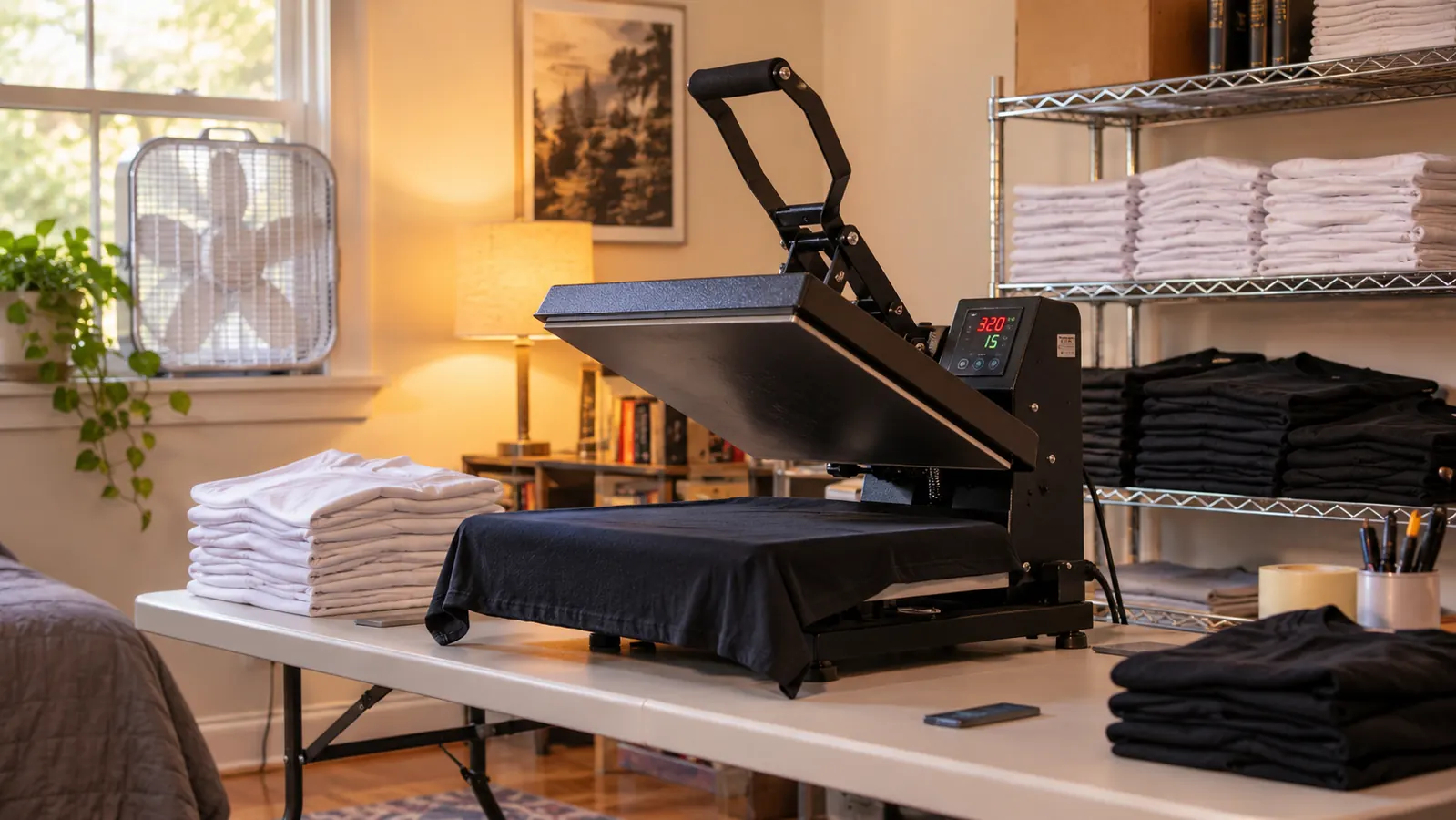
I said yes in a group text at 9:40 on a Tuesday night. Twenty-two shirts for the youth league by Saturday morning, names on the back, team logo on the front. I had made shirts before. I had never made twenty-two of them in four days, in a spare bedroom, with a household iron and a folding table that wobbles when you lean on it.
Two days later a box the size of a small suitcase was in my hallway. The Fancierstudio Digital Heat Press, 15 by 15 inches, 1800 watts. I am not going to pretend I researched it for months. I read enough reviews to see 4.6 stars across more than 9,500 of them, I measured my table, and I bought it. The measuring mattered more than I expected. The machine is 33 inches long, 23 wide and 20 tall, and it took most of the table I had.
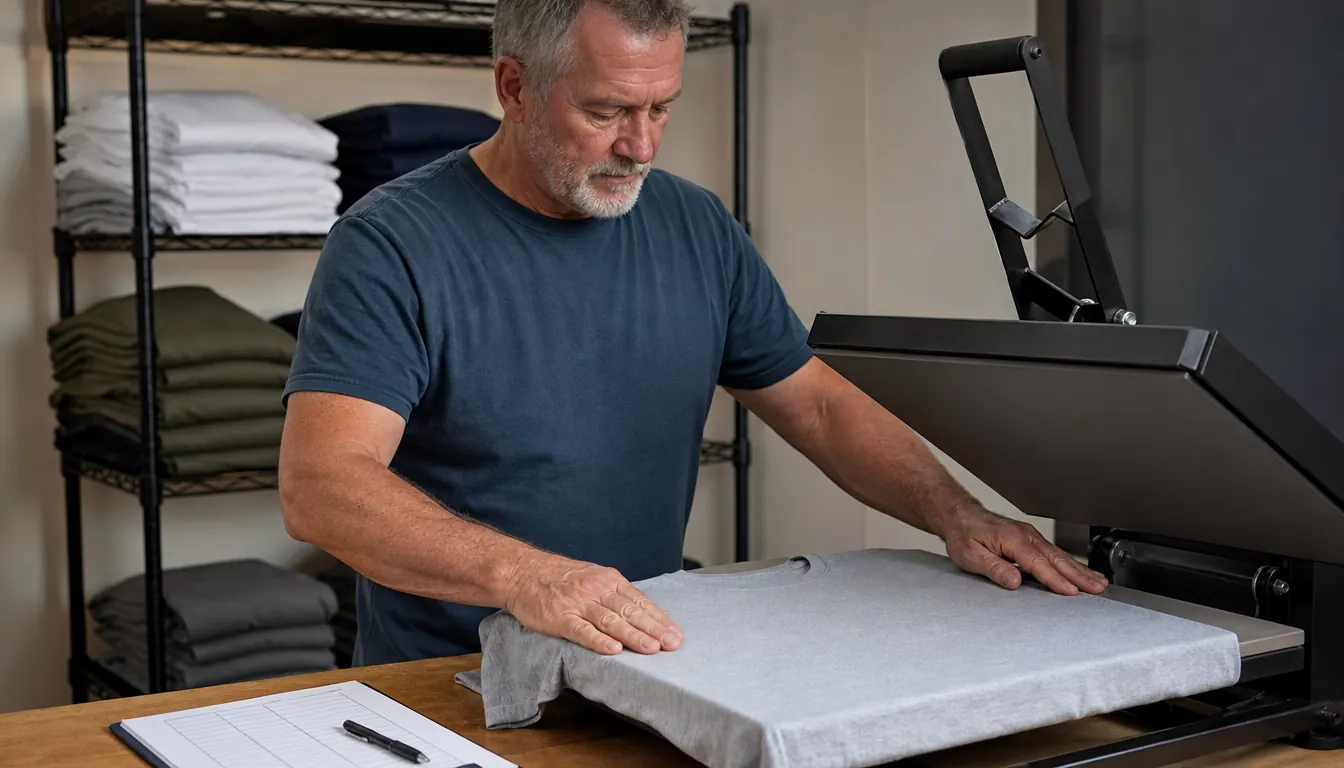
Here is what the iron was doing to me. A transfer needs even heat and even pressure across the whole surface at once. An iron gives you a hot triangle in the middle and warm edges, so you press, lift, shift, press again, and the vinyl creeps. Half my shirts had a shiny scorch mark where I held still too long, or a corner that peeled up in the wash two weeks later. I was remaking about one in five, and remaking them at night is how you start to hate a thing you used to enjoy.
The Fancierstudio platen is 15 by 15 inches, and that is the part that fixed it. A full front print on an adult large fits inside it with room to spare, and so does a back print. You set the shirt down once, bring the heat onto the whole design at the same time, and the entire transfer cures in one press instead of six passes. My first run of ten came out flat, no creases, no lifted corners. I stood there a minute.
The controls are the other reason I stopped dreading shirt night. The temperature range runs to 699 degrees Fahrenheit and the timer runs to 999 seconds, and you set both before you start so the machine holds them. My vinyl wants 305 and twelve seconds; my sublimation blanks want more heat and more time. I write the numbers on a sticky note above the table, and I stop guessing. I pressed a test scrap twice before I trusted it on a real shirt. The platen has a Teflon coating, which means stray adhesive and little bits of vinyl lift off instead of baking on.
The first ten shirts came off the platen flat, with no lifted corners and no scorch marks, and I did not have to remake a single one.
The Platen That Ended My Iron Nights
Fancierstudio Digital Heat Press, 15 by 15 inches, 1800 watts, with electronic time and heat control you set once per material.
Amazon Check Today's Price on Amazon →The twenty-two shirts took two evenings. Twelve seconds on the platen, a short peel, a fold, a bag, then the next one. My nephew came over on the second night to fold and bag while I pressed, and we finished before ten. I keep a checklist taped to the shelf: count, size, name spelling, then bag. What used to be two weeks of dread is now a Saturday afternoon. That is the honest version of what changed: a job I used to avoid now takes the time it should.
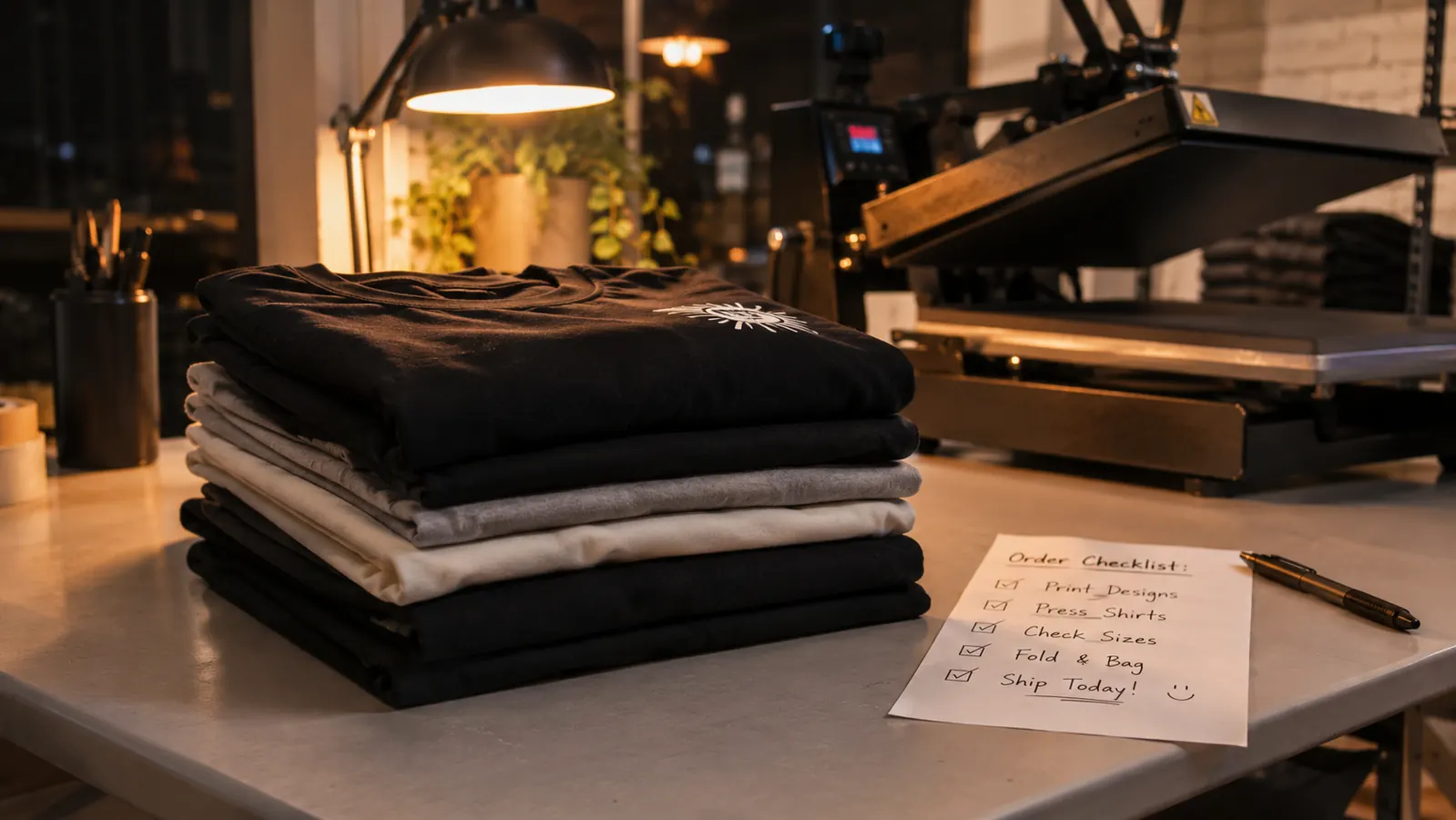
A few things I would tell you before you buy one. It is a table machine. You are not folding it up and putting it in a closet between orders, so decide where it lives before it arrives. Set it on a surface that does not rock, because a wobbling table shows up in your seams. It needs a few minutes to come up to temperature, which is enough time to lay out your first three shirts. The warranty is three months, which is short, so run it hard in the first month while you still have recourse. Mine has been steady, but I would not skip that step.
It also widened what I say yes to. Shirts are still most of it, but the same platen does totes, mouse pads, and the flat bags I sell at the church festival booth. Rhinestone templates behave better under even pressure than they ever did under an iron. The table does not care what you put on it. None of this turned into a different job. It just made the work I was already doing look like it was done by someone who knew what she was doing.
The part I did not expect was the quiet. With the iron I was always mid-flinch, watching a corner lift or a scorch spread. Now I set the temperature, set the time, press, and look at the result. When something comes out wrong I can usually name why, and that feels different from guessing.
What I'd Tell You If We Were Sitting at My Kitchen Table
I would tell you the machine is not the hard part. Learning your materials is. Keep a notebook with the temperature and time for every blank and every vinyl you use, and write down the failures too, because the failures are where the numbers come from. I would tell you to buy the 15 by 15 rather than the smaller size, because a full front print on an adult shirt needs the room and you will want it within a month. Buy more blanks than you think you need, because you will press at least one wrong name before you press twenty-two right ones. And I would tell you a heat press does not make you a business. It removes an excuse. The shirts still have to be ordered, pressed, folded and delivered, and most of that is not the press.
The Size I Would Buy Again
Fancierstudio 15x15: full front and back prints in one press, digital heat and time you set per material, Teflon-coated platen, three month warranty.
Amazon Check Today's Price on Amazon →