
I pressed my first order of shirts with a household iron and a folded bath towel on the kitchen counter. Twelve shirts for a church festival booth. By the following weekend, eight of them had lifted at the corners, and I handed money back to a woman who had been perfectly kind about the whole thing. That is the part nobody puts in a beginner tutorial.
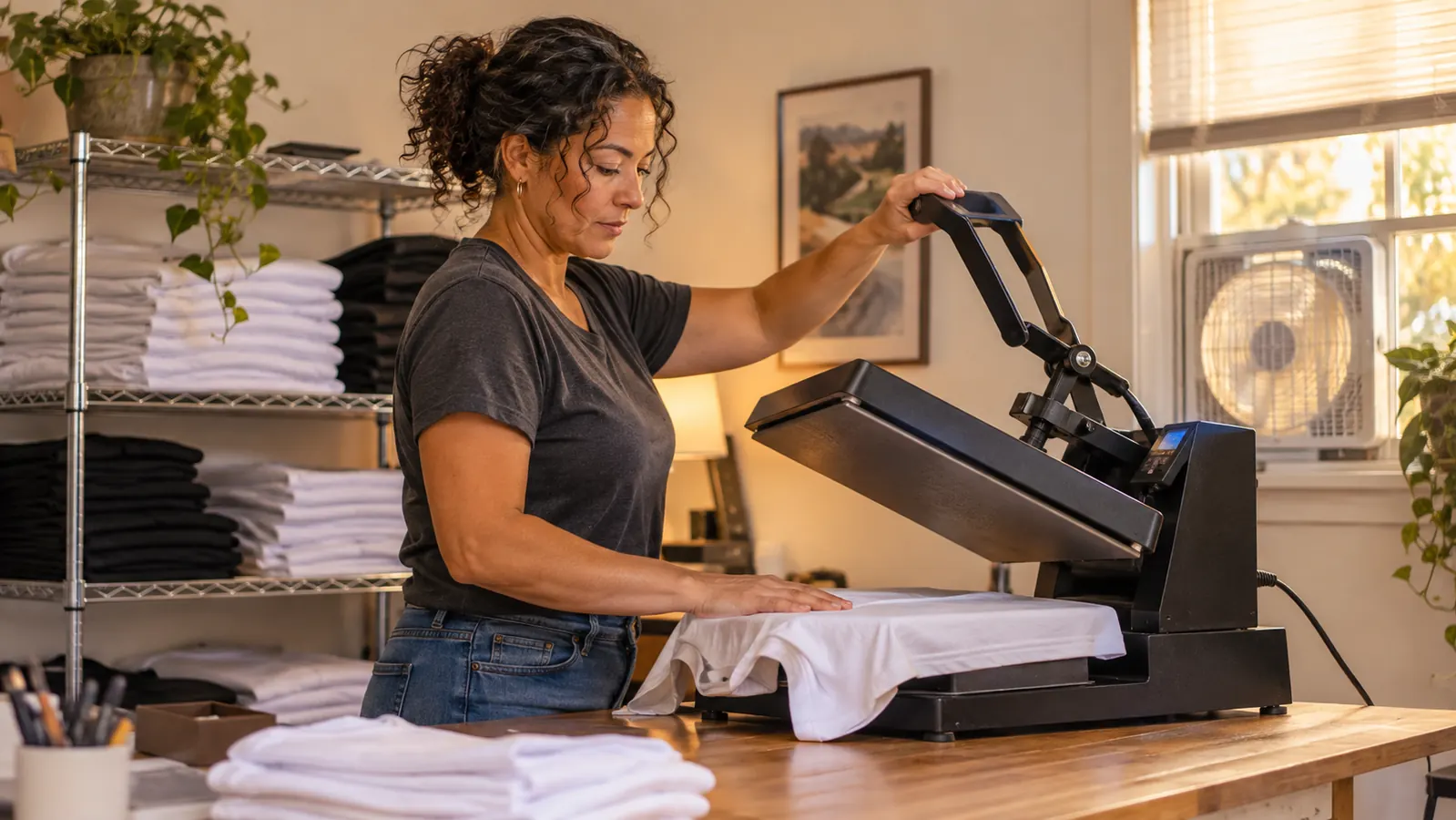
That was four years ago. The iron lives in a closet now, and the machine doing the actual work is a Fancierstudio 15 x 15 clamshell in the spare bedroom I turned into a press room. One long folding table, a wire shelf of blanks, a fan in the window. That is the entire setup, and it is enough.
I am not going to tell you a heat press will make you money. What I will say is that nearly every problem I had in my first year of taking shirt orders traced back to one of two things: an iron that could not hold a temperature, or me guessing at how long to hold it down. A clamshell press removes both variables. Here are ten reasons it beats an iron, in the order they mattered to me.
The press that ended my peeling-shirt problem
Fancierstudio 15 x 15 clamshell: 1800 watts, electronic time and heat control, a 15 by 15 inch platen, and a Teflon-coated plate. It is the machine every paid order goes through in my house.
Amazon Check Today's Price on Amazon →Covers the full front of an adult tee in one pass
The platen is 15 by 15 inches. An adult large front print sits inside that square with room left over. With an iron I worked in overlapping stripes, and each pass cooled while I moved to the next one, which is exactly how you get vinyl that lifts at the edge three washes later. Here I lay the shirt down, close the top, and the entire design is under heat at the same moment. One pass, one temperature, one result I can repeat tomorrow.
Holds a number instead of drifting
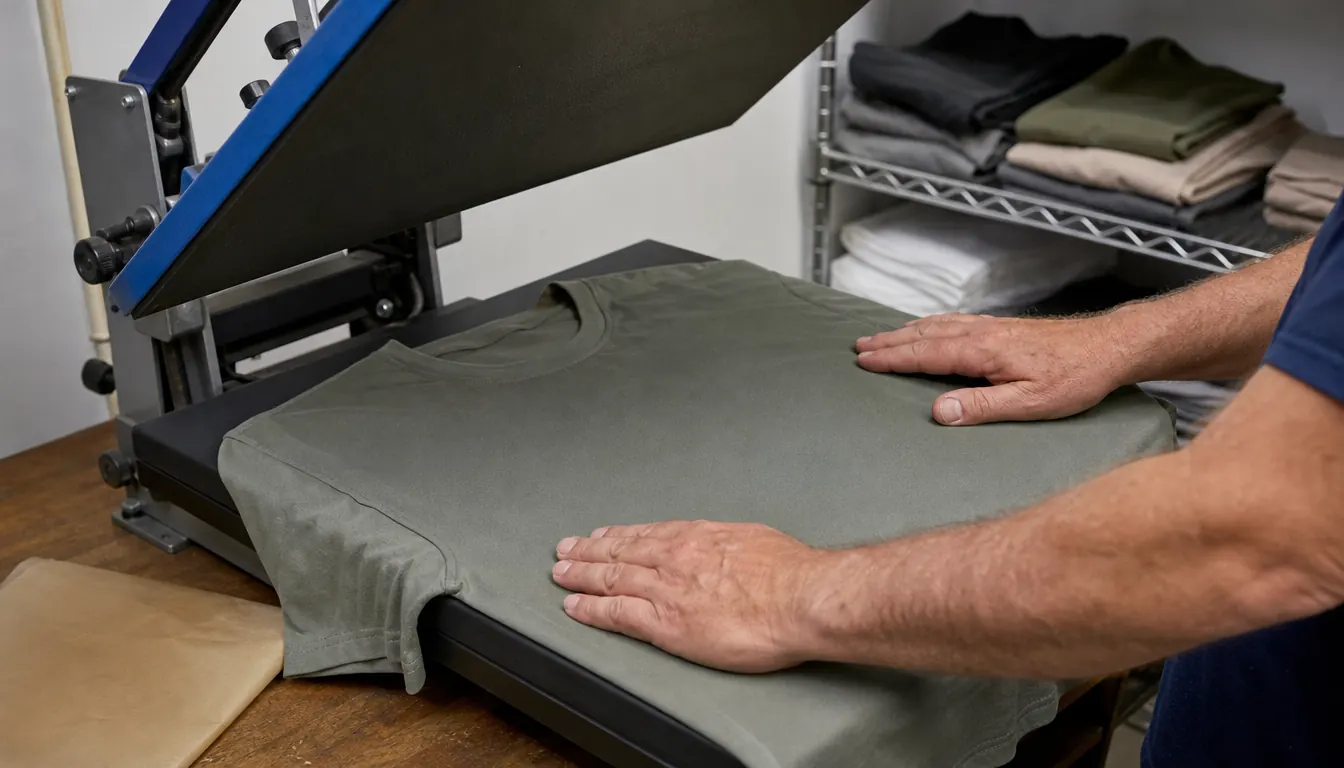
The listing gives a temperature range of 0 to 699 degrees F with electronic heat control. What that means at the table is simple: I set a number on the panel and it stays. My iron had a dial with words printed on it, and it cycled up and down whether I liked it or not. Cotton, poly blends and sublimation blanks all want different numbers, and I cannot hit any of them with a dial that says linen and has no degrees on it anywhere.
A real timer, 0 to 999 seconds, so twelve seconds means twelve seconds
Time range on this press runs 0 to 999 seconds, set on the panel. I press most cotton vinyl at twelve seconds and most sublimation blanks much longer than that. The exact numbers matter less than the fact that I am not counting in my head while also holding an iron and hoping. Counted presses drift. You look away, you go long, and the shirt takes a scorch mark you cannot undo. The timer ends the press for me.
Twenty shirts in a row come out the same
This is the reason I stopped using an iron for anything I was selling. With an iron, shirt one and shirt twenty get different treatment, because I got tired and sloppy in between. Electronic time and heat control means the machine does on shirt twenty what it did on shirt one. If a customer orders ten staff shirts, all ten match. If one of them peels later, I know it was my vinyl or my placement, not a temperature drift I will never be able to trace back.
The Teflon coating on the platen saves the shirt when you fumble
Fancierstudio added a Teflon coating to the heat platen, and I noticed it in the first week. Adhesive residue, stray glitter from a rhinestone order, and the occasional bit of lint lift off instead of baking onto the plate and transferring to the next shirt. My old iron had a scorched patch on the soleplate from a mistake in year one, and every white shirt after that carried a faint brown shadow until I replaced the thing.
1800 watts at 110 volts, on a normal bedroom outlet
The press draws 1800 watts at 110 volts. It runs on the same kind of outlet already in the wall behind my folding table. I did not run new wiring, I did not move my setup to a garage, and I have not tripped a breaker once in four years. The wattage also means the plate gets back to temperature quickly between presses, so I am not standing there with a shirt half-placed waiting for it to climb back up.
Opens with one hand so the other hand stays on the shirt
A clamshell press lifts from a hinge at the back. I open it with my left hand and my right hand is free to smooth the shirt flat, pull off a stray thread, or straighten a design that shifted two inches to the left. With an iron, both hands are on the iron and the shirt goes wherever it wants. Half my early crooked prints were never a heat problem at all. They were a hands problem, and the press fixed it by giving me a hand back.
Presses totes and mouse pads, not only shirts
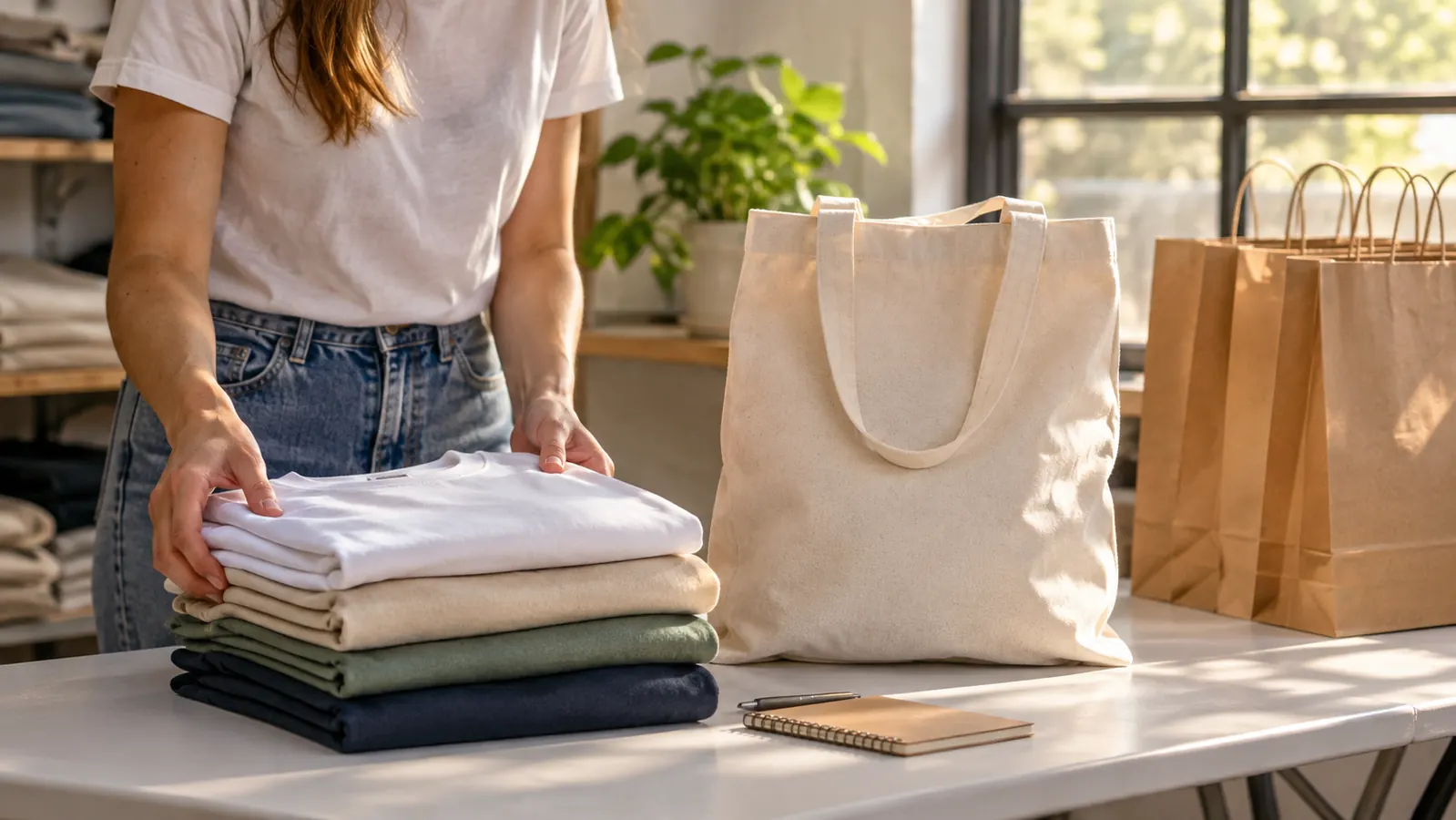
The listing recommends it for bags, mouse pads and t-shirts, and that matches how I use it. Totes are where an iron completely falls apart, because you cannot get even pressure into a canvas corner with a hand iron and a prayer. My shop sells as many totes as shirts around the holidays, and the press handles both without me changing anything except the number and the seconds. One machine, several products, one table.
Fits on a folding table, which is the whole point in a spare bedroom
The footprint is 33 inches long, 23 inches wide and 20 inches high. That reads large in a sentence and looks reasonable on a six-foot folding table. Mine sits at one end with the blank shelf on the left and a small basket for finished orders on the right. You do not need a shop or a storefront to make this work. You need a corner that belongs to the press and stays clear of the laundry pile.
9,551 reviews mean somebody already wrote down what breaks
This press has 9,551 ratings at 4.6 stars, which is the kind of number that makes the boring problems visible before you buy anything. Read the low reviews on a machine with that many owners and you learn which part fails first and how people work around it. I would rather buy a press with a long, imperfect review history than a quiet listing with nine reviews and a promise. Fancierstudio has enough owners that nothing stays hidden for long.
What I'd Skip
I would skip buying an iron as a stopgap while you save for a press. That is exactly what I did, and the shirts I sold during those months cost me more in reprints and apologies than waiting would have. If you are not ready for a press, take fewer orders, not worse ones.
I would also skip the giant starter bundle. You do not need forty vinyl colours on day one. Buy three that match what people actually ask you for, and learn those. And pay attention to the warranty side: this press carries a 3 month warranty, so open the box, run a test press the day it arrives, and put it through a real order while you are still covered. Mine has run four years without a service call, but I would not skip the test.
Shirt one and shirt twenty come out the same on a press. With an iron they come out however tired I was by shirt twenty.
If you are taking shirt orders this month, press them on this
A 15 by 15 inch platen, 1800 watts, electronic time and heat control, and a footprint that fits a folding table in a spare bedroom. The iron has been in the closet since the first week.
Amazon Check Today's Price on Amazon →