The first zipper I pressed on a hoodie looked fine until the shirt cooled. Then a hard ridge showed through the vinyl, a thin bright line where the zipper tape sat under the design. I had used a folded towel, the same thing a lot of people start with, and the towel had done what a towel does: it shifted, bunched, and left the pressure uneven. That was the week I ordered the VCHOMY Heat Press Pillow Kit, mostly because it came in four sizes and I was tired of guessing.
I run a small custom shirt and tote business out of the spare bedroom in my house in Albuquerque. I have been pressing for about four years, long enough to know that the difference between a shirt that looks homemade and one that looks shop-made is usually a seam, a zipper, or a placket. The VCHOMY set is not a magic fix for every blank. It is, however, the tool I now keep within arm's reach for the jobs where a flat platen cannot get the pressure it needs.
The Quick Verdict
A four-piece set of Teflon press pillows that earns its space on small blanks, zippers, caps and seams. It is not a replacement for a pressing mat on large flat prints.
Amazon Check Today's Price →The zipper line is the first thing a customer sees
The VCHOMY set gives you four sizes for the seams, caps and small blanks that a flat platen misses. I reach for the 5 x 15 inch pillow before every hoodie order.
Amazon See the 4-piece set on Amazon →How I've Used It
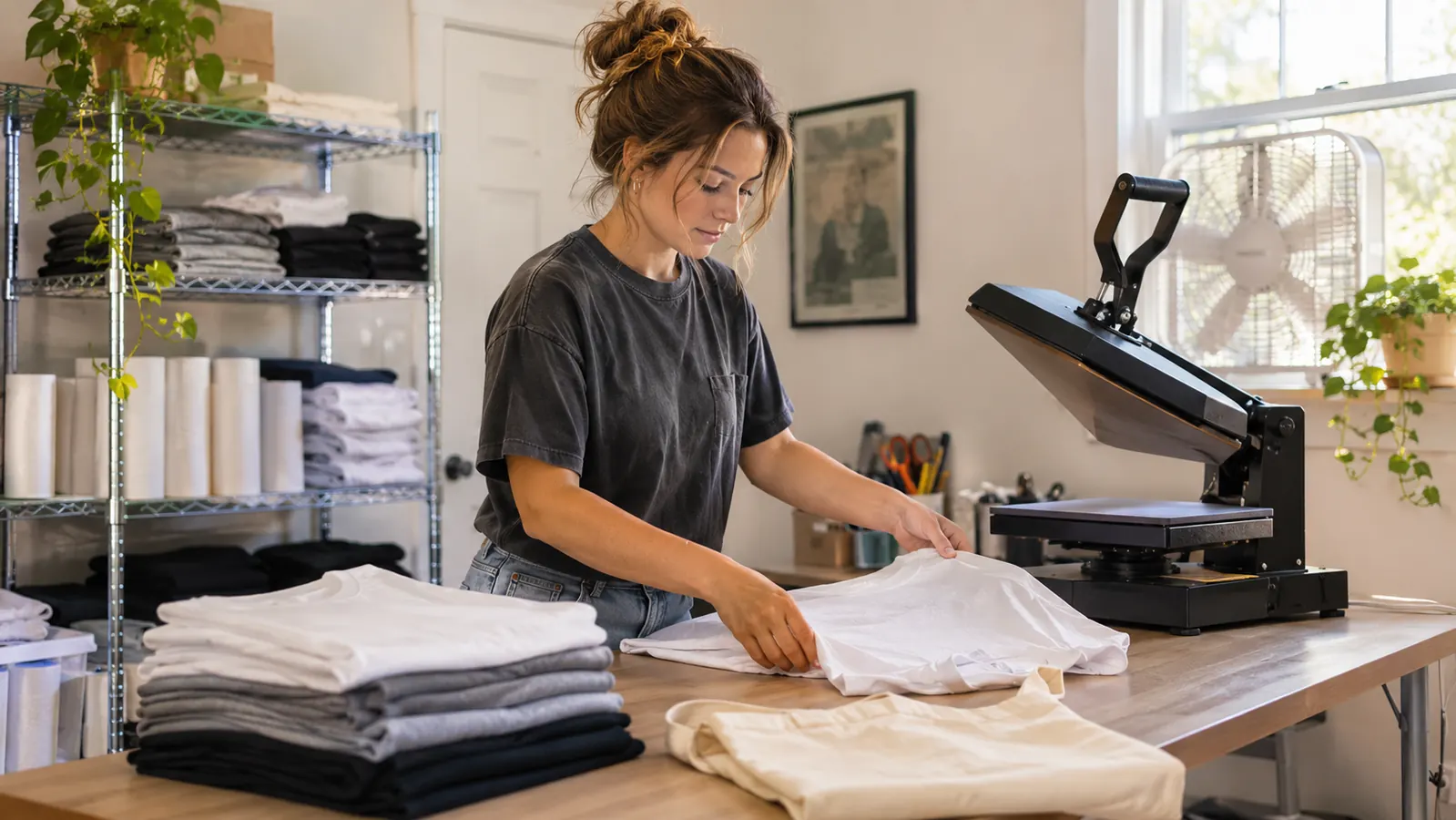
My press room is one long folding table, a wire shelf of blanks, and a fan in the window. Most weeks I press school spirit shirts for the staff at the office where I work, a batch of youth sports jerseys for a local team, and a few totes for a church festival booth. The VCHOMY pillows live in a shallow drawer under the table, flat, because a bent pillow is a pillow that will press a bend into your vinyl.
I started with the 10 x 10 inch pillow on a set of staff shirts. The design was a left-chest logo, small enough that I could have used a folded towel, but the towel had been sliding on the platen. The pillow stayed put. It has a Teflon surface that is smooth and slightly slick, and the foam inside gives just enough. I set the press to 315°F for the vinyl I use, which is well under the 600°F upper temperature rating on the listing, and pressed for the usual time.
The 5 x 15 inch pillow became the one I use most. It fits under a zipper placket on a hoodie, under the seam of a tote bag, and inside the crown of a cap. The 12 x 15 inch pillow is for bigger backs and for the body of a tote. The 5 x 5 inch one is the cap and sleeve pillow, and I also use it for the small chest patch on youth jerseys. Four sizes sounds like more than you need until you are halfway through a batch and the only thing that will fit under the seam is the small one.
What's in the Set and How It's Built
The listing is plain about what you get: four teflon pillows in 5 x 5 inch, 10 x 10 inch, 5 x 15 inch, and 12 x 15 inch sizes. The set weighs 8.48 ounces, so it is light enough to hang on a hook or keep in a drawer without adding clutter. The item dimensions are listed as 16 by 13 by 1.5 inches, which tells you the largest piece is the one that sets the footprint.
The construction is a Teflon outer layer over a fire-resistant foam core. The listing calls the surface waterproof and reusable, and I have tested the waterproof part by accident. A cup of water tipped over next to my press and a few drops landed on the 10 x 10 inch pillow. They beaded on the surface and wiped off with a dry cloth. The foam inside did not soak through, which matters in a room where a spilled drink near a hot press is already a bad moment.
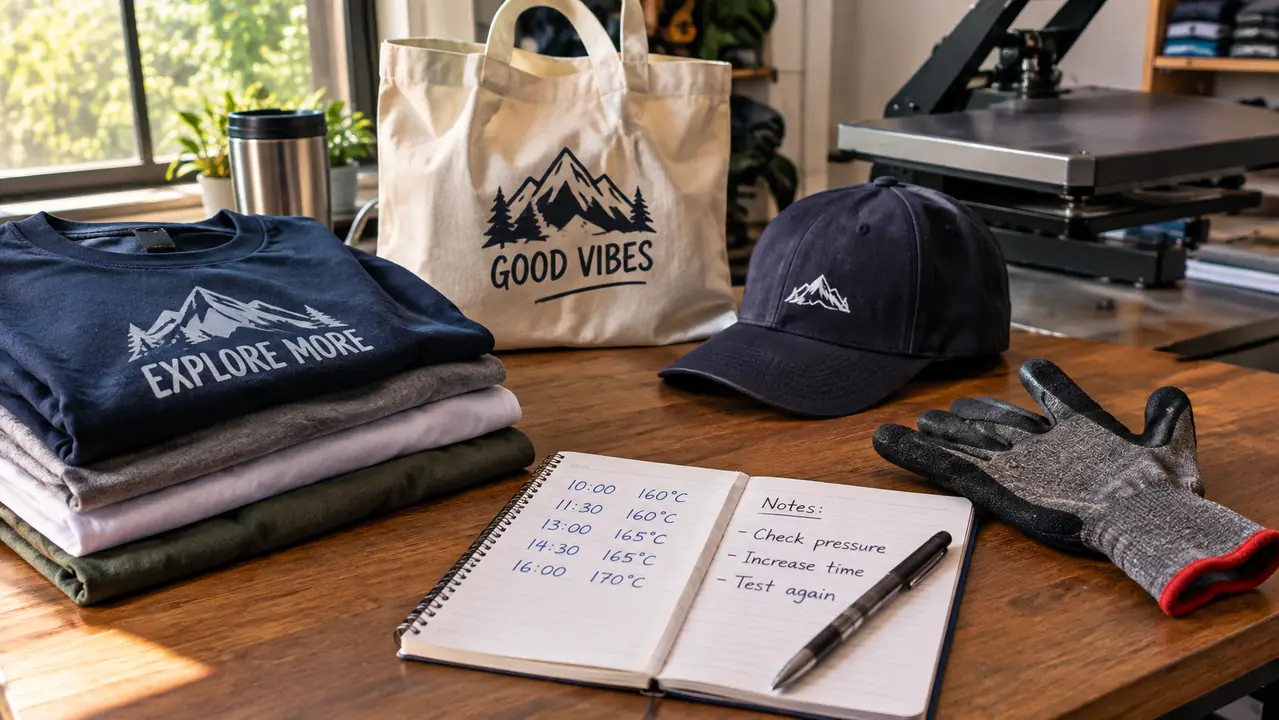
The 600°F upper temperature rating is more headroom than most home presses need. I press vinyl between 300°F and 320°F, and the highest I have gone for a sublimation blank is 400°F. The pillow has not curled, scorched, or gone soft at those temperatures. The Teflon surface does show a faint mark where I once let a hot platen sit against it, but it has not changed how it presses.
One thing I noticed is that the Teflon is slick. That is good for releasing a shirt, and less good when you are trying to hold a pillow in place while you close the press. I keep a heat glove on the table and position the pillow with the press open, then lay the shirt over it and smooth the design by hand before I close the platen. If you are used to a towel that grips, the first press with a pillow will feel like it wants to slide.
The Jobs Where the Pillows Actually Help
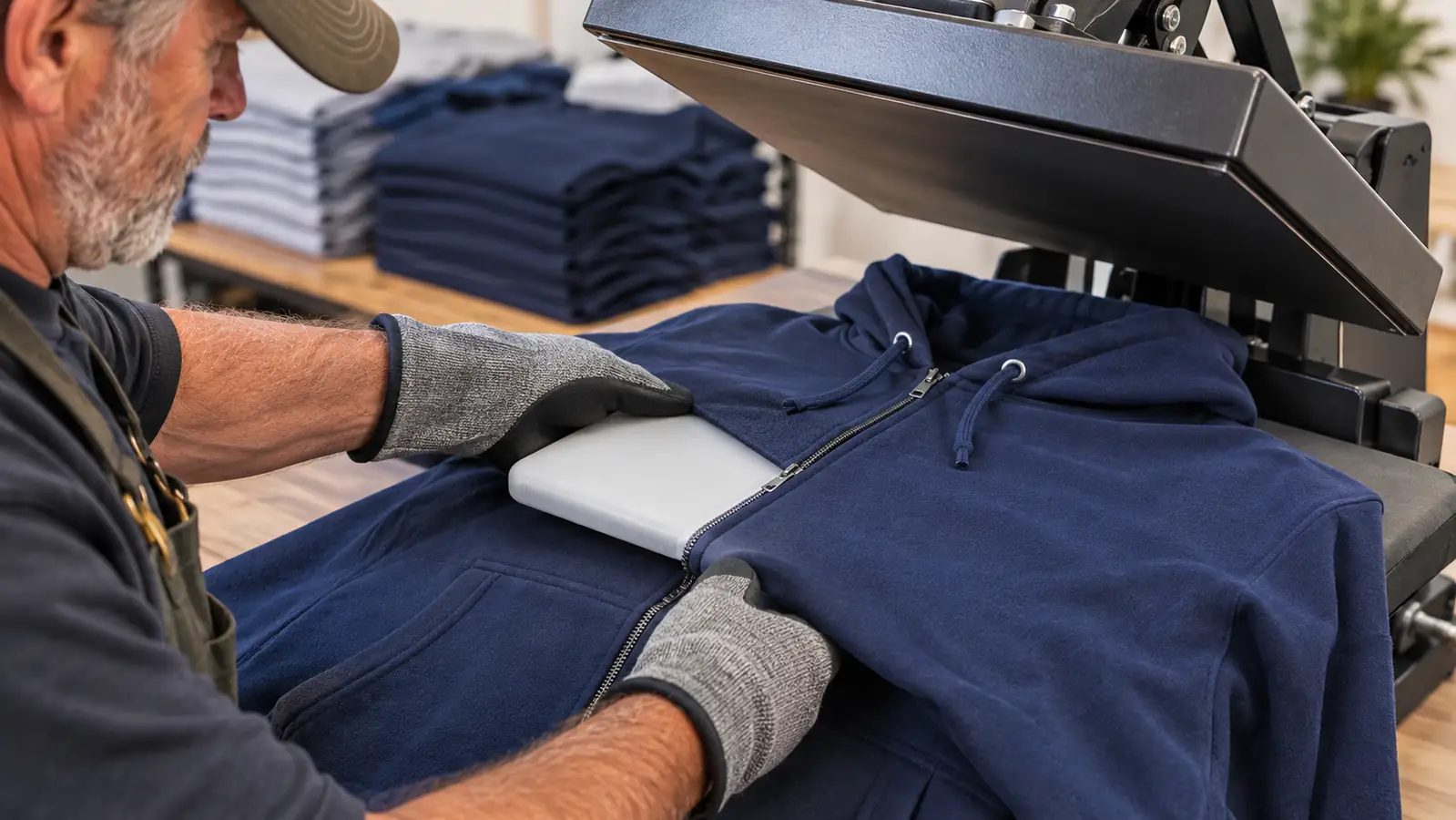
The first job is a zipper. A hoodie zipper is a hard line under a design, and a flat platen cannot push the vinyl down around it because the zipper is already holding the fabric up. I slide the 5 x 15 inch pillow under the zipper, let the teeth sit in the soft foam, and press. The vinyl goes down on both sides of the zipper instead of bridging over it. The same trick works on a quarter-zip pullover and on a tote bag with a recessed zipper.
The second job is a seam. A raglan sleeve, a side seam on a tote, or the double needle hem on a youth jersey all create a bump. The 10 x 10 inch pillow is the right size for most sleeve seams, and the 5 x 5 inch one is right for a cap or a small curve. I press the seam area first with the pillow under it, then place the design. That extra step has saved more shirts than any other change I have made this year.
The third job is a cap. A cap is mostly curve and no flat surface, and the 5 x 5 inch pillow fits inside the crown. I press the front panel with the pillow under it, then turn the cap and press the side. The listing recommends the set for hats and caps, and that matches my experience. It is not a cap press, and it will not give you the same result as a dedicated cap attachment, but for a few team caps with a small logo it is enough.
The fourth job is a small blank. A youth small shirt, a baby onesie, or a tote pocket does not need the whole platen. The 10 x 10 inch pillow gives you a soft surface that fits inside the smaller area, and the 5 x 15 inch one works for a sleeve or a leg. The 12 x 15 inch pillow is the one I use for a full back print on an adult shirt, but only when the design is large and the seams are outside the press area. If the design crosses a side seam, the pillow helps, but you still have to watch the edges.
What Months of Pressing Taught Me
The set has held its shape. I have used the 5 x 15 inch pillow on dozens of hoodies, and the foam has not collapsed in the middle. The edges are still flat, which is the part I expected to fail first. The Teflon surface has a slight sheen and a few faint marks from heat, but no cracks and no peeling. The 60-day exchange and money-back guarantee on the listing is longer than the return window on most craft supplies, and I did not need it.
The 12 x 15 inch pillow is the one that taught me the most. At first I used it for every adult back print, whether the design needed it or not. That was a mistake. On a large flat print with no seams, the pillow adds a little loft, and if the design runs past the edge of the pillow, the pressure can go uneven right at that line. I now use the 12 x 15 inch pillow only when the print crosses a seam or when the blank is small enough that the pillow covers the whole press area. For a plain flat back, I use the press mat.
The 10 x 10 inch pillow is the workhorse for staff shirts. A left chest logo is small, the pillow fits under the chest area, and the shirt does not move when I close the press. I have pressed the same 10 x 10 inch pillow at least three times a week for months, and it still lies flat. The 5 x 5 inch one is the one I have used the least, mostly because I do not press many caps, but when I do, it is the only size that fits.
Cleaning is simple. I wipe the Teflon with a dry cloth after a batch, and if a bit of vinyl residue sticks, I let the pillow cool completely and wipe it again. I do not use water on the surface while it is hot. The listing says the surface is waterproof, not that it is a cleaning cloth, and I treat it like any other press surface.
Where the Set Falls Short
The set does not replace a pressing mat. A pillow is for loft and for seams. A mat is for a flat, even surface. If you press mostly large flat back prints on adult shirts, you will still want a mat, and the pillow will sit in the drawer until a zipper or a cap shows up. I would rather tell you that than have you buy the set expecting it to fix every pressure problem.
The sizes leave one gap for me. I press a lot of youth medium and youth large shirts with a full front design. The 10 x 10 inch pillow is a little small for a full front, and the 12 x 15 inch pillow is bigger than the youth platen area. I would like an 8 x 10 inch size in the set, and it is not there. I make the 10 x 10 inch work by pressing the design in two passes, but it is an extra step.
The slick surface is the other tradeoff. A towel grips the platen. The Teflon pillow slides. If you are not careful, the pillow can shift when you close the press, and the design moves with it. I learned to position the pillow with the press open, then lay the shirt over it and smooth the design with both hands before I close the platen. That habit fixed the problem, but it is a habit you have to build.
The edges can leave a line if you let the pillow extend past the seam. I keep the edge of the pillow about a half inch inside the seam line, so the press is pushing down on fabric and foam, not on the edge of the pillow. The first time I used the 12 x 15 inch pillow on a tote, I let the edge hang past the bag seam and got a faint crease. It steamed out, but I do not do it that way anymore.
What I Liked
- Four sizes cover zippers, caps, sleeves, totes and small blanks
- Teflon surface releases vinyl and wipes clean
- Rated to 600°F, well above normal home press temperatures
- Foam holds its shape after months of regular use
- Light enough to store flat in a drawer
Where It Falls Short
- Not a replacement for a pressing mat on large flat prints
- Teflon surface slides on the platen until you learn to position it
- No 8 x 10 inch size for youth full fronts
- Edges can leave a crease if they extend past a seam
The 5 x 15 inch pillow is the one that fixed zipper lines for me. It lets the zipper teeth sit in the foam instead of pushing the vinyl up into a ridge.
Who This Is For
This set is for the home presser who does a mix of small blanks and garments with hardware. If you press staff shirts with left chest logos, youth jerseys with names and numbers, totes with seams, or the occasional cap, the VCHOMY set gives you a size for each job. It is also a good first pillow set because the four sizes let you learn which one your work actually needs before you buy a single larger piece.
It is for someone who already has a heat press and a pressing mat. The pillow is an add-on, not a starter kit. If you are still pressing with an iron on the kitchen table, the pillow will help with a seam, but it will not replace the even pressure of a press.
Who Should Skip It
Skip it if your work is almost entirely large flat prints on adult shirts. A pillow adds loft, and loft is the opposite of what a big flat design needs. You will use the 12 x 15 inch piece once, get a crease at the edge, and go back to your mat.
Skip it if you are looking for a cap press. The 5 x 5 inch pillow helps inside a cap crown, but it is not a cap attachment and it will not press a curved bill or a full front panel the way a dedicated cap press does. It is a helper, not a replacement.
Skip it if you do not want to change how you load a press. The Teflon surface is slick, and you have to position the pillow with the press open and smooth the shirt by hand. If you are used to throwing a towel down and closing the press, the first few presses will feel fussy.
If your press room is a spare bedroom, buy the size that matches your most common blank
The VCHOMY set covers the zippers, caps and small seams that a flat platen misses. Start with the 5 x 15 inch pillow for hoodies and the 10 x 10 inch for chest logos, then keep the rest flat in a drawer.
Amazon View the VCHOMY set on Amazon →