
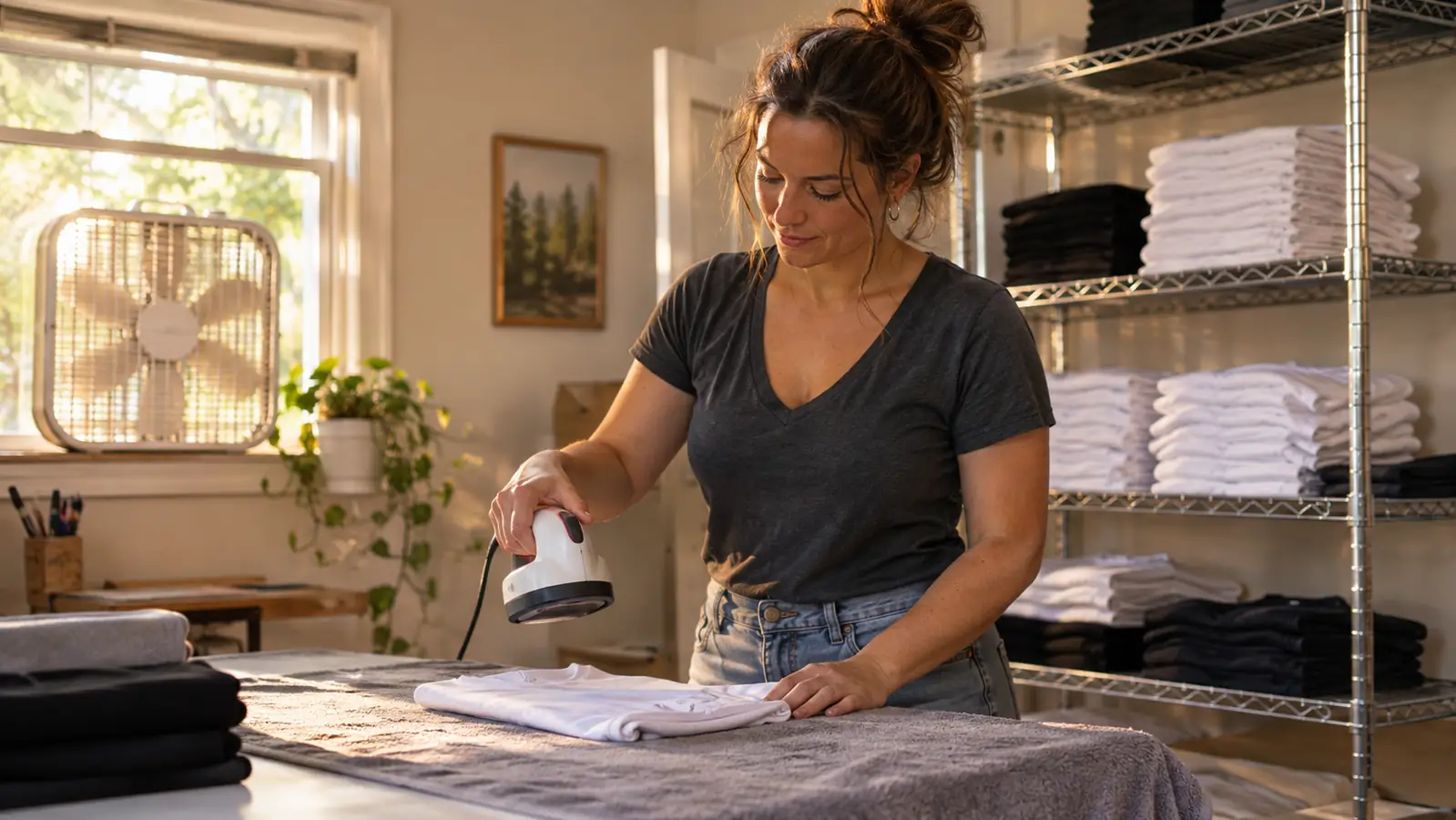
The first heat transfer I ever did used my kitchen iron, a folded bath towel, and a vinyl decal that lifted off in the wash two days later. I had read that I needed a real press. I had also read that real presses cost more than I wanted to spend on something that might turn out to be a phase. So I bought nothing, and I ruined three shirts learning the same lesson.
Four years and a lot of ruined blanks later, the tool I reach for most is not the big clamshell press. It is the Cricut EasyPress Mini, a 13.44 ounce handheld unit that sits on my wire shelf between a stack of blank totes and a jar of pens. If your projects are small, hats and sleeves and names on pockets, here is the honest case for starting there instead of saving up for something larger you will use twice a month.
The press I reach for before the big one
Cricut EasyPress Mini. 13.44 ounces, ceramic plate, precision tip, insulated safety base, auto-off. It is the tool that stays out on the folding table.
Amazon Check Today's Price on Amazon →Presses a cap without crushing the crown
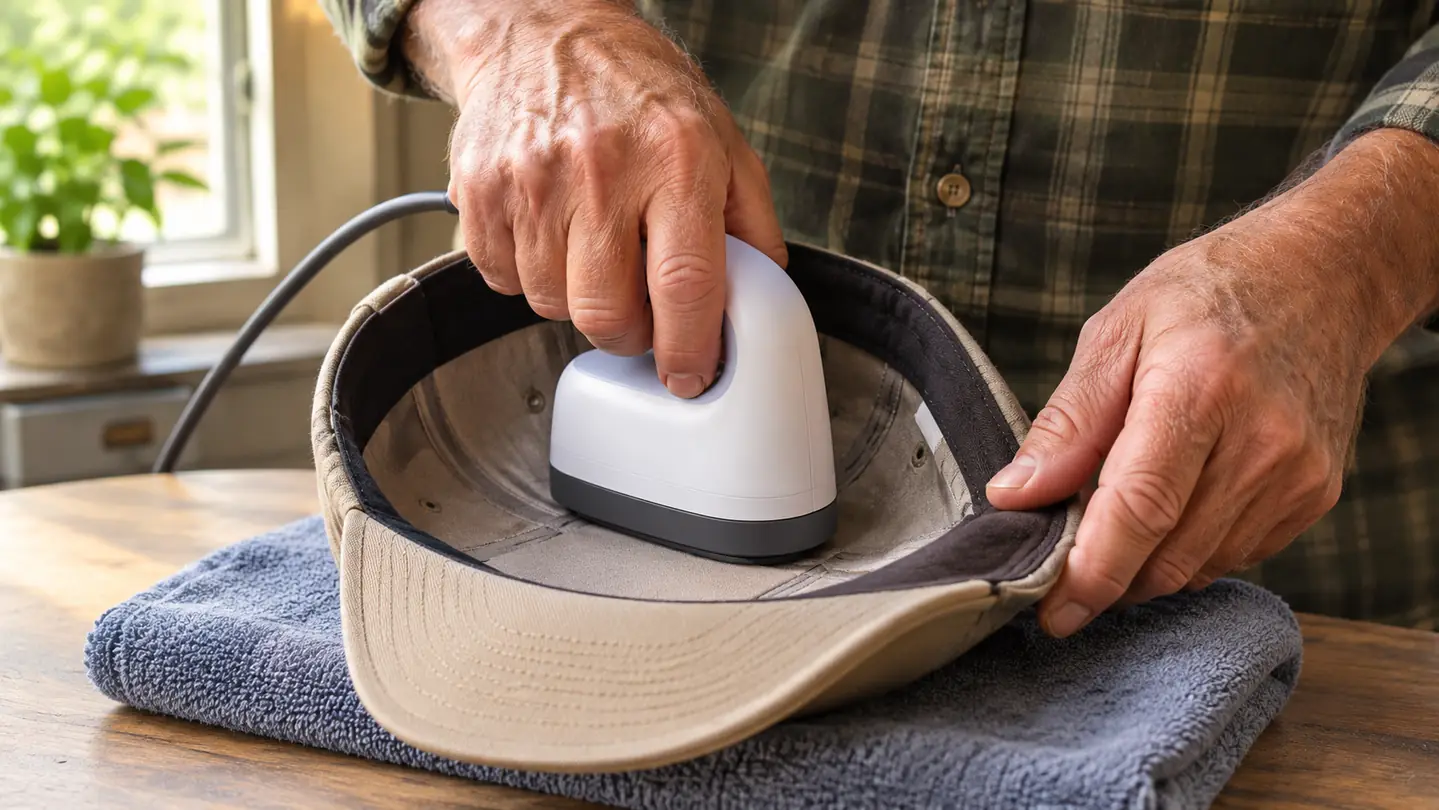
Any flat platen will flatten a baseball cap, which is why my first hat attempt came out looking like a pancake with a logo on it. The Mini is 2.52 by 3.94 inches at the base, small enough to work inside the crown of a cap instead of bearing down on top of it. Hats are also the project that taught me to stop guessing at temperature, because a synthetic blend will scorch long before cotton even thinks about it.
Reaches sleeves, pockets and seams a big press cannot
Most of what I make is a name on a sleeve or a number on a pocket. On a full-size press those areas are a negotiation. You fold the garment around the platen, you add a pressing pillow, and you still end up with a crease running through the design. Handheld is the whole advantage here. I put the plate exactly where the design goes and hold it there, and the rest of the shirt stays flat and unbothered on the table.
Lives on a shelf instead of owning a corner of the room
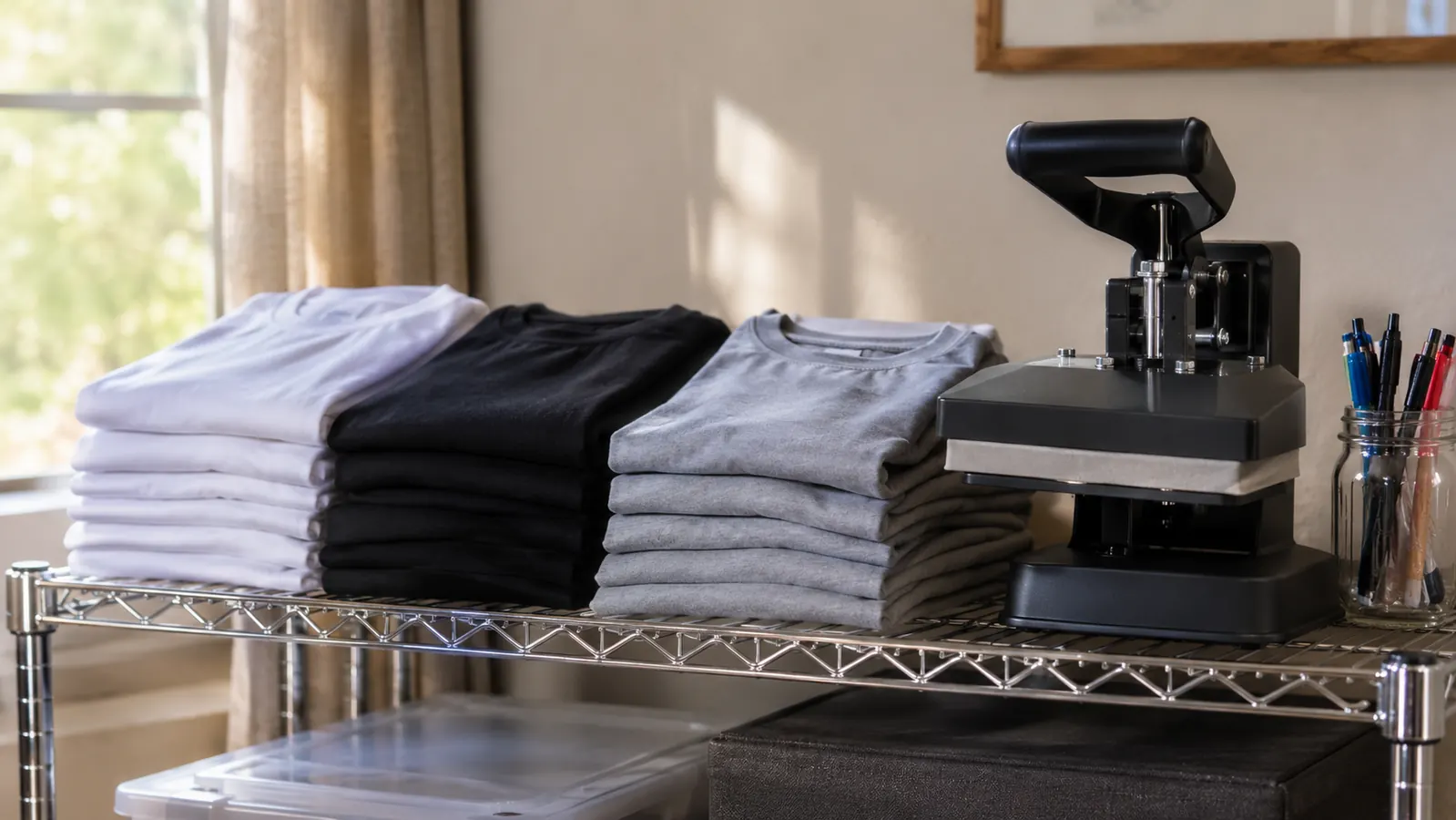
My press room is the spare bedroom. One long folding table, a wire shelf of blanks, a fan in the window, and no floor space to spare. The Mini stands 4.61 inches tall and weighs 13.44 ounces, so it goes back on the shelf when I am done and the room goes back to being a room. A clamshell press does not go on a shelf. It becomes furniture, and then the room belongs to it.
The precision tip does the detail work
The tip is the reason I stopped dreading small lettering. When you are pressing a two-inch monogram or the dot on an i, a wide plate is a liability, because heat you did not aim at the design still lands on the shirt around it. The narrow tip lets me work an edge, lift, reposition and come back without dragging a carrier sheet across vinyl that has already started to set.
A ceramic plate holds its heat across the whole surface
The plate is ceramic, and that matters more than it sounds. A household iron cycles on and off against its thermostat, so the soleplate temperature swings while you stand there with a timer running. Ceramic holds what it has. On small projects, where you are only touching a few square inches at a time, that steadiness is the difference between a clean lift and a decal that peels at one corner three washes in.
13.44 ounces, 4.61 inches tall, and it still presses a hat better than the big press in the corner.
The 204 °C ceiling covers what I actually press
The upper temperature rating is 204 °C, and hats, tees and the occasional mug all live comfortably under that. What I like is that I am not paying for headroom I will never use. A press built for industrial transfers comes with settings I would never touch, and every extra control is one more thing to get wrong at nine at night when I am trying to finish a youth team order.
Auto-off means a distraction does not cost me the evening
I press after work, which means I am also answering texts, letting my nephew in the front door, and forgetting what I walked into the kitchen for. Auto-off has saved me more than once. I set the press down, get pulled away, and come back to something that has already cooled itself rather than something quietly cooking a mark into my table.
The insulated safety base makes a folding table safe to use
I do not have a dedicated heat-resistant work surface. I have a folding table with a towel on it. The insulated safety base is what makes that acceptable, because I can set a hot press down between passes without thinking about it or hunting for a trivet. If your workspace is a spare bedroom rather than a shop, this is not a small feature. It is the reason the whole setup works at all.
The Cricut Heat Guide takes the guessing out of settings
The part of a heat press that actually ruins projects is not the plate. It is not knowing what time and temperature a given blank needs. Cricut publishes a heat guide that pairs material with settings, and I check it every time I open a new brand of blank. It is a small thing, but it is the difference between a beginner ruining two shirts and a beginner ruining twelve.
A one-year limited warranty makes it a low-risk first press
The warranty is one year limited, which is honest for a tool at this level. What I tell people who ask me how to start is that your first press should be the one that hurts least to be wrong about. Buy the small one. Make ten hats. Find out whether you actually enjoy the work. If you do, you will know exactly what to buy next, and the Mini will still be the tool you grab for cuffs.
What I'd Skip
Two things. First, skip the urge to buy a box of blanks before you have pressed anything. My first order of shirts sat in the closet for a month while I figured out settings on scrap fabric, and half of them were blends I did not yet know how to press without scorching. Second, skip any tutorial that tells you to hold the press still and count to twenty without looking at your material. Time and temperature come from the material, not from a habit. Press a scrap, peel the carrier while it is warm, and look at what actually happened.
One more honest note. This is a small press. It is not the tool for a full back print on a hoodie, and if that is the plan, save for the larger one. The Mini earns its place on cuffs, caps, pockets and names, and on those jobs it beats the big press rather than merely keeping up with it.
Start with the tool you will actually leave on the table
Cricut EasyPress Mini. 13.44 ounces, ceramic plate, insulated safety base, auto-off, one year limited warranty. Small projects, finished properly.
Amazon Check Today's Price on Amazon →