
The first thing I pressed with the Cricut EasyPress Mini was a youth baseball cap, and I spent the whole first minute waiting for it to go wrong. Hats are the reason I bought it. My full-size press cannot get inside a cap, a household iron scorches the brim before the decal ever sets, and I had a dozen caps on the folding table for a local youth team with a church festival close behind them. Twenty minutes later every cap was done and not one was burnt. That was months ago and the Mini has not left the end of my table since.
I run a small custom shirt, tote and tumbler business out of my spare bedroom in Albuquerque. Four years of pressing, starting on a household iron and working up from there. I am a school office manager the rest of the time, so this is evening and weekend work. That means the Mini was tested the way most people actually use a heat press: a lot of short sessions after dinner, not one long production run.
The Quick Verdict
The right tool for hats, sleeves and small blanks, and a slow, fussy compromise if you expect it to press a full adult shirt front.
Amazon Check Today's Price →The reason my iron no longer goes near a hat brim
Small enough to press inside a cap, precise enough for a left-chest logo, light enough that a dozen hats do not wreck your wrist. Mine lives on the end of the table between orders.
Amazon Check Today's Price on Amazon →How I've Used It
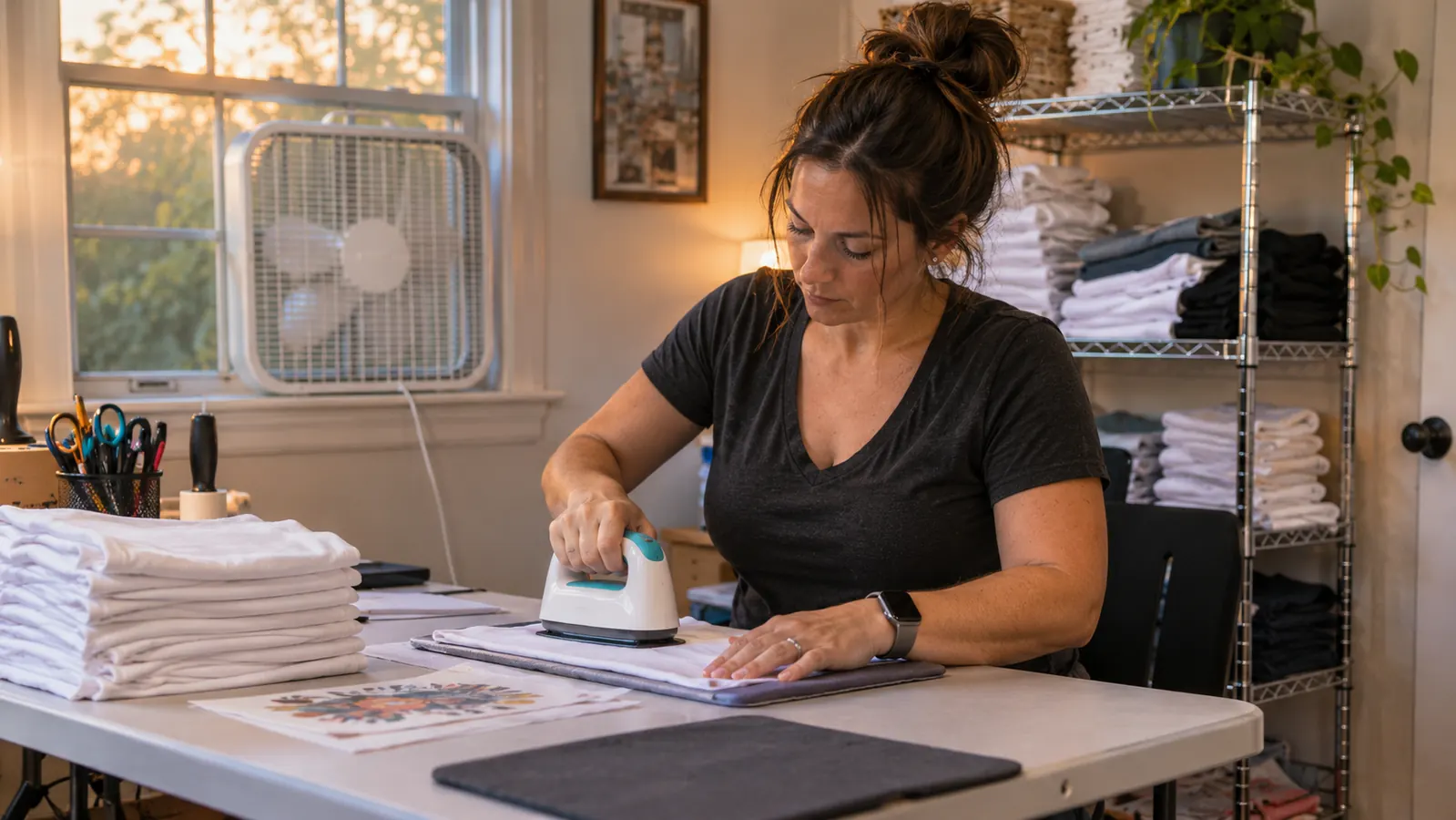
Since it arrived it has handled every hat in the shop, every left-chest logo, every sleeve print, a run of toddler shirts for a school fundraiser, and the awkward corners of tote bags where the seam fights back. My press room is one long folding table, a wire shelf of blanks, and a fan in the window, because a heat press in a small bedroom turns the air thick fast. The Cricut sits at the right end of the table next to the mat.
What surprised me is how often I reach for it on jobs that are not hats. A left-chest logo on a polo is about twenty seconds of pressing with the Mini and a whole setup with the big press, because with the big one I have to lay the shirt flat, square it up, and hope nothing shifts while I close it. With the little one I hold the shirt in my left hand and press with my right. Fewer steps and fewer ways to ruin a blank.
Hat work is still what sold me. A cap goes over a hat form, you press the inside, let it cool, peel, and press again. Shoulders and seams do not need the pressing pillow ritual that a flat press demands. I have done caps for teachers, for a family reunion, and for the youth team that started all of this, and I have not scorched a brim since the iron went into the closet.
I also want to be honest about how I used it early on. I treated it as a toy for small jobs and kept dragging out the big press for anything I considered serious. Months in, that has flipped. The Mini handles most of what comes through the door and the big press comes out for full fronts and large flat panels.
What the Mini Is and What It Is Not
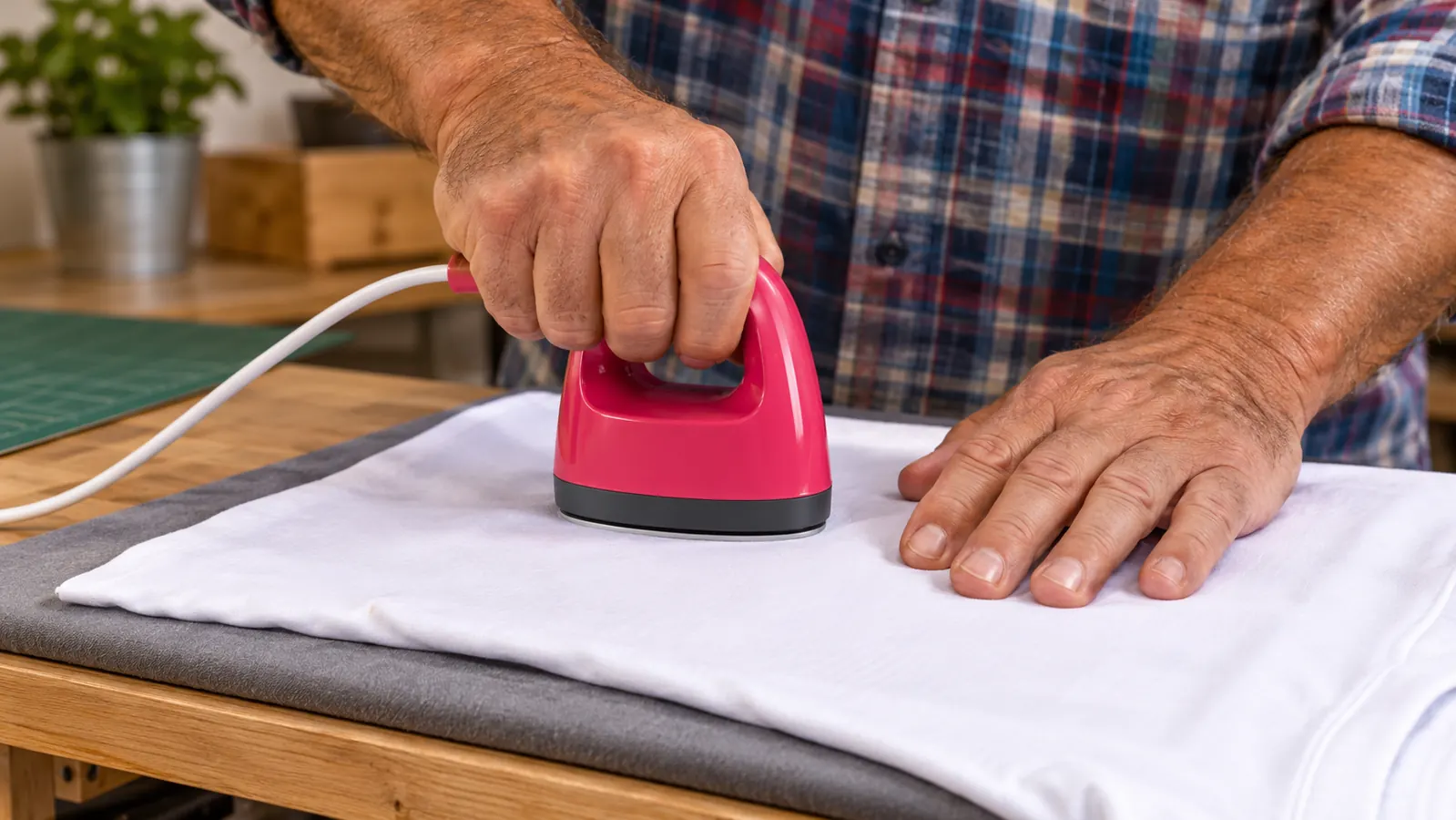
The numbers tell you more than the marketing copy does. It weighs 13.44 ounces, light enough that my wrist does not complain after a dozen hats, and it measures 2.52 inches long by 3.94 inches wide by 4.61 inches tall. That footprint is the entire story. Small enough to sit inside a cap, small enough to store on a shelf without clearing space for it.
The plate is ceramic, and the unit tops out at 204 degrees Celsius, just under 400 Fahrenheit. That ceiling covers every heat transfer vinyl, patch and sublimation blank I have put under it. The precision tip is the part I did not expect to care about and now use constantly. It gets into a corner or along a placket edge without dragging the rest of the plate across a design that is already set.
What it is not is a shirt press, and I want to be plain about that because the product photos flatter it. Pressing a full front on an adult tee means moving the Mini in overlapping sections and counting to yourself to keep the timing even across all of them. It works. It is also slower and less even than a press with a plate wide enough to cover the design in one pass.
There is also a size of job it cannot do at all, which is anything wider than roughly four inches pressed in one go. Large back prints, big sublimation panels, full-width tote designs. Those are not Mini jobs and no amount of patience changes that.
Heat, Time, and the Cricut Heat Guide
Settings ruin more first projects than bad equipment does. The Cricut Heat Guide gives a temperature and a time for the material in front of you, and I check it every time I open a pack of blanks I have not used before. Different vinyl, different carrier sheet, different fabric, different numbers. Guessing because the last job worked is how you end up with a design that peels in the wash six weeks later.
What I had to learn was pressure and motion. The Mini wants steady downward pressure and slow movement, not a long park in one spot. My first run of tote bags has shiny patches where I left it sitting too long. My first run of toddler shirts has a corner that lifted because I was nervous and pressed too light. Neither was the press being bad. Both were me being impatient.
The other thing worth knowing is that peel temperature matters as much as press temperature. Some materials want a warm peel and some want cold, and the difference shows up in the first wash, not on the table. I keep a printed sheet of the settings I use most taped to the wire shelf, because looking it up on my phone with vinyl in one hand gets old fast.
One small habit that saved me a lot of grief: press a test scrap of every new blank and vinyl combination before it goes anywhere near a finished order. Ten seconds of scrap tells you more than any chart.
What Has Held Up and What Still Annoys Me
Months in, the machine itself has been boring in the best way. The ceramic plate has not chipped. The cord has not frayed at the strain relief. The housing has stayed cool enough to handle between presses. The insulated safety base is the feature I would miss most if it disappeared. I set the press down constantly between steps, and a hot plate resting on a folding table with blanks nearby is a real problem. The base makes it a non-issue.
The auto-off has saved me twice. I am the person who walks away to answer a text and comes back twenty minutes later. A heat press still hot and forgotten in a spare bedroom is not something I want to think about at night. It shuts itself down and I stop worrying.
The annoyances are real, and they are the annoyances of a small tool. Long runs of flat work leave my thumb and forearm tired, because you grip and push instead of pulling a handle. A big design goes down in three overlapping passes, and the seams between passes are only invisible when I am careful. There is no temperature readout to glance at, so halfway through a job I am trusting the settings and my own timing rather than a number in front of me.
None of that is a reason to avoid it. It is a reason to buy it for the jobs it is built for and keep something bigger for the rest.
Where It Beats the Big Press
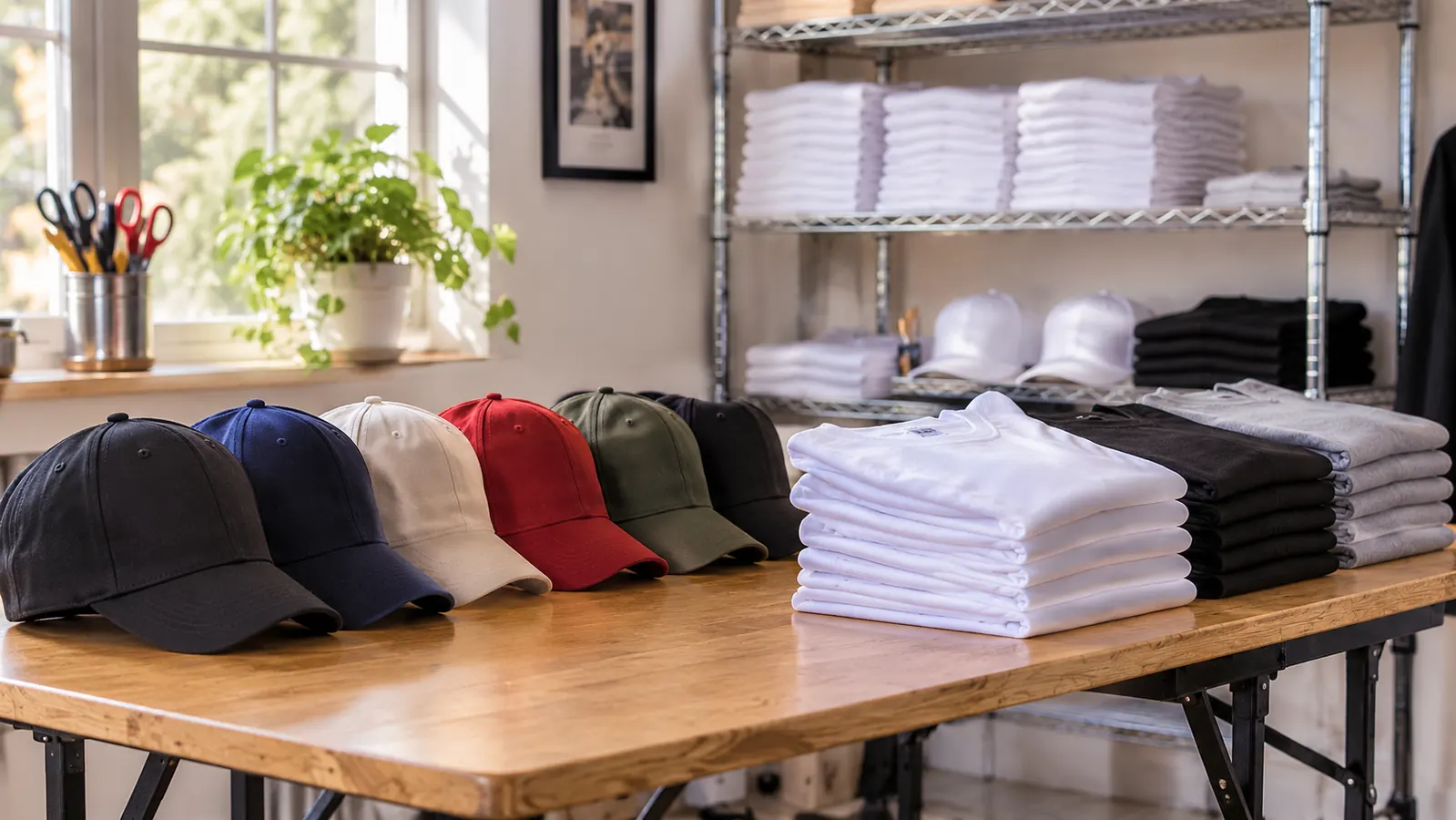
There is a whole category of work where the Mini is just faster, and it is larger than the name suggests. Hats. Sleeves, especially long sleeves, where a flat press fights the tube of fabric. Onesies and toddler shirts where the entire garment fits under the plate. Tote corners. Anything with a zipper, a button placket or a seam running through the middle of the design. On a flat press every one of those is a workaround and a pressing pillow. On the Mini they are simply the job.
That is why it stopped being a backup for me. It sits next to the big press rather than in a drawer. If you make hats at any volume at all, the Mini earns its place in the blanks you no longer throw away, and I say that as somebody who threw away plenty before I got one.
That said, I would not want it as my only press. There are evenings when a full order of adult tees comes in and I am glad the big one is on the other end of the table. The Mini is the tool I reach for first and the one I would replace first if it died, but it is not the one I would keep if I could only keep one. That answer depends on what you make, and for a hat-heavy shop the answer flips.
The Mistakes I Made So You Do Not Have To
Pressing on a hard surface. My folding table is hard, and my first hats came out with the seam impression showing through the design. A folded towel or a pressing mat under the work fixes it and costs nothing.
Moving the design instead of the press. With a flat press the plate comes down onto the design. With the Mini it is easy to drag the blank around while you chase it with the plate, and that is how a decal shifts a quarter inch halfway through. Tape or pin the blank first, then move the press.
Skipping the cool-down on multilayer work. I stacked a two-color design too fast on my third hat order and lifted the first layer with the second press. Give each layer its time. The Mini is quick enough that it makes you feel like you can rush the whole stack, and you cannot.
What I Liked
- Gets inside caps, sleeves and small blanks that a flat press cannot reach
- 13.44 ounces, so a long hat run does not wreck my wrist
- Precision tip handles corners and plackets cleanly
- Insulated safety base and auto-off make it safe to leave out between steps
- Ceramic plate has held up through months of short sessions
- Small enough to stay on the table, which means I actually use it
Where It Falls Short
- Cannot press a full adult shirt front in one pass
- Overlapping passes show if you rush them
- No temperature readout to glance at mid-job
- Hand and forearm tire on long flat runs
- Easy to under-pressure if you are used to a handle press
I have pressed every cap that has come through here with it, and I have not scorched a brim since the iron went into the closet.
Who This Is For
You make hats. That is the clearest case and the reason most people end up here. Caps, beanies, visors, anything with a curved surface and a seam that a flat press cannot reach.
You also make small things in volume: left-chest logos, sleeve prints, onesies, totes, patches, small sublimation blanks, and anything with a placket or a zipper in the way. If your work is small and repetitive and your space is a corner of a room rather than a shop, the size that annoys some people is exactly the size that helps you.
It also suits anyone who has been doing this with a household iron and losing blanks to scorch marks. The control is a different category from an iron, and the safety base and auto-off make it a much easier thing to leave out on a table between orders.
Who Should Skip It
If your orders are mostly full front adult shirts, skip it and put the money toward a press with a plate that covers the design in one pass. You will fight this one on every order and blame the tool for a job it was not built for.
If you press large sublimation panels, wide tote designs or back prints, same answer. The plate is roughly four inches across at its widest. That is a hard limit, not a learning curve.
And if you want one press that does everything, this is not it. It is a specialist. The people happiest with it are the ones who own something bigger for flat work and reach for this one when the shape gets awkward.
If your work is hats, sleeves and small blanks, this is the one that earns its space
Mine has been on the end of the table for months and it is the tool I reach for first. Check today's price and see whether it fits the jobs you actually take.
Amazon Check Today's Price on Amazon →