
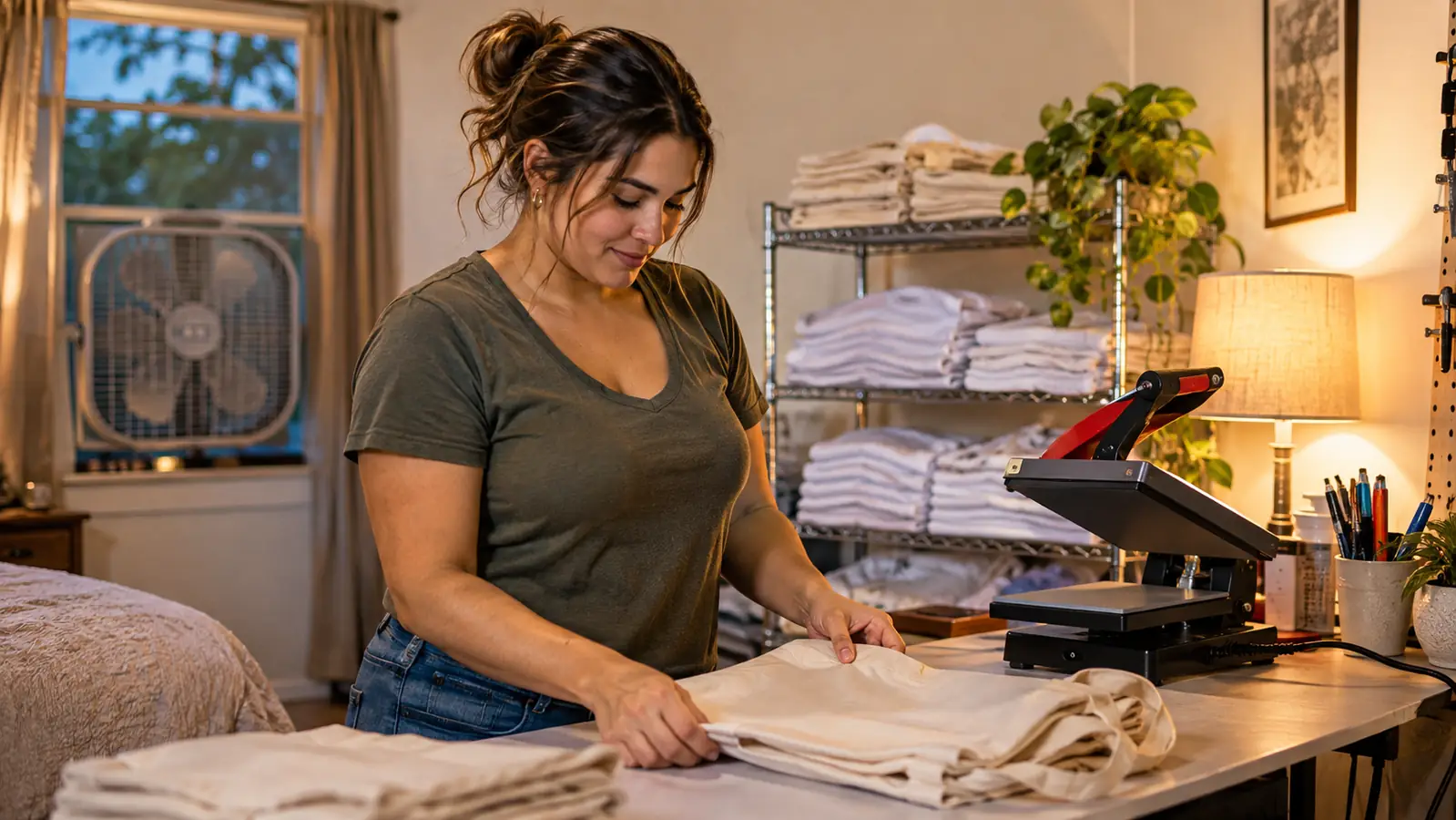
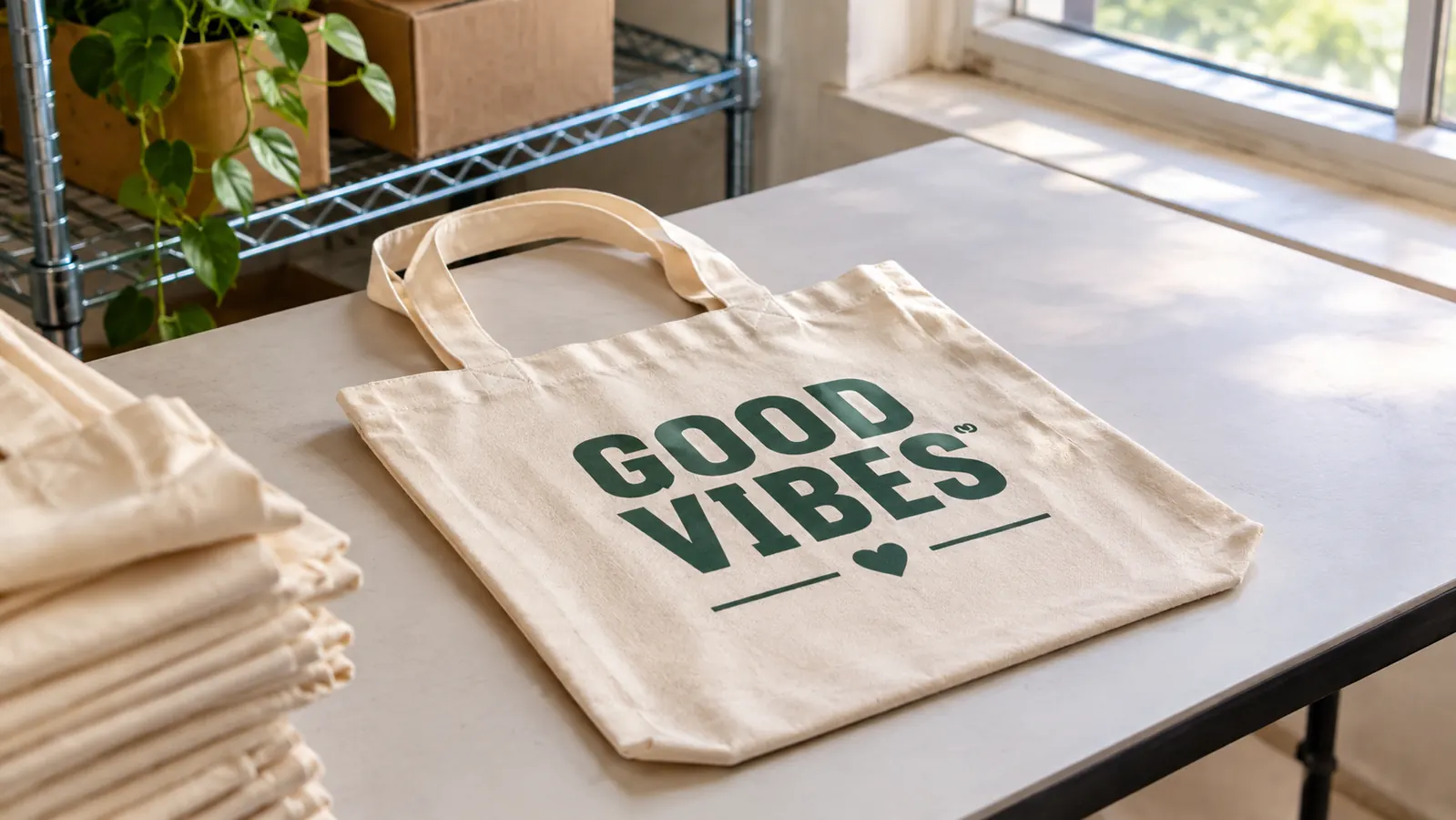
The first tote bag I ever pressed was a disaster. I laid a heat transfer design on cotton canvas, set my grandmother's iron on top of it, and counted to thirty Mississippi. When I peeled the carrier sheet back, half the letters came up with it and the other half stayed welded to the paper. I remember standing in the spare bedroom at eleven at night, holding a tote with one word and a half on it, thinking there had to be a better way to do the small stuff.
That was about four years ago. These days I make custom shirts, totes and tumblers for school staff, a church festival booth, and a couple of youth sports teams around Albuquerque, plus a small shop online. A big flat press handles a full t-shirt front beautifully. But the jobs that kept beating me were never the big ones. They were a name on a tote pocket, a mascot on a cap brim, a date pressed inside a collar. Flat plates do not fit those shapes, and no amount of pressing harder fixes that.
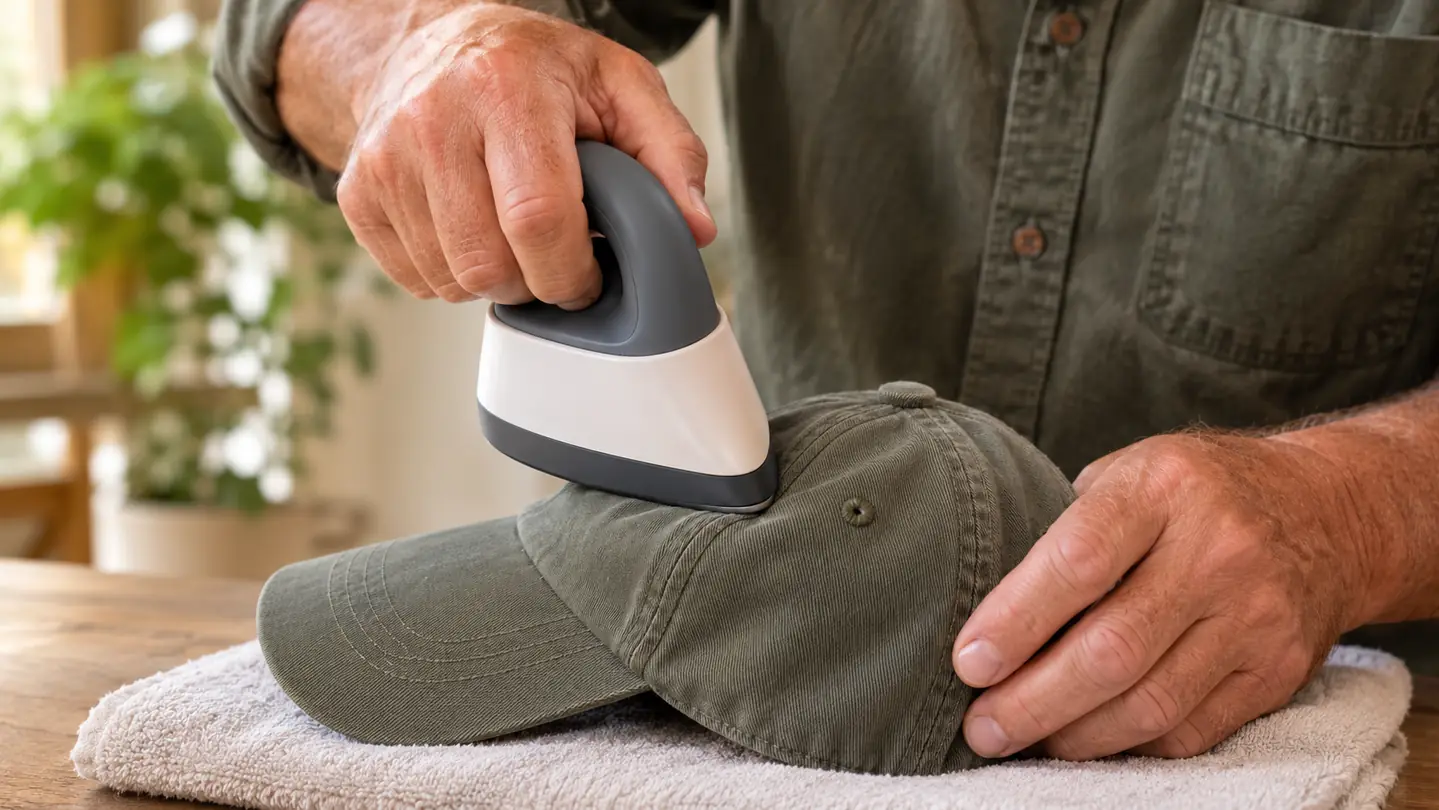
Which is why the Cricut EasyPress Mini ended up on my folding table and stayed there. It is a small handheld press, 13.44 ounces, about 2.52 by 3.94 by 4.61 inches, with a pointed tip instead of a wide flat plate. The first time I used it on a cap, I finally understood what I had been fighting for two years. That tip let me press along a curved seam without dragging a big plate across the vinyl I had just placed.
I did not get it right immediately. I treated it like my big press and leaned my whole body weight into it, and I scorched the corner of a canvas tote badly enough that it became a shop rag. What fixed me was the Cricut Heat Guide, the settings lookup on the Cricut site that gives you a temperature and a time based on your blank and your material. Once I stopped guessing and started following it, the scorching stopped and my press times got shorter.
Here is the part that changed my evenings. On a small press you control where the heat goes. My household iron heats a big area, so I spend half my time hovering it in the air, trying not to touch a vinyl edge I already lined up. The EasyPress Mini is small enough that I can set the tip exactly where I want it and leave it there. It tops out at 204 degrees Celsius, which is more than enough for the heat transfer vinyl I buy.
A flat plate is the right tool for a full t-shirt front. It is the wrong tool for a cap brim, and I spent two years not admitting that.
The press that reaches the seams a flat plate cannot
Small, 13.44 ounces, and pointed at the tip for cap brims, side seams and pocket corners. Comes with an insulated safety base so you can set it down mid-project without hunting for a trivet.
Amazon Check Today's Price on Amazon →The other thing that matters when you work out of a spare bedroom: it has an auto-off feature and it parks in an insulated safety base. I do not leave it running when I walk away, but the auto-off has saved me twice when the phone rang and I got pulled into a conversation. The base means I can set the press down on the folding table between passes instead of balancing it on a plate and hoping.
Caps are where it earns its place in my routine. A cap has a curved crown and a brim seam, and a flat press simply cannot reach into either one. With the mini I press the front panel flat, then tilt the tip down and work it along the seam in short passes. I do the same thing on tote side seams and on the small chest prints that look absurd under a full-size plate. Twelve caps for a youth team took me one evening instead of a whole weekend.
I want to be honest about the limits, because I have bought tools on the strength of reviews that skipped them. This is not a replacement for a big press. If you are running twenty t-shirt fronts in a row, this will take you several times as long, because you are covering the same area with a much smaller tool. The ceramic plate holds heat well, but the body stays small, so long runs mean more repositioning. It is a detail tool, not a production tool.
Mine lives on the wire shelf next to my blanks when I am not using it, because it is small enough that putting it away is not a chore. That sounds trivial. It is not. The press I avoid dragging out is the press I never use, and the one within arm's reach is the one I reach for without thinking. I now say yes to the small jobs I used to turn down, and turning them down was costing me more than I realized.
What I'd Tell You If We Were Sitting at My Kitchen Table
I would tell you to buy it for the jobs you are currently refusing, not the jobs you already have handled. If all of your work is full-front t-shirts, put your money into a bigger plate and skip this entirely. But if you are turning down cap orders, or fudging tote pockets with an iron and a prayer, this solves a specific problem that a bigger press genuinely cannot solve, at any size.
I would also tell you to follow the Cricut Heat Guide for your first ten presses instead of trusting your gut, and to test on a scrap before you touch the real thing. Almost everything I know about heat transfer, I learned by ruining blanks. I would rather you learn it from a scrap of canvas than from a tote that already has somebody's name on it. There is also a one year limited warranty, which I have never needed, and I would still tell you to register the thing the day it arrives.
Start saying yes to the small jobs you keep turning down
13.44 ounces, a precision tip, an insulated safety base and auto-off. Small enough to leave on the table, which is exactly why it gets used.
Amazon Check Today's Price on Amazon →