
The first thing nobody tells you about sublimation paper is that the paper is almost never the reason a transfer fails. I have blamed paper for a smeared mug, a washed out tote and one genuinely ugly youth football jersey, and every single one of those times the real culprit was my press, my blank or my own impatience. So when I tell you that A-SUB Sublimation Paper is good, understand that I am not easily impressed and I do not hand out compliments to supplies. The pack is 8.5 by 11 inches, 110 sheets, 125 g, and after working through most of it I reach for it first on an ordinary weeknight.
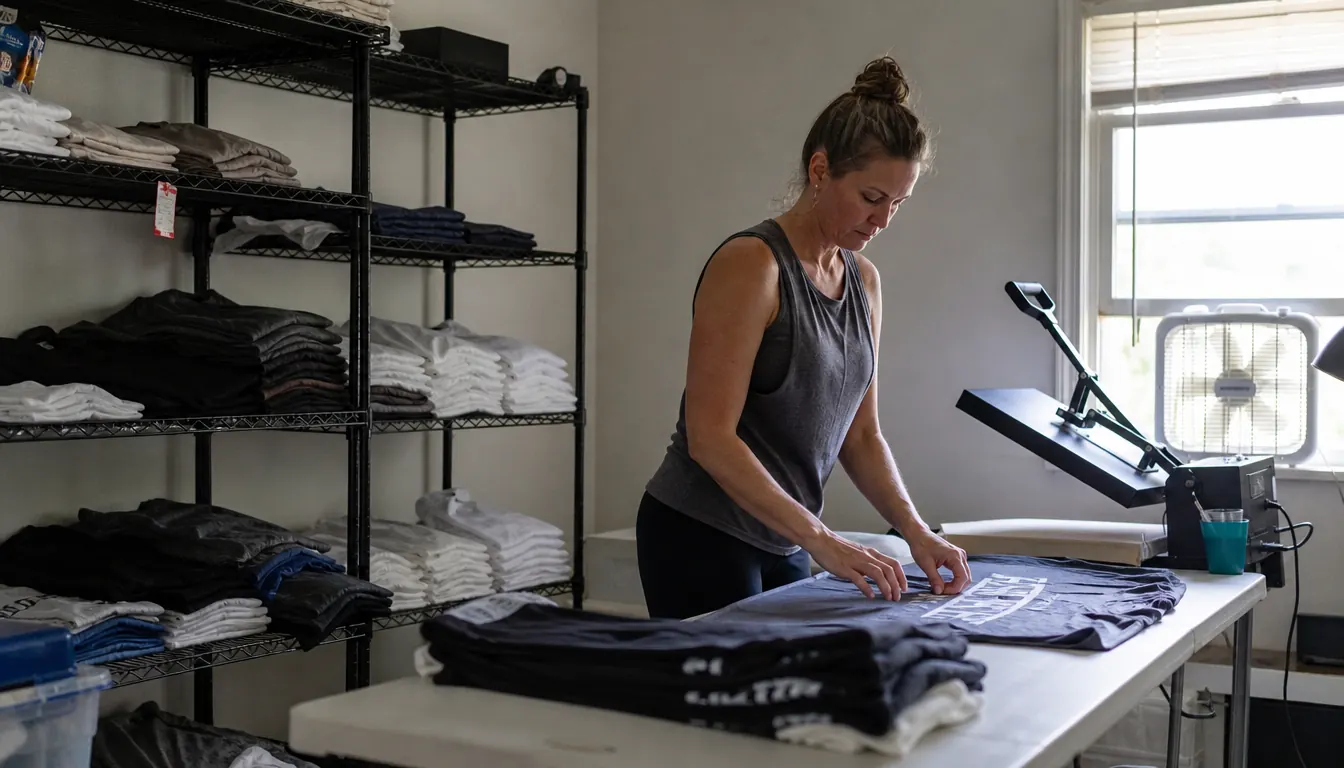
Some context, because a paper review without context is just a mood. I run a small custom shirt, tote and tumbler business out of the spare bedroom of my house in Albuquerque. One long folding table, one press, a wire shelf of blanks and a box fan in the window because that room gets hot by the second hour. I have been pressing for about four years, starting with a household iron and a stack of ruined cotton, and my orders come from school staff, friends, a church festival booth and a couple of local youth sports teams. Nothing glamorous. Just a steady trickle of jobs where a bad sheet costs me an entire evening.
The Quick Verdict
A reliable everyday sublimation sheet that releases cleanly on light polyester, ceramic, tile, phone cases and metal, as long as you accept it will not fix a cold press or a cotton blank.
Amazon Check Today's Price →The paper I keep reordering instead of testing something new
110 coated sheets at 8.5 by 11 inches, built for sublimation ink on white or light polyester, ceramic, tile, phone cases and metal. If your press is already dialed in, this is the sheet that stops eating your blanks.
Amazon Check Today's Price on Amazon →How I've Used It
My first run with this pack was a set of youth football jerseys, which is a terrible place to start with any new supply. I printed a full page of numbers and names, pressed them onto light polyester jerseys at settings I already trusted, and peeled the sheet back while it was still warm because I am impatient. The transfer came off clean and the white of the jersey stayed white around the lettering. No halo, no paper ghost, no faint rectangle where the sheet had been. That last one is the tell I watch for, because a paper that scorches or holds onto its coating will leave a shadow on a light blank that you cannot press out later.
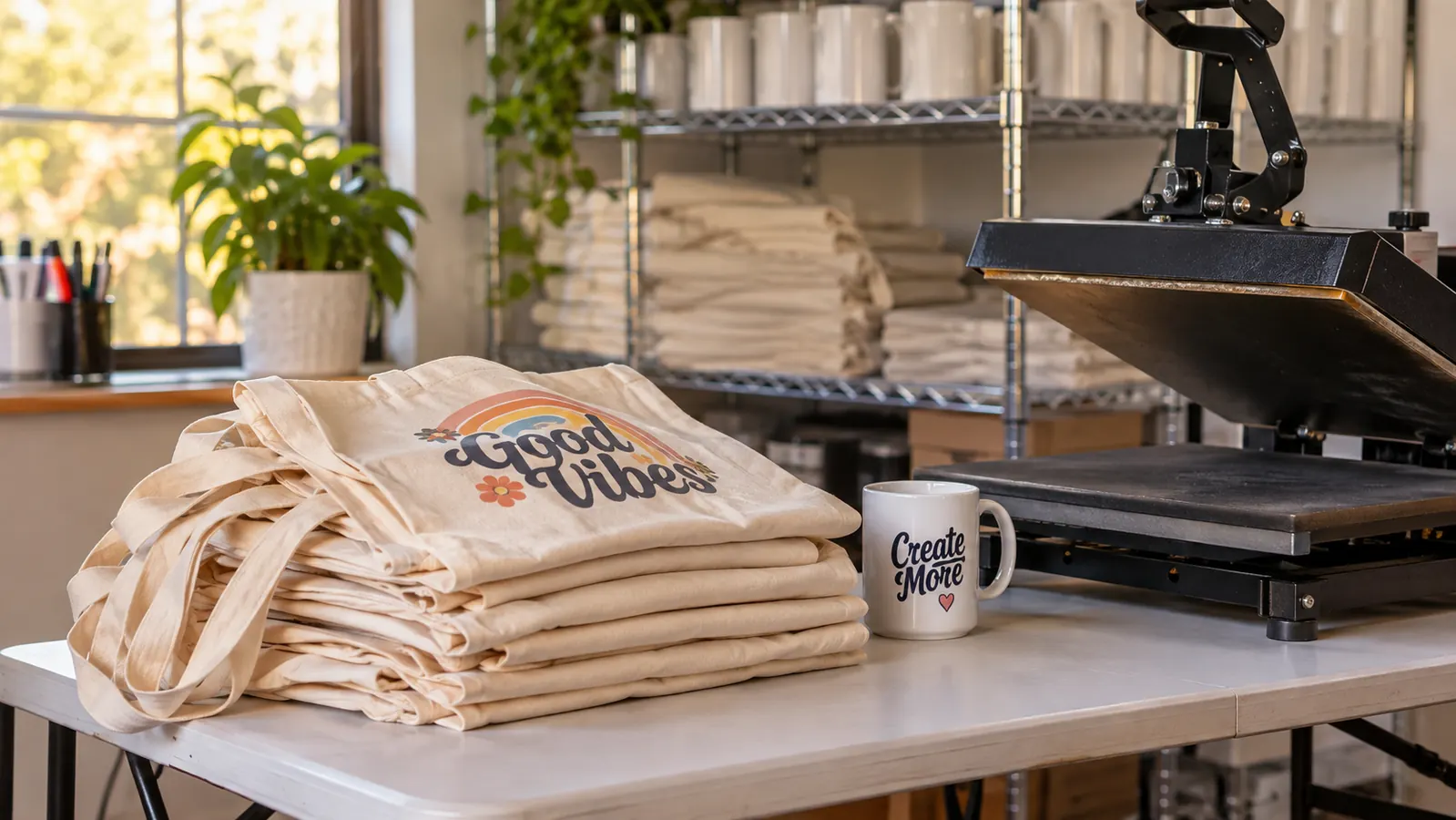
From there I moved through the rest of what the listing says the paper handles. Light colored polyester totes, which took a bright transfer with crisp edges. Ceramic and tile, including a run of coasters for the church booth. A handful of phone cases, which are the fussiest of the bunch because the surface curves and you get one shot at wrapping it. Metal ornaments at the end of the season. The paper behaved the same way across all of them, which is the highest compliment I can pay a supply. It did not become my new favorite on one blank and my enemy on the next.
The coaster run is the one I remember most, because it was the first time I pressed tile at any volume. Thirty two 4 inch tiles, one design, and I set the press to the temperature the tile supplier listed, with a sixty second dwell and medium firm pressure. What I learned the hard way is that a tile needs a slightly longer dwell than polyester does, because the ceramic pulls heat away from the sheet faster than fabric will. The first two tiles came out pale through the center of the design. I added about ten seconds to the dwell and the remaining thirty pressed evenly, and the paper did not curl or leave residue on the platen after any of them.
One practical note on volume. A 110 sheet pack sounds enormous when it arrives and feels much smaller around the third week, because test pressing eats sheets. Every blank you have never used before costs you at least one sheet to dial in, sometimes two if the surface is unusual or curved. I now keep one pack open on the table and one sealed on the shelf, which is the only inventory system I have ever managed to maintain for more than a month.
What the Spec Sheet Actually Tells You
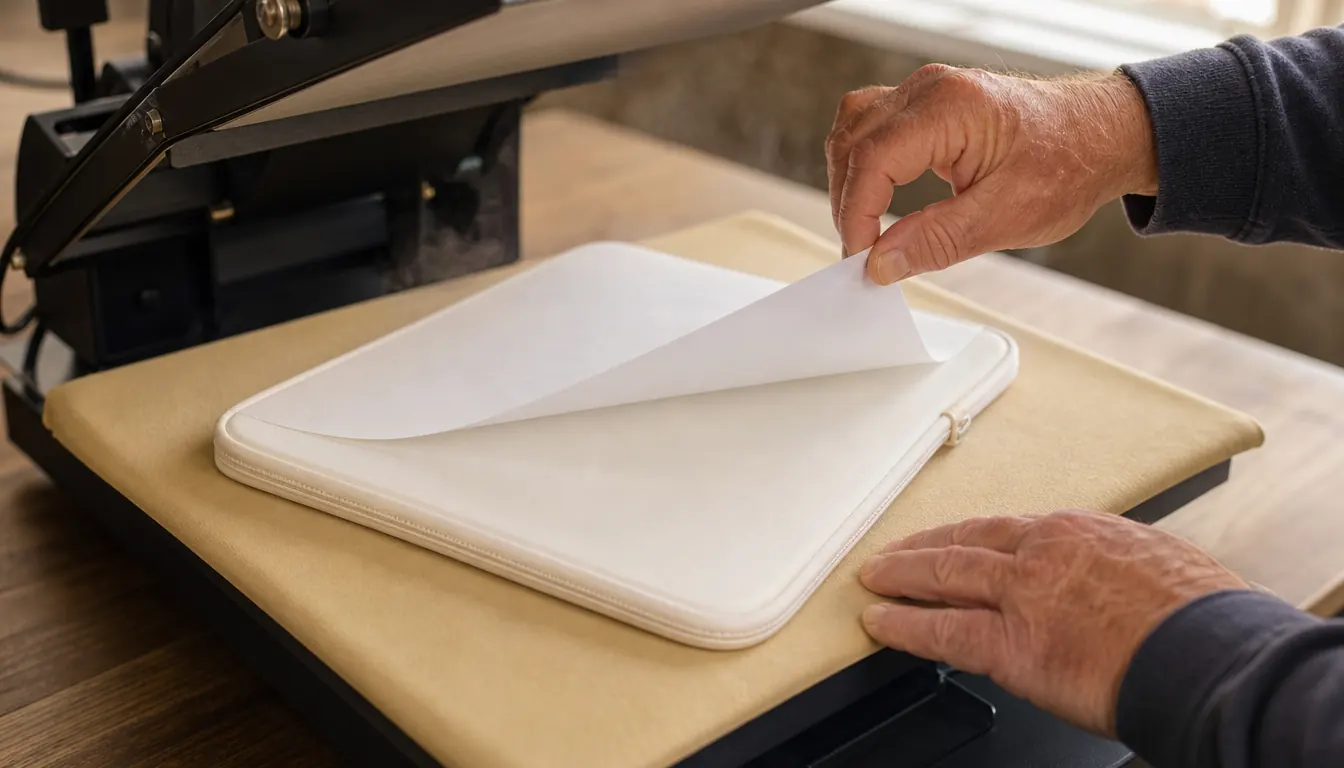
The listing describes 8.5 by 11 inch sheets, 110 to a pack, with a paper weight listed as 120 and an item weight of 125 g. It has a coated finish, and the product description calls out a high transfer rate. Coated is the part that matters most, because the coating is what holds the sublimation ink in place long enough for the press to drive it into the blank. A thin uncoated sheet releases dye unevenly and you see it as blotching on the finished piece, usually right in the middle of a large solid area where you cannot hide it.
The compatibility note is the one people skip and then complain about in public. This paper works with sublimation ink only. Regular ink will not transfer no matter what you set the press to, and I have watched two people argue with a paper for a week before discovering they had the wrong cartridge in the machine. It is also built for white or light colored polyester, material with a cotton content of 30 percent or less, ceramic and tile, phone cases and metal. Dark garments are simply not on that list, and no paper on the market changes that.
The other number worth thinking about is the size itself. 8.5 by 11 inches is the standard home printer sheet, and the printable area you actually get is smaller than that once your printer imposes its own margins, usually somewhere between an eighth and a quarter inch on each side. That matters when you lay out a design that fills the page. I keep my artwork inside 8 by 10.5 inches and I have not had a clipped edge since I started doing it. If you need a full bleed transfer you are either tiling two sheets or moving up to a larger format, and neither of those is a defect in this paper. It is just geometry you plan around.
Where It Surprised Me
The surprise was consistency across a long run. I pressed thirty tote bags for a school event over two evenings, and by the last one the transfers looked like the first. Same depth of color, same clean release, same absence of the pale edge that shows up when paper starts pulling moisture out of the air. Albuquerque is dry, which helps, but that room still gets warm and I still leave the pack open for hours at a time while I work. A pack that survives that without going wavy is a pack I trust enough to stop thinking about.
Second surprise: how little of it I lose to jams and misprints. Thin papers feed badly and thick papers fight the rollers, and this coated sheet sits in a middle range my printer has not objected to once. In a full pack I have thrown away maybe four sheets, and three of those were my fault for loading the stack crooked. That is a far better ratio than the bargain paper I bought when I started, where I lost a quarter of the pack to double feeds and smeared edges and spent more time clearing the machine than pressing.
The other thing that caught my attention was a full page solid block of color, which is where a cheap sheet gives itself away. I printed a large navy rectangle for the back of a youth jersey, the kind of design that shows every band, streak and thin patch because there is no texture to hide behind. On the bargain paper I used two years ago, a block that size came out with faint horizontal banding near the bottom of the page. On this sheet the navy went down even from edge to edge, and the jersey looked the same after four washes. I have pressed roughly a dozen solid blocks since then and have not seen banding once.
Where It Let Me Down
Here is the part the five star reviews leave out. This paper feels heavier in the hand than some competitors, and on very light polyester, like the thin performance fabric on a cheap youth jersey, that weight shows up as a slightly stiffer hand-feel right where the transfer sits. It softens after a couple of washes but it does not disappear. If you are pressing close-fitting garments for adults who care about drape, test one before you commit to a run of twenty.
It also does not forgive a cold spot. My press has a slight dip near the left rear corner, and this sheet will produce a lighter patch there before a thinner paper will, simply because it takes more heat to drive through the coating. I noticed it on a tile coaster first and then found the same faint corner on two totes. That is a press problem, not a paper problem, but it is worth knowing that this paper will tell you the truth about your equipment rather than covering for it.
And the honest limit: if your blanks are dark, cotton heavy, or a blend above 30 percent cotton, this paper cannot help you and no amount of pressure will change it. Sublimation needs a light surface and polyester or a polyester coating. Nearly every angry review of every sublimation paper online comes from somebody who tried to put a full color image on a black cotton t shirt. That is not a paper defect. It is a mismatch, and the listing says so plainly if you read past the first line.
This sheet will tell you the truth about your equipment rather than covering for it.
What I Liked
- Clean release on light polyester, ceramic, tile, phone cases and metal, with no paper ghost left behind
- Coated finish holds ink evenly across large solid areas
- Consistent from the first sheet of the pack to the last, even with the pack left open for hours
- 8.5 by 11 inch sheets, 110 to a pack, enough for a full run plus the test presses
- Feeds without jams in a normal home printer
Where It Falls Short
- Slightly stiffer hand-feel on very thin polyester than lighter papers
- Will expose a cold spot on an uneven press instead of hiding it
- Not for dark garments or anything above 30 percent cotton
- Useless with regular ink, so one wrong cartridge wastes an evening
- Test pressing burns through the pack faster than the sheet count suggests
The Mistakes I Made So You Don't Have To
My first mistake was treating the pack like a stack of ordinary printer paper. I left it open on the table for a week in a room with a fan running, and the top sheets picked up enough moisture to press visibly duller than the ones underneath. Sublimation coating is thirsty. Keep the sheets in the pack, keep the pack closed when you are not feeding it, and if you live somewhere humid, store it in a zip bag with the air pressed out. That one habit fixed a color problem I had been blaming on my ink for months.
Second mistake: pressing hotter to make up for a transfer that looked faint. Faint usually means too little pressure or too short a dwell, not too little heat, and turning the temperature up just scorches the coating onto the blank. I ruined a ceramic tile that way and had to explain to a customer why her coaster had a brown edge. Start where the blank manufacturer tells you to start, press one, and change a single variable at a time. Paper cannot rescue a scattergun approach.
Third mistake, and the one that cost me the most blanks: pressing on a surface that was not flat. A folded towel under the shirt feels forgiving and it is, right up until the transfer shifts because the fabric moved under the platen. A firm flat pad gives you a transfer that lands where you placed it. This paper releases cleanly when the pressure is even and shows you immediately when it is not, which is annoying the first time and useful every time after that.
Fourth mistake, and I still catch myself doing it: crowding the sheet to save paper. Small items like keychains and ornaments look like they waste space, so I used to lay six or eight of them on a single page and trim close to the edge. The problem is that ink migrates slightly past the printed line, and when you trim right up against it you get a faint bleed on the finished piece that you cannot feel but can absolutely see. I now leave a quarter inch of margin around every small piece and I have stopped ruining ornaments. A false economy is still a false economy.
Who This Is For
This is the right paper for someone doing exactly what I do. Small runs, mixed blanks, a home press and a table that has to be cleared before dinner. You press light polyester shirts and totes, ceramic mugs, tile coasters, phone cases and small metal pieces, and you want a sheet that behaves the same on a Tuesday night as it did on Saturday morning. If you are past the stage of blaming your supplies for everything and you are ready to actually learn your press, A-SUB will support that.
It also suits the person about to buy their first real quantity of paper and skip the cheap phase entirely. You pay closer attention to settings when the paper is not fighting you, and learning on a sheet that releases cleanly is a faster education than learning on one that ghosts every third press. I wish I had started here instead of working through three brands that all ended up in the giveaway box at the back of the shelf.
Who Should Skip It
Skip it if you are pressing cotton t shirts. The listing is clear that cotton content needs to be 30 percent or below, and a standard cotton tee is nowhere near that number. You would be better served by a heat transfer vinyl setup or a polyester blend blank, and no sublimation paper will rescue the cotton shirt. Skip it as well if you are pressing dark garments, for the same reason. Neither of those is a knock on A-SUB. It is a knock on buying paper for a job it was never built to do.
Skip it if you are running a production shop where the press never cools and every second counts. This is a fine home and small shop paper, but at high volume the arithmetic of a heavier coated stock starts to matter and a shop at that scale usually has a supplier relationship and a paper it has already dialed in. Skip it too if you refuse to test press. Nearly every complaint I have read about this paper traces back to a blank that nobody tried before running twenty more just like it.
If your press is honest, this paper will be too
8.5 by 11 inch coated sheets, 110 to a pack, made for sublimation ink on white or light polyester, ceramic, tile, phone cases and metal. The right sheet for small runs and mixed blanks.
Amazon Check Today's Price on Amazon →