
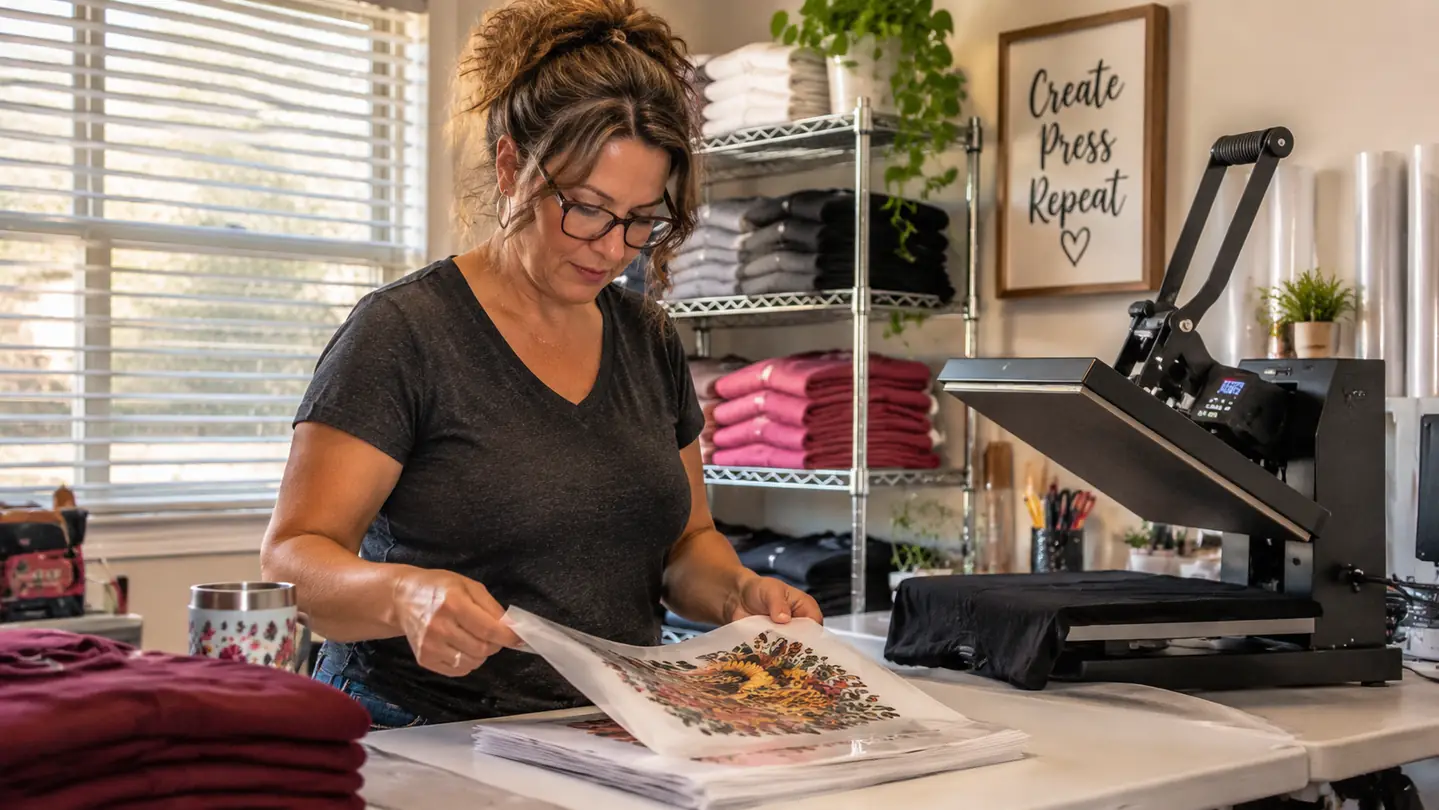
For about three months, two packs of sublimation paper sat end to end on my wire shelf, and I could not have told you which one was better. A-SUB on the left, Koala on the right, same printer, same sublimation ink, same heat press, same stack of blank polyester totes from the same supplier. Every time somebody in a craft group asked which one to buy, the thread turned into an argument between people who had pressed forty shirts and people who had pressed four thousand. So I stopped reading and ran the comparison myself, one variable at a time, in the spare bedroom I use as a press room.
Here is the version I give now. A-SUB Sublimation Paper is the pack I reorder, mostly because 110 sheets of one weight and one coated finish means I stop thinking about paper and start thinking about the order in front of me. Koala is a good paper too, and on straight polyester it lays down a slightly deeper black than the A-SUB sheet does. If you press a handful of shirts a month, either will get you there. If you are filling orders for school staff, a church festival booth, or a youth team, pack size and consistency are what decide it.
| A-SUB Sublimation Paper | Koala Sublimation Paper | |
|---|---|---|
| Sheets per pack | 110 sheets at 8.5 by 11 inches, one weight, one coating, so a team order fits in a single pack | Depends on the listing you land on, so read the count before you order |
| Paper weight | The title says 125 g and the spec table says 120, so treat it as a 120 to 125 gsm style sheet | Sold in more than one weight, which is flexible but easier to get wrong |
| Feed and curl | Same curl sheet to sheet in a standard 8.5 by 11 tray, very few jams in six weeks of pressing | Fine most days, catches more often in a dry room in my experience |
| Ink release on full bleed | Coated finish lets go cleanly, little ghosting at the edges of a tote panel | Good release overall, slightly more ink left on the sheet under heavy coverage |
| Colour depth on polyester | Clean and accurate, blacks read a touch cooler on the table | Deeper blacks and richer mid tones in a direct side by side |
| Small test quantities | One pack size, so testing the paper means committing to 110 sheets | Easier to find in small lots when you want to try a new blank first |
| Blank compatibility | White or light colored polyester, cotton content 30 percent or less, ceramic, tile, phone cases and metal | Similar range, but confirm the manufacturer's stated limits on each listing |
Read that table the way I meant it. A-SUB takes more rows because it is the paper I buy in bulk and therefore the one I have the most data on, not because Koala is a bad sheet. Where Koala wins, it wins honestly, and I say so below.
Where A-SUB Wins
The first thing you notice is the sheet count. This pack is 110 sheets at 8.5 by 11 inches, which on a busy weekend is the difference between finishing a team order and driving to the store on a Saturday morning. Koala quantities move around depending on the listing, so I always double check what is actually in the pack before I buy. When I am pressing twenty shirts for a youth team, I do not want to open a fresh pack halfway through the back row.
The second thing is consistency inside the pack. Every sheet in that stack behaved the same way in my printer, fed from the same tray, curled the same amount, and came off the platen with the same release. Sublimation is unforgiving about variance. A sheet that curls a little differently will catch, and a caught sheet means a jam, a wasted print, and a transfer with a pale stripe through the middle of the design. I have thrown away fewer prints from this pack than from anything else I have run.
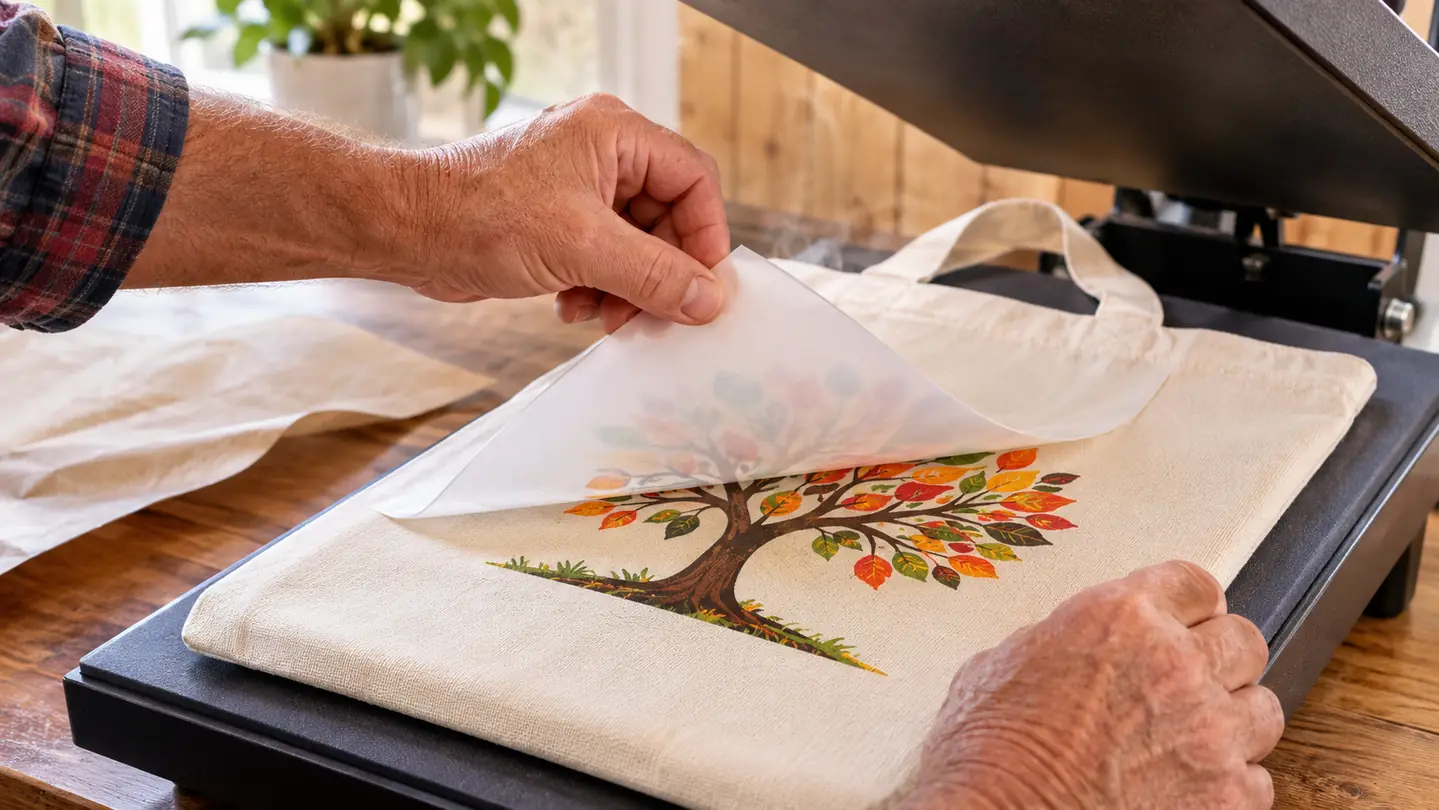
Third, the paper is listed as high transfer rate on a coated finish, and that matches what I see on the press. Use the same time and temperature I use for any 120 to 125 gram sheet, press the tote, peel, and very little ink stays behind on the paper. That matters on full bleed prints, the ones where the design runs to the edge of a tote or a shirt panel. Paper that holds onto ink gives you a washed edge and a faint ghost of the image left on the sheet. This one comes away clean.
It also covers the range of blanks I actually press: white or light colored polyester, cotton blends up to about thirty percent cotton, ceramic, tile, phone cases and metal. That comes from the manufacturer's own listing, and it lines up with what has worked and what has not in my room. The cotton limit is real. A fifty fifty blend gives you a faded, vintage looking transfer, which some customers want and most do not.
One more, and it sounds small until you have lived it: the pack stores well. I reseal the bag, stand it on the shelf, and pull out only what I am about to press. Six weeks in, the last sheets printed the same as the first. A stack that takes on moisture from the air is a stack that wrinkles under the press, and I have lost good blanks that way.
Where Koala Wins
Koala earns its reputation. On straight polyester, the blacks came out a shade deeper than the A-SUB sheet in my side by side, and the mid tones on a photo print looked a little richer. If your work leans toward photographic designs, a portrait for a memorial shirt, a detailed logo with gradients in it, you will notice. It is not a dramatic difference, and the person wearing the shirt could not tell you which paper it came from. But I can see it on the table, so I am telling you.
Koala also wins the small pack problem. When I want to test a new blank or a new ink batch, I do not want to break open 110 sheets to find out. Smaller quantities are easier to find with Koala, and for someone pressing six shirts a month who wants to try two papers before committing, that is a genuine advantage. Buying a big stack of the wrong paper is how a hobby turns into a shelf of regret.
The last place Koala wins is trust, and I will not pretend otherwise. It is a paper people already know, with a long trail of reviews behind it. If you are nervous about trying a brand for the first time, a familiar name is easier to say yes to. A-SUB is not the only correct answer here. It is the answer that fit my order volume, and your volume may not look like mine.
The 110-sheet pack that kept me out of the car on a Saturday morning
8.5 by 11 inches, 110 sheets to a pack, one coated finish from the first sheet to the last. Works with sublimation ink only, so check your cartridges before you print.
Amazon Check Today's Price on Amazon →How I Tested Both Papers
One printer, one set of sublimation ink, one press, one box of blanks. The paper was the only variable, which is the only kind of comparison I trust. I ran the same design, a two color school mascot with a gradient in the lettering, on the same 100 percent polyester crewneck, at the same temperature, for the same time, at the same pressure, and I peeled both at the same point.
My standard settings for polyester sit around 385 to 400 degrees Fahrenheit for 55 to 60 seconds at medium pressure, with butcher paper over the top and a short pre press of the shirt first to pull the moisture out. I am not going to tell you those are the only numbers that work, because every press runs a little hot or a little cold. Using the same numbers on both papers is the whole point. Change the temperature between tests and you are no longer testing paper.
I also counted the failures, which almost nobody does. Over six weeks I logged every jam, every ghosted print, every edge that came out light. That log is the reason I say A-SUB feeds better. It is not a feeling about a brand. It is a count of ruined sheets, and a ruined sheet costs more than the paper it was printed on.
Same printer, same ink, same press, same shirt. The paper was the only variable, and a jammed sheet costs more than the sheet did.
What Actually Changes on Press Day
Three things separate one sheet from another, and none of them show up in a product photo. Curl, release, and how much ink the coating will take before the image stops being crisp.
Curl is the one that bites beginners. Paper pulls moisture out of the air, and in an Albuquerque summer with a fan in the window that happens fast. A sheet that has taken on moisture buckles as it heats and you get a wrinkle across the middle of the print. Keep the pack sealed, pull out only what you are about to press, and that one habit will do more for your hit rate than any change of brand.
Release is the second. The coated side is the side you print on and the plain side is the side that touches the shirt. Get it backwards and you press a blank shirt and ruin a sheet at the same time. On the A-SUB sheet the coated side is the one that feels slightly slicker, and after four years my fingers find it without my having to think. Paper that releases badly leaves ink on the sheet and the shirt comes out dull, and it shows worst on full bleed designs, which is exactly where you cannot hide it.
The third is ink handling. The listing is blunt that this paper only works with sublimation ink and that regular ink does not work. That sounds obvious until you are three shirts into an order and realize the printer has the wrong cartridge in it. Sublimation ink turns to gas at press temperature and moves into the polyester. Regular ink just sits there and looks like a faint, sad photocopy.
The Mistake That Ruins Either Paper
The mistake that ruins both of these papers is pressing too hot for too long. People see a light transfer, so they add twenty seconds, then ten more degrees, and the polyester starts to scorch and the ink starts to spread. Then the paper gets blamed. I ruined four shirts learning that. Now I press one test shirt with a new pack, peel it, look at it in daylight, and only then run the rest of the order.
The second mistake is skipping the pre press. Polyester holds moisture and sizing, and pressing it dry before the transfer goes down removes both. Skip it and that moisture comes out during the transfer, under the paper, and you get uneven patches that look like the design is sweating. Sixty extra seconds at the front end, and no ruined blank.
What I'd Tell a Beginner
Buy one pack, learn your press, and stop shopping. The person who owns four kinds of paper and cannot set a consistent temperature is worse off than the person who owns one kind and knows it cold. I say that as someone who owned four kinds of paper.
Then write down your settings on a sticky note and keep it on the press. Temperature, time, pressure, and whether you peeled hot or cold. When a print comes out wrong three weeks later, that note is the only thing that will tell you what changed. It is the least interesting advice in this article and the advice that saved me the most blanks.
Who Should Buy Which
If you press for other people, buy the A-SUB pack. One hundred and ten sheets of one weight at 8.5 by 11 inches, consistent from the first sheet to the last, on a coated finish that lets go of the ink. That is what a repeatable order looks like. It is the pack that stays on my shelf and the one I stop thinking about, which is the highest compliment I can pay something I throw away after every job.
If you are still testing designs, pressing a few shirts a month, or you want to compare papers before committing, buy a small Koala pack first and see how your press behaves with it. Then buy the larger A-SUB pack once your settings land. Small first, big second, and you will never end up with a shelf of paper you do not like. Neither purchase is a mistake. Buying 110 sheets of anything before you know your own press is.
One honest note before you go. Nobody outside your house will ever know which paper is on a finished shirt. They will know if the print is crisp, if the edges are clean, and if the design survived the wash. That is where your attention belongs, and either of these papers can get you there with a little practice.
One pack, one weight, 110 sheets, and you can stop thinking about paper
Listed at 8.5 by 11 inches with a high transfer rate coated finish, for white or light polyester, cotton blends up to 30 percent, ceramic, tile, phone cases and metal. Sublimation ink only.
Amazon Check Today's Price on Amazon →