
The first pack of A-SUB sublimation paper I ordered sat on the wire shelf in my press room for eleven days before I opened it. I had already lost a stack of blanks to a cheaper pack that curled, jammed, and left half an image behind on the sheet. So I was in no hurry to lose more. Then I loaded one sheet, pressed a school-spirit shirt for a coworker, and peeled the paper back in a single clean pull. The image was on the shirt. All of it. That was four months ago, and I have been buying the same pack since.
Since then I have run A-SUB through somewhere near three hundred and fifty sheets: staff shirts for the front office, a batch of tote bags for a church festival booth, a set of youth jerseys for a team out in Rio Rancho, and a slow trickle of tumblers and phone cases for the small shop I keep online. Not every sheet went well. Some of that was the paper. Most of it was me. What follows is the honest version of four months of evenings and weekends in a spare bedroom in Albuquerque, including the parts where I set the press wrong and quietly blamed the paper for it.
The Quick Verdict
Releases clean and behaves the same sheet to sheet on light polyester, blends under 30 percent cotton, mugs and cases. It curls if you leave it out in dry air, and it will not rescue a bad press setting.
Amazon Check Today's Price →The pack I reorder instead of shopping around again
8.5 by 11 inches, 110 sheets, coated for sublimation ink only. If your press is already dialed in and your blanks are light polyester or a cotton blend at or under 30 percent, this is the sheet that stops wasting them.
Amazon Check Today's Price on Amazon →How I've Used It
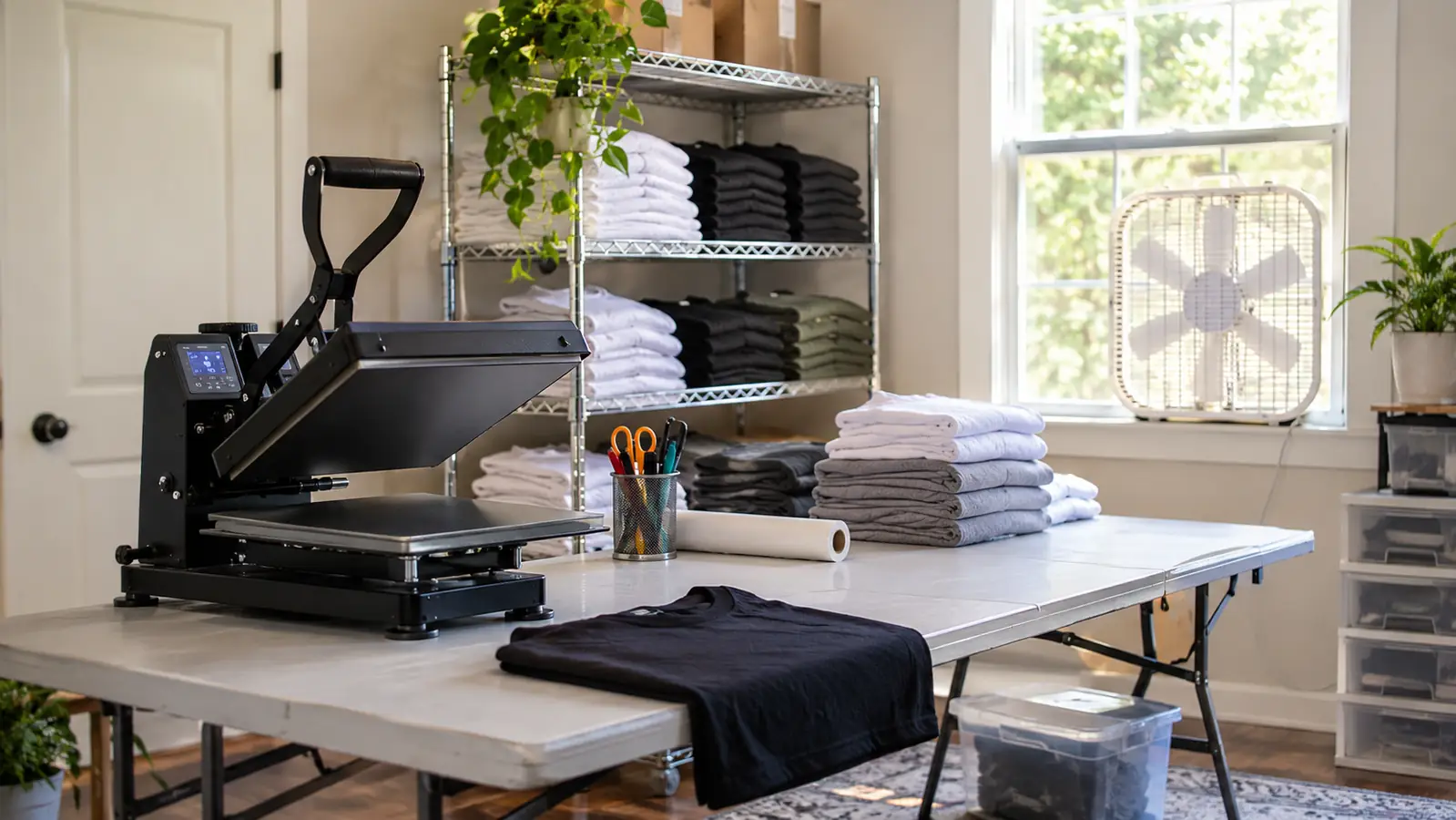
My setup is one long folding table in the spare bedroom, a heat press on the left end, a fan in the window because Albuquerque summers do not negotiate, and a wire shelf behind me stacked with blanks. I have been pressing for about four years, starting the way a lot of people start, with a household iron on the kitchen counter and a lot of scorched pillowcases. Paper is the part of this hobby I used to think about least. It turns out paper is the part that quietly decides whether a shirt goes in the bag or goes in the reject pile under the table.
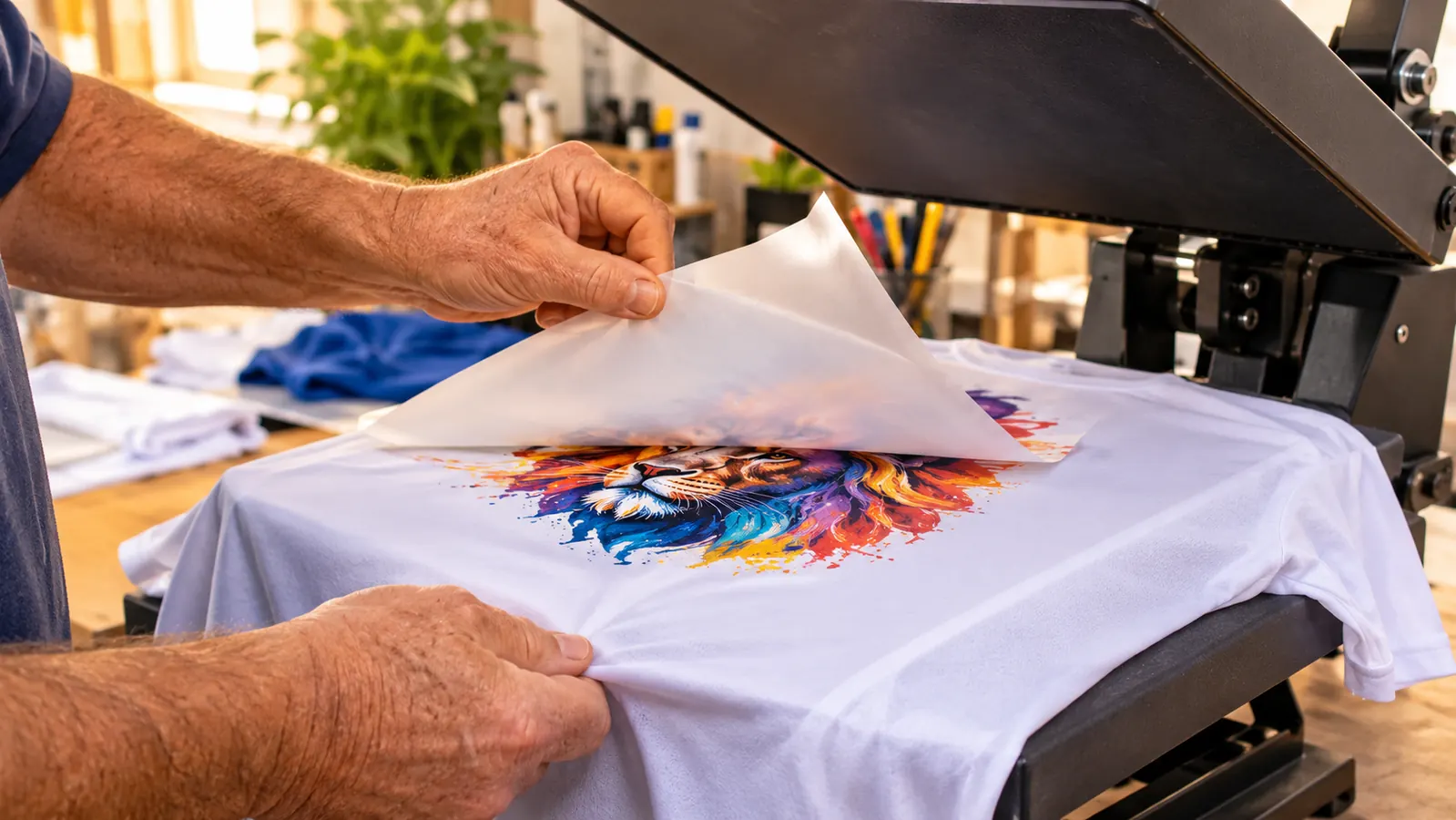
My setting is 385 degrees, sixty seconds, medium pressure. I peel hot for polyester and let blends cool a few seconds first. That is my press and my routine, not a promise about yours. What A-SUB did for me was remove the variable I could not control. With the flimsier sheets I used before, the coating would sometimes release unevenly near the edges, which shows up as a faint fade on the outer inch of a design, usually on the one shirt I needed to be perfect. Across roughly three hundred and fifty sheets of A-SUB I have had two sheets with a visible edge issue. Both came from a stack that sat open for weeks in February air.
The other thing I noticed, and it matters more than it sounds like it should, is consistency between packs. When you are pressing ten staff shirts in one evening, you do not want to re-learn your press on sheet nine. My second and third packs behaved the same as the first, same release, same color density, same tack when I laid a design down. That is the unglamorous reason I stopped shopping around.
The night that sold me was a Thursday in September, fourteen shirts for a volleyball banquet, one design with a lot of small lettering across the chest. I started at seven and had them folded and bagged by ten, and I never once stopped to re-print a sheet because a release went bad. Three hours for fourteen shirts is not fast by anybody's standard. But it was steady, and steady is what I need when I am tired, the fan is running, and the design has small type that will look terrible if a sheet shifts a quarter inch.
My teenage nephew helps me fold and bag on the nights before a booth, and he has a good eye for the ones I should not sell. In four months he has pulled two shirts. Two. With the previous paper it was closer to one in every twelve, and I had stopped counting because counting was depressing.
What 125g Paper Actually Feels Like in the Hand
The listing carries a 125g figure on the label and a 120 paper weight in one of the detail fields, which is the kind of small contradiction that makes you squint at your screen. What matters in your hand is that it is stiff enough to feed without curling into the printer and thin enough to sit flat against a shirt. I run an Epson EcoTank converted to sublimation ink, and I have had exactly one misfeed with this paper in four months, caused by me loading the stack crooked while talking on the phone.
I also learned to fan the stack before loading it. Not because the sheets stick together, they do not, but because the top sheet picks up a slight wave from the one under it if the stack has been sitting in a bag for a while. Fan them, square them against the table edge, and drop them into the tray. I have run a hundred and ten sheets through the same converted printer and the only variable that ever changed was how carefully I loaded it.
If you have used a thin bargain sheet, you know the difference the second you pick one up. Thin sheets flop, they take a wave from the printer rollers, and they want to shift when you lay them down on a blank. The coated finish on this one holds its shape long enough to position a design and tape it. That matters more than any number printed on the box, especially on a full-front print where a quarter inch of drift is visible to anyone who looks at the person wearing it.
One thing the listing says plainly and I will repeat because someone always learns it the hard way: this paper works with sublimation ink only. Regular ink will not transfer, no matter what you set the press to. A friend at the school tried it with her everyday desktop ink and could not understand why her image came out of the press blank. That is not a flaw in the paper. That is the process.
Transfer Results on Polyester, Blends and Hard Blanks
The listing says white or light colored polyester, cotton content at or under 30 percent, plus ceramic, tile, phone cases and metal. I have tested all of those except tile. Light polyester takes color the way you want it to, bright, and it survives the wash cycle on cold inside out. My 50/50 blend staff shirts come out a touch softer in the blacks than a full poly tee, and that is the blend doing it, not the sheet.
On hard blanks I have done ceramic mugs, a handful of phone cases, and a set of metal ornaments for the church booth. A mug wrap needs a tight fit and the paper has to conform around the curve without cracking at the seam, and these sheets handle that without complaint. I did lose one phone case to a lifted corner because I got lazy and did not tape the edges down. Tape your edges. That advice cost me a case and a customer's patience.
The mugs were the surprise. I bought a dozen white ceramic mugs from a wholesale place over on the west side and pressed them in two rounds of six, and every single one came out even around the curve with no pale band where the wrap met near the handle. My first attempt at mugs, back on the old paper, gave me three that looked sun faded down one side. With these sheets I got twelve out of twelve, and I have not had a bad mug since.
Where it struggles is anything with a high cotton count. I tried a 60/40 shirt for a family member because she loved the color, and the image washed out to a pastel after two washes. That is a substrate problem and no sheet of paper fixes it. If your blanks are mostly heavy cotton, you are in the wrong process, and buying a different paper will just cost you time before you figure that out. If you are weighing this against Koala, the two behave differently on blends, and it is worth reading a direct side-by-side before you commit to a case.
Curl, Storage and the Dry Air Problem
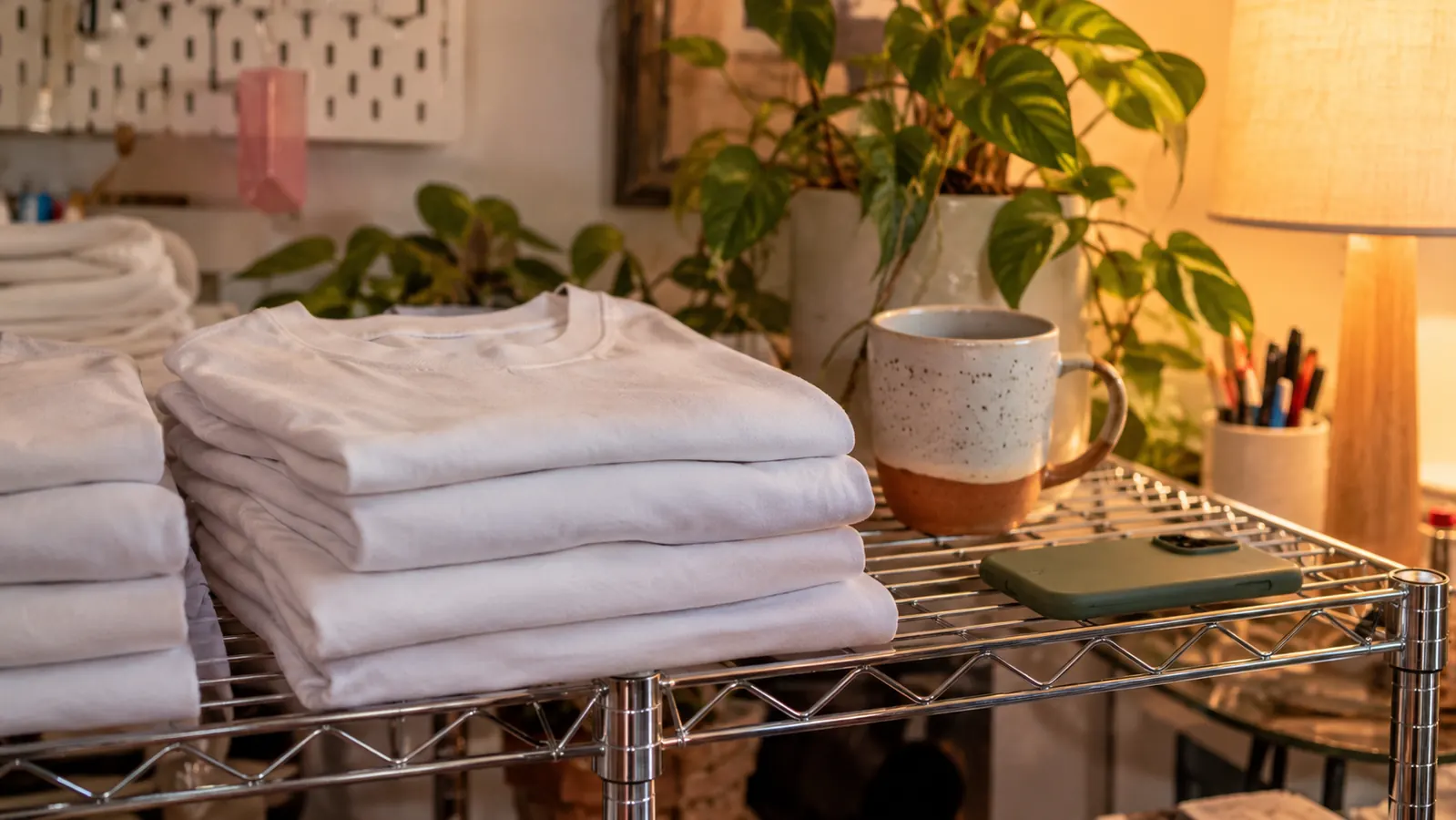
Here is my one real complaint. New Mexico air is dry enough to crack a lip, and coated paper does not love it. The box is not resealable, so once you open it you are on your own for keeping the stack flat. I keep my open sheets in a gallon zip bag with the air pressed out and the bag lying flat under a spare cutting mat. When I left a stack out on the table overnight in February, the corners lifted and I fought the printer for the better part of a week.
What I tried first was a binder clip on the open box with a heavy book on top. That held for about a week, and then the top twenty sheets had taken a set, and no amount of weighting them flat got the curl out. Once coated paper has a memory of a bend, it keeps it. The zip bag works because it keeps the dry air off the stack in the first place, instead of trying to flatten the damage afterward.
The fix is cheap and boring. Bag the open stack, store it flat, and if a sheet has been sitting out and looks like a potato chip, do not feed it and hope. Print a fresh one. Wasting a sheet costs you a few cents. Wasting a shirt costs you a blank and twenty minutes and your mood for the evening. If you want the longer version of why sheet condition changes your results, the piece on why paper quality matters walks through it in more detail than I can here.
The Mistakes That Were Mine, Not the Paper's
I blamed this paper for a run of washed-out tote bags in month two. Then I checked my press and found I had bumped the temperature down while pressing a thin blank and never turned it back up. Sixty seconds at the wrong temperature gives you a faint, dusty-looking transfer that looks exactly like bad paper. It was not bad paper. It was me, pressing at a setting I had set three days earlier and forgotten.
The second mistake was pressure. I run medium, and when I first moved to this paper I lightened it because the sheet felt stiff and I was worried about press marks. Light pressure leaves gaps between the sheet and the weave, and gaps show up as a mottled patch in the middle of a design. If a transfer looks patchy, check pressure before you blame the coating. Third mistake, and the one I am least proud of: pressing a shirt with a wrinkle in it and expecting the paper to hide it. Nothing hides a wrinkle. Press your blank first.
The reason I list these is not to be hard on myself. It is that most of the bad reviews I read before buying described problems that sounded like settings, storage, or substrate. The paper is a consistent product. The variables around it are where things go sideways, and there are more variables than anyone tells you when you start.
What I Liked
- Releases clean and in one piece, with almost no edge fade across roughly 350 sheets
- Behaves the same from pack to pack, so you are not re-learning your press mid-run
- Stiff enough to feed without curling and holds position while you tape a design
- Handles ceramic mugs, phone cases and metal blanks without cracking at the seam
- 110 sheets to a pack, which lasted me most of a season of weekend orders
Where It Falls Short
- Curls at the corners if left out in dry air, and the box does not reseal
- Only works with sublimation ink, so a converted printer is non-negotiable
- No help at all on high-cotton blanks, which are simply the wrong substrate
- 8.5 by 11 only, so full back prints on larger adult sizes need piecing
Two edge issues in roughly three hundred and fifty sheets, both from a stack left open in February air. That is the entire complaint list.
Who This Is For
This is for the person with a converted printer and a press already sitting on a table, making shirts for a team, a school staff, a festival booth, or a small shop that trickles in orders on weeknights. You are pressing light polyester and blends at or under 30 percent cotton, you are doing mugs and cases and the occasional metal ornament, and you want a sheet that behaves the same every time so you can stop thinking about paper and think about design. If you are at the stage where you buy blanks in small batches and press after dinner, this pack will last you a long while, and the consistency is the whole reason to pay attention to it.
Who Should Skip It
Skip it if your blanks are mostly 100 percent cotton or high-cotton blends. The listing is upfront about the 30 percent ceiling and it means it, and no amount of fiddling with temperature will push a cotton shirt into taking a sublimation transfer properly. Skip it if you need a large format sheet, because this is 8.5 by 11 and a full back print on an adult XXL will need to be pieced or sized down. Skip it if you have not converted your printer to sublimation ink yet, since the paper is useless with regular ink. And skip it if you want a resealable box, because you are not getting one, and you will want a zip bag on hand before your first pack arrives.
One less variable between you and a clean pull
110 sheets of 8.5 by 11 coated sublimation paper, consistent pack to pack, for light polyester, blends under 30 percent cotton, mugs, cases and metal. Bag the open stack and it will treat you right.
Amazon Check Today's Price on Amazon →