
The box arrived on a Thursday and sat in the hallway for two days because I was nervous about plugging it in. That is the honest start of this review. Before the Fancierstudio 15 by 15 came into my house, I had been pressing shirts with a household iron, a folded towel and a lot of hoping.
Four years later I still use the same machine and I still recommend it to people who ask. But I want to be straight about why. Nobody's shirts got better because of a press. They got better because the press made the same shirt come out the same way twice, which is a smaller and far more useful promise than the one most reviews make. What follows is the version I wish I had read before I bought: the numbers on the listing that disagree with each other, the parts of the machine that fight you, and the people who should buy something else.
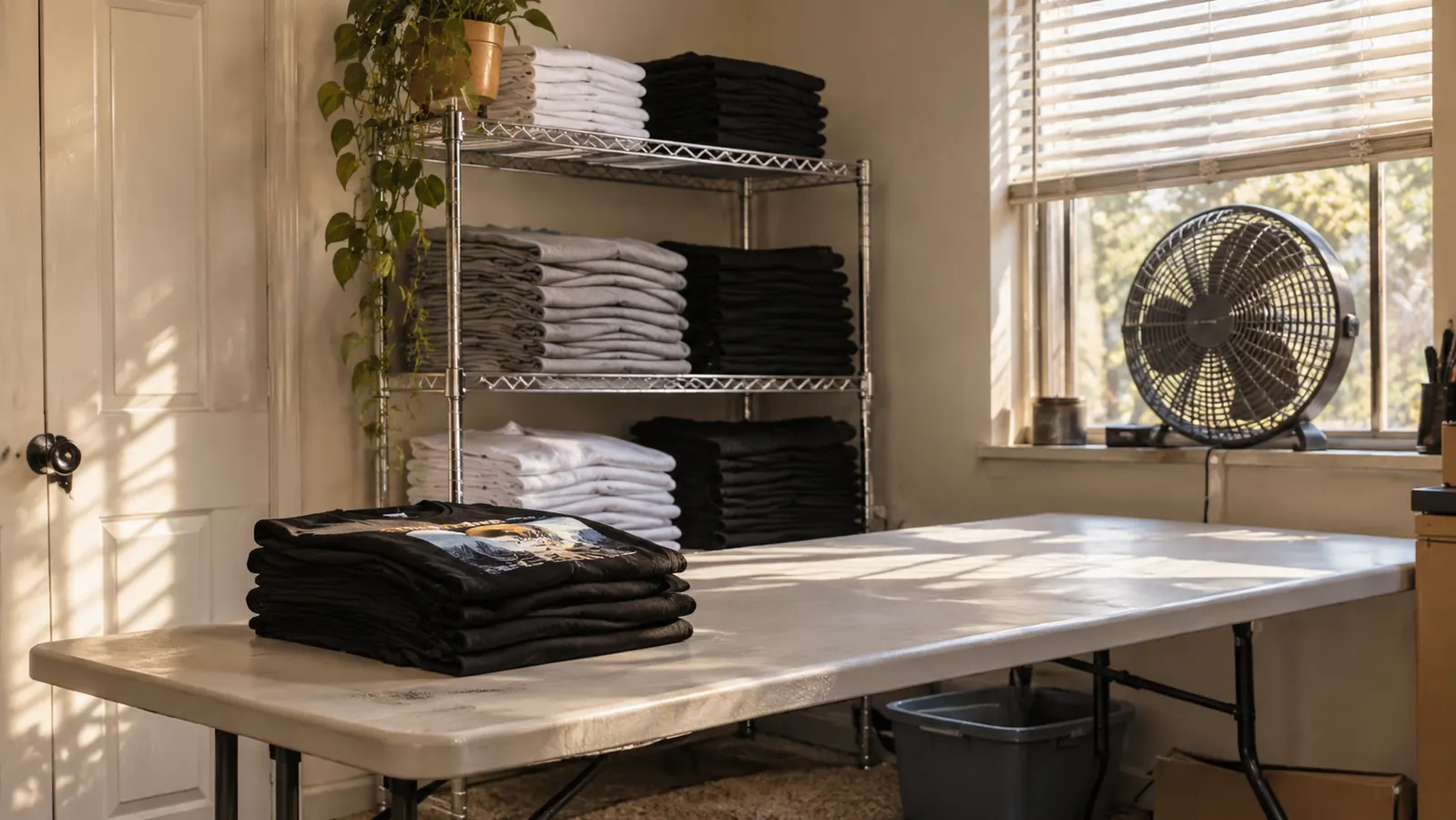
My setup is one long folding table in the spare bedroom, a wire shelf of blanks behind me, a fan in the window and a house rule that nobody opens the door while the light is on. That is the whole shop, and whatever this Fancierstudio is good at, it has to be good at it in a room that also holds a bed and a bookcase.
The Quick Verdict
A plain, capable 15 by 15 flat press that does what the listing says once you learn its habits. The three month warranty and the two contradictory temperature lines are what I would want a buyer to read twice.
Amazon Check Today's Price →Four years in and it is still on my table
A 15 by 15 flat platen, 1800 watts and electronic time and heat control. If that is the shape of press your work needs, this one has held up in my spare room. Current price and buyer reviews are below.
Amazon Check Today's Price on Amazon →How I Ended Up With a Heat Press in the Spare Bedroom
I ruined a youth soccer jersey in 2021 with an iron and a bad attitude. The number took a hot spot through the middle of it and the jersey went in the bin. I bought a press the following week, and I bought this one for the least interesting reason available: the number of ratings. It was sitting at roughly nine thousand five hundred reviews with a 4.6 average, and a machine that a lot of people have already argued with felt safer than a cheaper one nobody had.
I had tried the iron properly first, and I want to be specific about how it failed, because that failure is the reason I am writing this at all. The method was a bath towel folded twice on the kitchen counter, a cotton setting, a sheet of parchment over the transfer and steady pressure for a slow count of forty. It worked on the first shirt. It worked on the second and third. On the fourth it did not, because I had gotten comfortable by then and stopped counting out loud. The number lifted at one corner two washes later. That is the whole story of an iron: it does not fail loudly on the day, it fails quietly three weeks on, usually in front of somebody who paid you. What I wanted was not more heat. I wanted the same heat, for the same length of time, in the same place, every single time, and no household iron on the market will give you that.
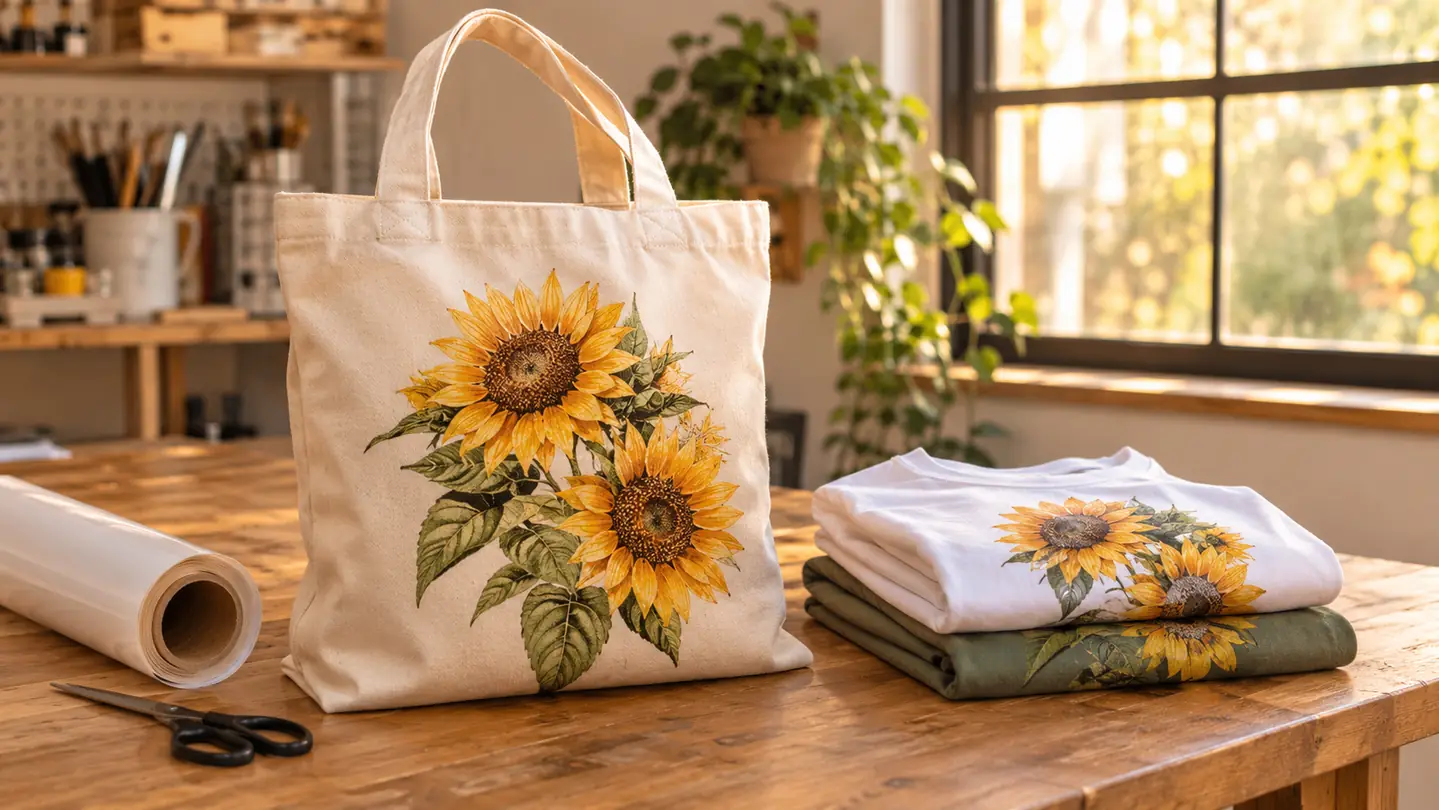
What I actually press has not changed much since. School staff shirts for the office where I work during the day, a stack of totes for the church festival booth every October, numbers and names for two youth teams, and a slow trickle of orders from a small online shop. Bags and mouse pads, which the listing names as intended uses, come up more often than you would guess.
None of that is heavy production and this review is worth less if I pretend otherwise. This is an evenings and weekends machine in a spare bedroom. It has never been asked to run eight hours a day, and if you need that, the honest answer is that I cannot tell you how it behaves.
What the Spec Sheet Actually Tells You, and Where It Argues With Itself
Start with the electrical side, because it is what will actually stop you. The listing gives 1800 watts at 110 volts. Do the division and you land around sixteen amps, which is more than the fifteen a standard bedroom circuit is rated for. In my house that meant not sharing the outlet with the space heater and not running the iron on the same circuit at the same time. The first time I tripped the breaker I thought the press had died. It had not. It wanted a circuit of its own.
Before the press arrived I did the thing I now recommend to everyone, which was to open the breaker panel and read the little handwritten label inside the door. My spare bedroom shares a fifteen amp circuit with the hallway bathroom, and the outlet behind the bookcase is the only one on it. My first fix was the easy one: a heavy extension cord run to the kitchen, which worked and also put a cord across a walkway that people tripped over twice in one evening. My second fix was to slide the folding table about two feet to the left so it sat against the wall with that outlet, and to write PRESS on a strip of masking tape under the breaker switch. That tape is still there four years later. Anything else in that room plugs in somewhere else now, including the little space heater I used to run in January.
The temperature spec is where the listing argues with itself, and it is worth knowing before you buy. One line gives the range as 0 to 699 degrees Fahrenheit. Another line in the same product details gives the upper temperature rating as 500 degrees Fahrenheit. Those are two different claims. In practice it does not touch my work, because a cotton shirt presses well under 400 and this machine spends its life nowhere near either ceiling. But it tells you how much care went into the listing, and you should calibrate your expectations of the documentation to match.
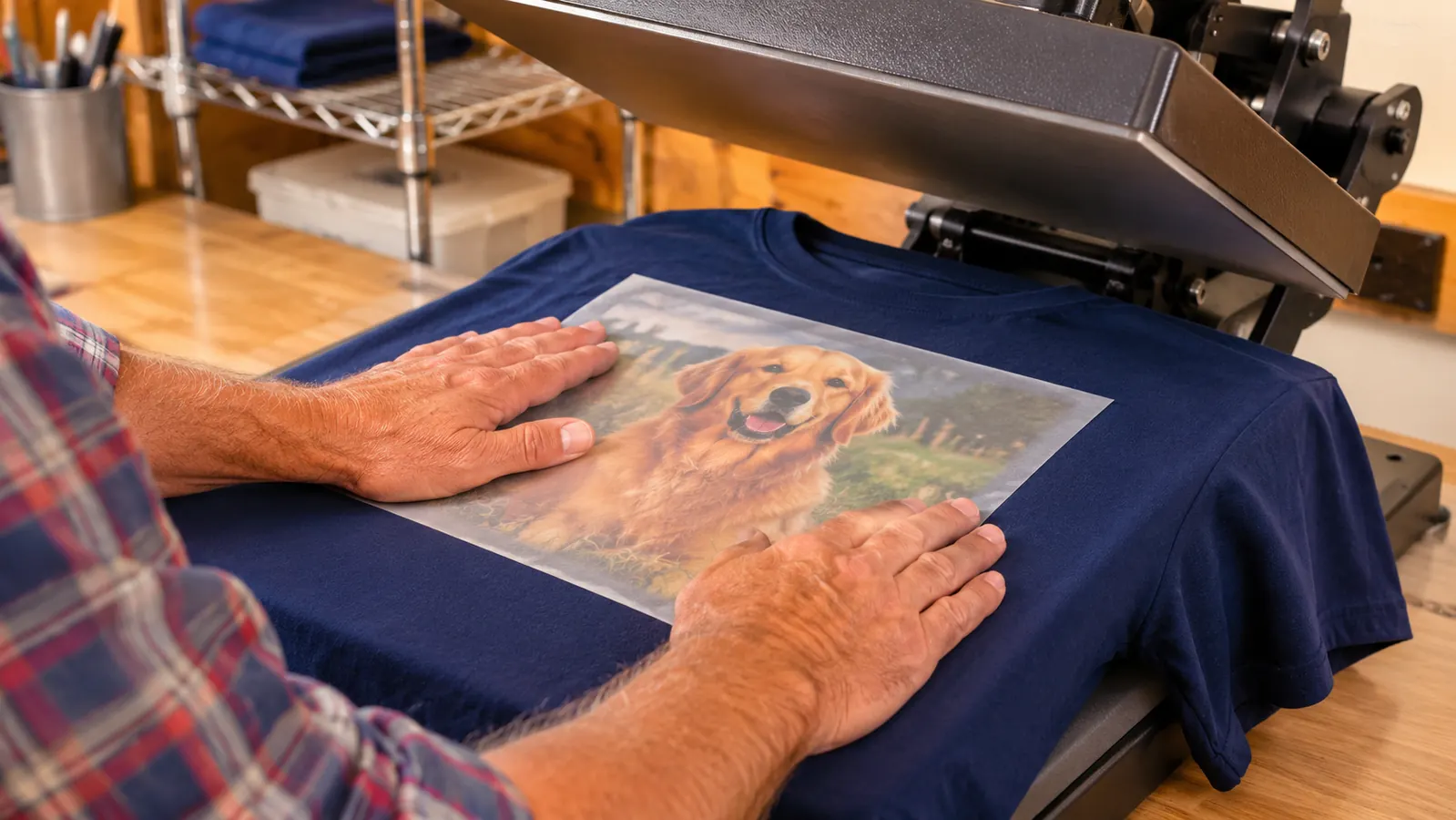
The rest of the sheet is plain and accurate. Time runs from 0 to 999 seconds under electronic control, so you set a number, it counts down and it beeps. The platen carries a Teflon coating, which means stray adhesive wipes off instead of baking on. A 15 by 15 sheet is included. The unit measures 33 inches long by 23 inches wide by 20 inches high, and that footprint is the number I would tape to the wall before ordering anything.
The warranty is three months, and I am not going to dress that up. Mine is years past the window and has never needed it. That does not make the coverage longer.
What Nobody Tells You About a 15 by 15 Platen
A 15 by 15 platen is bigger than most people need and smaller than they expect. It takes a full front print on an adult tee with room to spare, a left chest logo, a tote body, a mouse pad, a modest back print. What it will not do is a large back print and a sleeve at once, and it will not wrap a tumbler or a cap without a different machine. I bought a separate tumbler press two years in, and I would tell anyone starting out to plan for that if drinkware is on the list. The listing names bags, mouse pads and t-shirts, which is an accurate description of the job.
Here is the thing nobody says out loud. Most of your bad presses in the first month will have nothing to do with the machine. They will be about pressure and edges. The rim of any platen behaves differently from the middle of it, and if a design sits close to the edge you will see it in the finished shirt. My fix was boring. I stopped putting anything within an inch of the edge and my failure rate dropped to almost nothing. That is a habit, not a feature, and no press at any price sells it to you.
The second thing nobody says is that the press does not know what temperature your shirt is seeing. The controller reports one number, and where the sensor sits inside the assembly is not something the listing explains. I keep an inexpensive infrared thermometer on the shelf and spot check the platen at the start of a run. It reads a little off the displayed number and always has. Once I knew the offset I stopped worrying, but I was glad to know it before I pressed a hundred tote bags for a festival.
October is the real test every year. The church festival booth is the first Saturday of the month, and last year that meant sixty tote bags in the three evenings before it, which is the most this machine has ever been asked to do in a single week. I pressed them in batches of twelve with the fan going and a glass of water on the shelf, and I stopped between batches to check the platen with the thermometer because the reading had drifted slightly by the end of a long session. Fifty-eight came out clean. Two had a faint edge mark where I got careless about placement on the last batch of the night. I sold both at a small discount and told each buyer exactly what the mark was. That is a fair picture of the machine. It does not ruin things, but it will not save you from yourself either.
The third thing nobody says is effort. Bringing the platen down and holding it there is fine for ten shirts and noticeable for forty. My forearm knows when it is a forty shirt night. That is the shape of the machine rather than a defect, and the fix is to press in batches with a break in the middle.
The press is not why the shirt looks good. The press is why the twenty-fourth shirt looks exactly like the first one.
The Parts That Annoyed Me After Four Years
In the first month I kept a notebook, which sounds fussy and was the most useful thing I did all year. Every press got a line: the date, what it was, the temperature I set, the seconds, and one word for how it came out. Twenty-two entries. Four were bad, and three of those failed for the same reason, which was that I was peeling a transfer before it had cooled enough to come away cleanly. The notebook cost me nothing and it turned a vague feeling that things sometimes went wrong into one specific thing to stop doing. I still keep one, though now it is a page a week instead of a page a night.
The startup wait. A cold press takes time to come up, and the number on the controller climbing is not the same thing as the platen being ready. I give it a few extra minutes past the point where the reading settles and I check with the thermometer. Rushing that step is how I got my one and only scorched tote. The sheet that came in the box did not mention any of it, which is normal for this class of machine and still worth knowing.
The heat. A press pulling 1800 watts in a bedroom is a space heater that also makes shirts. By the third hour the room is unpleasant, the fan is on high and the door is cracked. That is physics rather than a flaw, but the listing will not prepare you for it. If you pictured a cool little craft corner, picture a warm one.
And the three month warranty again. I said it once and I will say it a second time, because it is the one number on this listing I would change. A warranty is a statement of how long the seller expects to hear from you, and three months is a short statement.
Where It Genuinely Delivers
For all of that, here is what it does well, and it is why the Fancierstudio is still on my table instead of in a closet. It repeats. Give me twenty-four shirts, the same paper, the same setting and the same countdown, and the last one will look like the first. Most of my early orders were built on that alone, because a staff order that comes out uneven does not come back the next year. The electronic time control matters more than I expected, and precise time set up is the phrase the listing uses, which is fair.
The Teflon coating has earned its keep. Adhesive from a misaligned transfer wipes off with a paper towel while the platen is warm instead of turning into a permanent mark. And the controls are a heat setting and a time setting with nothing to pair, nothing to update and nothing to reset. On a Tuesday night after a full day in a school office, that is worth more to me than a menu.
What I Liked
- Repeats accurately across a long run, which is the only thing an order really needs
- Teflon coated platen wipes clean while warm instead of staining
- Electronic time control counts down in single seconds up to 999
- 15 by 15 platen covers a full front print, a tote body and a mouse pad
- Simple control layout with nothing to pair, update or reset
- Still pressing after four years of evening and weekend work
Where It Falls Short
- Three month warranty is short
- Listing gives two different top temperatures, 699 F in one line and 500 F in another
- 1800 watts at 110 volts pulls around sixteen amps and will not share a bedroom circuit
- 33 by 23 inch footprint needs its own table rather than a corner
- No mug, cap or tumbler capability without a second machine
- No display of true platen temperature, so an outside thermometer helps
Who This Is For
You press flat goods in a room you can shut a door on. You make shirts for a team, a school, a church or a small shop, and you need the tenth shirt to look like the first. You have a circuit you can give to the press and about three feet of table. You are content to check a temperature rather than trust a reading, and you would rather learn a habit than pay for a feature. That is the buyer this Fancierstudio suits, and it is a large group of people.
Who Should Skip It
Skip it if drinkware is the plan, because a flat 15 by 15 press will not wrap a tumbler and no attachment is listed with it. Skip it if you need coverage longer than three months. Skip it if the press has to share one bedroom circuit with a space heater, because the first breaker trip will teach you that lesson more rudely than I can. And skip it if you want a machine that reports its own platen temperature and tells you when it is ready, because this one does not, and wanting it will not add the feature.
If the shape of the press fits your work, the press will do the job
Fifteen by fifteen flat, 1800 watts, electronic time and heat control, four years on my table in a spare bedroom. Check the current price and read the ratings with the warranty and the circuit in mind.
Amazon See Today's Price on Amazon →