
A heat press pillow is the accessory that looks like filler in a bundle and turns out to be the piece you reach for most. I bought the VCHOMY 4 pack after I melted the buttons on a youth sports jersey and had to eat the cost of the blank. Before you spend anything, here is the part the listing does not tell you: you will probably use two of the four sizes regularly. The other two sit in a drawer until one specific job drags them out.
That is not a complaint so much as the honest shape of the thing. Four years of pressing shirts, totes and tumblers out of the spare bedroom of my house in Albuquerque has taught me that bundles pad a listing and rarely match the work you do week to week. So this is not a parade of praise. It is what the VCHOMY kit does well, where it gets in the way, and who should walk away from it.
The Quick Verdict
A well made set of pressing pillows with a heat rating that outruns any home press and a teflon facing that does not grab. Two sizes earn their keep, two are situational, and the small square is the one that saves a jersey full of buttons.
Amazon Check Today's Price →The pillow that saved a jersey full of buttons
Four sizes, a 600 degree heat rating, and a surface that will not skid out from under your transfer. Compare the size chart against the work you actually do.
Amazon See the VCHOMY pillow set on Amazon →How I've Used It
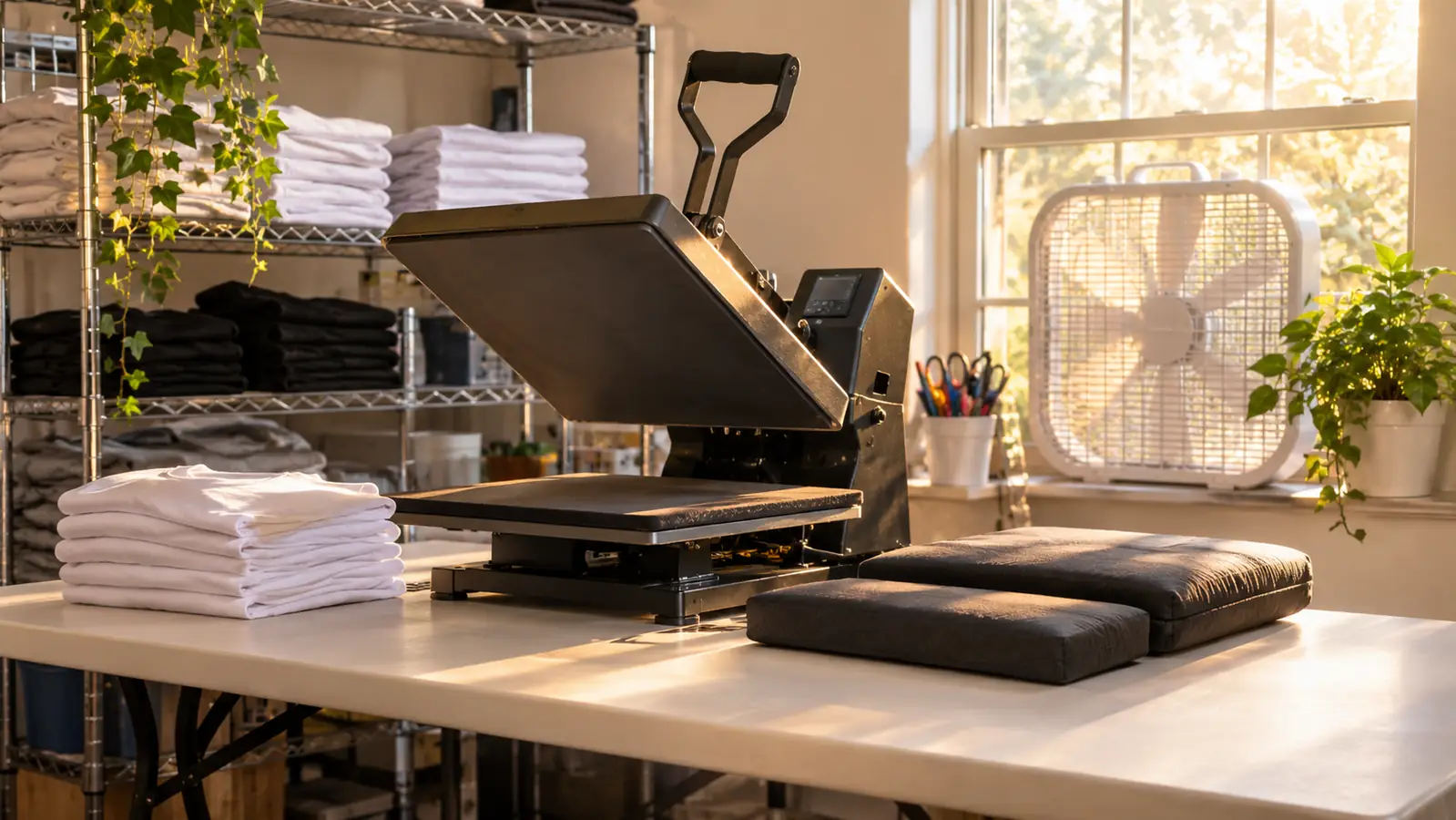
I press on a long folding table with a 15 by 15 inch clamshell, a wire shelf of blanks behind me, and a fan in the window because the room gets warm by the second hour. Most of my work is cotton tees for school staff, several dozen totes for a church festival booth, and youth sports jerseys where the numbers have to sit level. The VCHOMY pillows live on that shelf within arm's reach. The tools I do not use get pushed into a bin under the table, so where a thing lives tells you something on its own. I also keep a cheap spiral notebook beside the press with my settings written down, because I forget them between batches. 375 degrees for heat transfer vinyl on cotton, 20 seconds with a firm clamp. 385 to 400 for sublimation on polyester, 45 seconds at medium pressure. Those numbers have not moved in two years, and no pillow has ever made me want to change one.
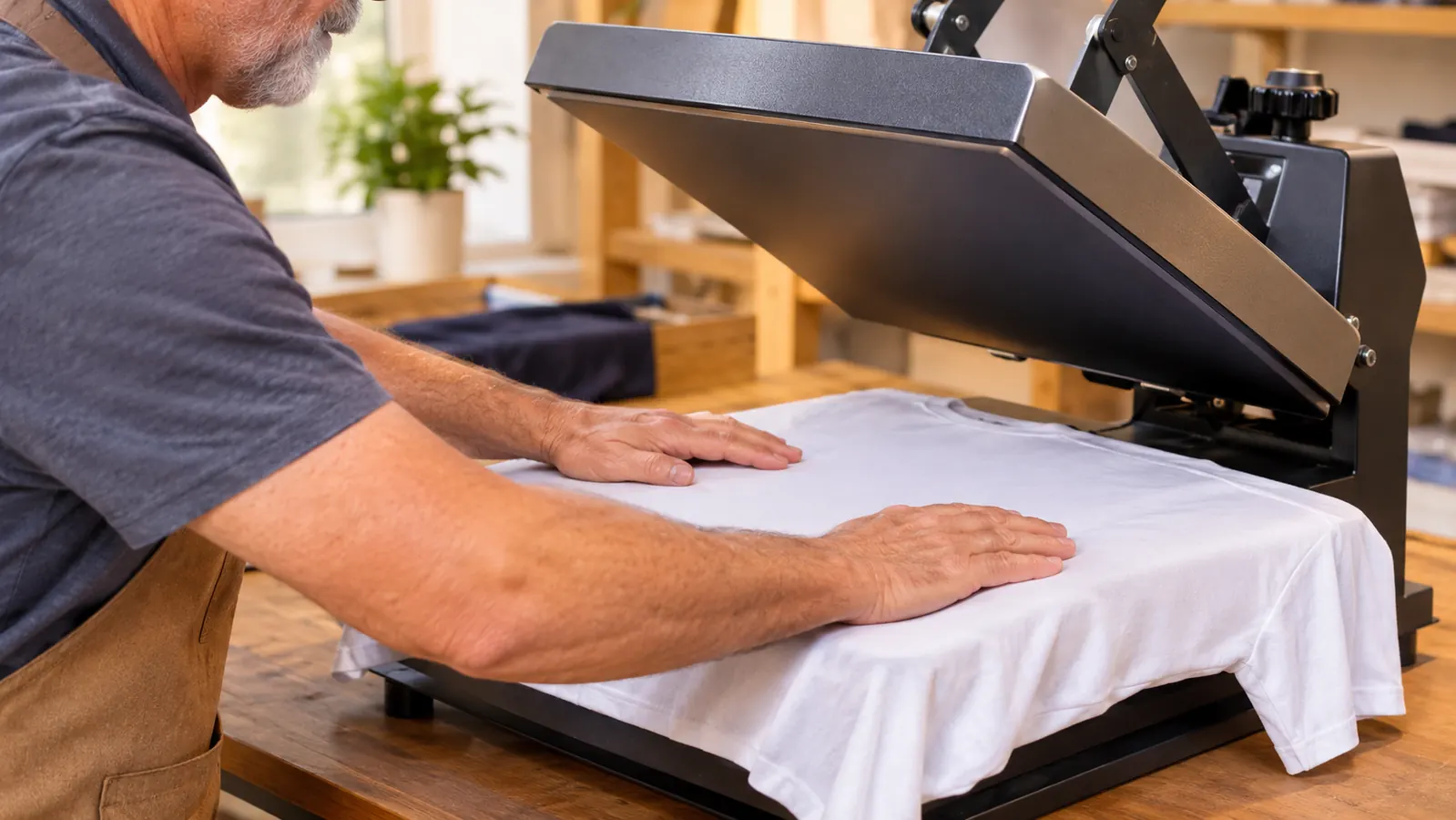
The method is plain. Lay the shirt on the lower platen, slide the right pillow under the area I am pressing, close the press, count, open. The pillow raises a seam or a placket or a zipper so the platen presses fabric against fabric instead of driving a hard lump up into the transfer. That is the whole job. It does not need to be complicated and this kit does not complicate it.
The first thing I noticed is that the surface does not grab. A folded towel skids and bunches, and you end up re-laying the shirt with the transfer already half stuck to itself. The pillow stays where you put it while you smooth the vinyl flat. That reads like a small thing in a review. It is the difference between a two minute job and a five minute job with a crease in it.
The second thing I noticed is heat. The set is rated to 600 degrees Fahrenheit, which is well above anything my press will do. I run 375 for heat transfer vinyl and somewhere around 385 to 400 for sublimation on polyester, and I have never once thought about the pillow while the platen was closed. That rating is the spec that matters most, because a pillow that scorches or goes flat under heat is worse than pressing on bare metal.
What I did not expect was the weight. The four pieces together come in at 8.48 ounces, so each one moves easily in one hand while the press is hot. Heavier might feel sturdier on the shelf. Lighter is safer when you are reaching into a machine sitting at 375 degrees, and I will take that trade every time.
The job that sold me was a set of twelve jerseys for a youth football team. Numbers on the front, a small sponsor mark on the back, a placket with three buttons. With the small square under the placket and the long strip under the sleeve hem, I did the whole batch in one sitting without a single button impression. Before this kit I would have done those on a folded hand towel and peeled half of them back off to redo.
The Four Sizes, and Which Two Actually Earn Their Keep
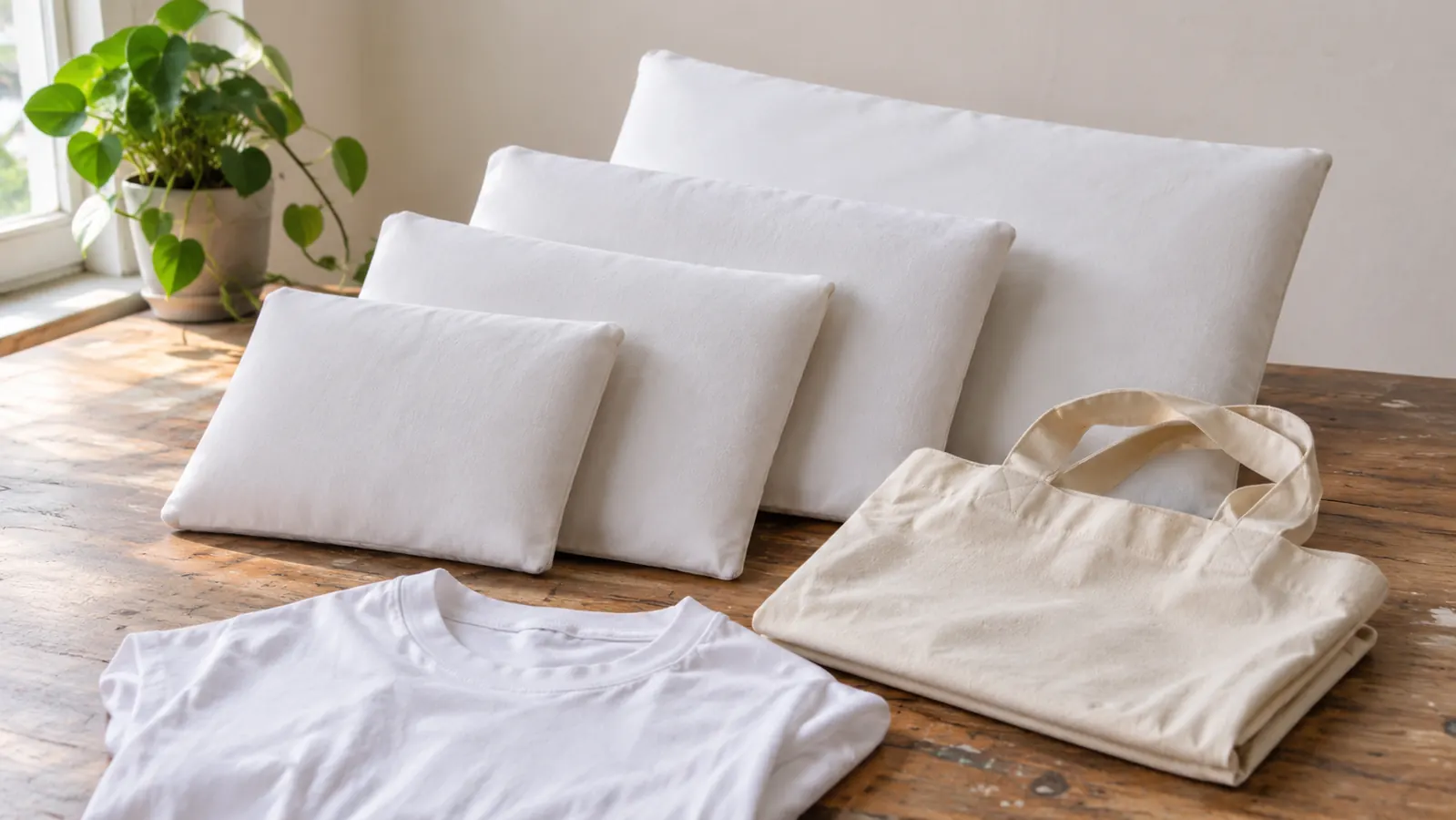
The set is four pieces: 5 by 5 inch, 10 by 10 inch, 5 by 15 inch, and 12 by 15 inch. Here is my real usage after more than a year, ranked honestly rather than pretending all four pull equal weight.
The 12 by 15 inch is the workhorse and it is the one I would buy again on its own. It covers most of my platen, so it handles full front prints, back prints, and the flat panels of a tote bag. Lay a shirt over it and the whole pressable area comes up level. If you pressed nothing but adult tees you could almost stop here and never miss the rest of the bundle. It measures 12 by 15 against a platen that gives me 15 inches of width, so a margin of bare metal is left along one edge. That margin turns out to be useful. It gives me somewhere to pinch and pull the pillow free without putting my fingers near the top platen, which is exactly the kind of thing you only think about after you have been careless once.
The 5 by 15 inch strip is the one I reach for second, and it is the piece that justifies buying this set instead of a single pillow. It is long and narrow, which is exactly what a sleeve needs. It also settles into the seam down the side of a tote where a square pillow rocks and refuses to sit. Sleeves, hems, and the long edge of a bag panel are its whole remit, and it handles all three.
The 5 by 5 inch square is the specialist. It goes under onesies, the placket of a polo, the space around a chest pocket, and a cap if you press caps. I use it in bursts, perhaps once a week, and when I need it nothing else in the set fits in the gap. It is small enough that I have nearly lost it twice, which is its own sort of endorsement.
The 10 by 10 inch is the piece I use least, and I want to be straight about why. It sits between the small square and the large rectangle without doing a job the other two cannot. When I am working fast I reach past it. It is not useless, and a mid size print does fine on it, but if you are buying this set expecting four equally essential tools you will be disappointed by one of them.
I have pressed at 375 and at 400 on these pillows for more than a year. The teflon has not bubbled, the foam has not flattened, and the 600 degree rating has never once been in question.
The Teflon Surface Is the Reason to Pick This Over a Towel
A folded towel is the free version of this and I have pressed on plenty of them. The difference is not cushioning. It is the facing. A towel is looped cotton, so it grips the transfer, sheds lint onto the adhesive side of the vinyl, and leaves a texture that shows through a thin material. The teflon facing on these pillows is slick and smooth, so a shirt slides flat and the carrier sheet releases clean.
The listing calls the surface waterproof and reusable, and after a year of use that holds up. A damp cloth takes off adhesive residue and stray glitter. I have not had one stain through to the foam underneath. The 12 by 15 and the 5 by 15 have taken the bulk of the wear, and both still sit flat on the table when I set them down. The worst thing I have put them through was a fall tote order with a spray of fine gold glitter across the design. Loose glitter gets into everything, and on a towel it stays in the loops and shows up again on the next shirt. On this facing it came off in one pass and did not come back.
The core of each pillow is a fire resistant foam according to the listing, which is the sort of line you read past until you remember what you are doing with it. You are putting a foam pad inside a machine that clamps down at 375 degrees. I want the manufacturer to have thought about that, and a 600 degree upper rating on top of a fire resistant core says they did. Reusable is the right word for the facing as well. A year in, the large rectangle still looks close to how it did in month one, apart from one faint mark near a corner from a careless minute with a hand iron before I owned a press.
One more thing about the facing. Teflon does not hold wrinkles the way fabric does. When I pull a pillow off the stack it is flat, and it stays flat while I slide it under a shirt. A towel needs folding and refolding and still ends up with a ridge somewhere in the middle. Across a dozen shirts that difference hands back minutes I would rather spend on the next order.
Where the Kit Falls Short
The pillows are not rigid and they are not meant to be. On a heavy canvas tote the foam compresses more than I would like, which means the panel does not come out as flat as it does on a cotton tee. You can work around it with a little more pressure or by doubling the pillow under the thickest part, but that is a workaround and not a fix. The fall festival batch is where this showed up for me. Twelve ounce canvas, a design running almost the full panel, and the first two came off with a soft ridge across the middle third where the pillow gave way under the heavier fabric. I re-pressed both, then laid the 5 by 15 strip under the heavy center of every bag after that and got a flat panel every time.
The set also holds heat. That sounds obvious for something that lives inside a hot press, but it matters when you are batching. A pillow that just came out of a 400 degree press is not something you grab bare handed or stack against a cold one. I keep a folded cloth on the table to move them and give them a moment before they go back on the shelf.
There is no marking on them to tell the sizes apart at a glance. In good light the difference is obvious. At nine at night with the fan running and four orders on the table, I have picked up the 10 by 10 thinking it was the 12 by 15 and only noticed when the print did not line up. A stitched size tag would cost almost nothing and I would like to see one.
The last limit is the one nobody wants to read. A pillow is not a fix for an uneven press. If your platen is worn or your clamshell does not sit level, a pillow will follow that unevenness rather than correct it. I spent a month blaming a pillow for a light corner before I checked my own machine and found the real problem sitting right there.
And you are paying for four pieces whether you need four or not. If your work is all adult tees and flat totes, three of these will sit unused most of the year. That is not a defect in the product. It is a mismatch between the bundle and your jobs, and it is worth thinking through before you order rather than after.
What I Liked
- Teflon facing does not grab, does not shed lint and does not leave a texture in the transfer
- Rated to 600 degrees Fahrenheit, well beyond any setting a home press will reach
- The 5 by 15 inch strip is the shape most bundles leave out, and it is the one sleeves need
- Waterproof and reusable, wipes clean with a damp cloth between orders
- Light enough at 8.48 ounces for the whole set to move one handed while the press is hot
Where It Falls Short
- The 10 by 10 inch does not do a job the other three sizes cannot
- Foam compresses on heavy canvas, so thick tote panels press less flat
- No size markings, which is a real problem when you are working fast
- Holds heat after a press, so you need a cloth or a glove to move one
- Will not correct an uneven platen, and it is easy to blame it for one
Who This Is For
This set suits someone pressing real garments with real seams. If your orders include jerseys with numbers, polos with plackets, onesies, sleeves, or tote bags with a side seam, the VCHOMY kit earns its shelf space quickly. It also suits anyone who has been pressing on a folded towel and quietly hating it. The teflon facing alone is worth the switch, and the four sizes cover the awkward jobs a single pillow cannot.
It fits a small setup like mine especially well. A spare bedroom, one table, a shelf of blanks, a household clamshell press. Nothing about this kit requires a bigger shop or a second table. If you take a few orders a week for friends, school staff and a local team, this is the right size of tool for that work.
It helps most if you press a mix of flat and shaped items. The moment your work moves off a plain adult tee, the sizes start to matter. Four pieces stacked beside the press means you are not folding a towel while the platen drops off temperature.
Who Should Skip It
Skip it if you press one thing. If every job is a full front print on an adult tee and that is the whole business, one large pillow or a decent pressing pad will do everything you need. Four pieces is more storage and more decisions than the work actually requires.
Skip it if you are still deciding whether pressing is for you. This is an accessory, not a starting point. Buy the press, learn your times and temperatures, ruin two shirts, and figure out whether you enjoy any of it. Then buy pillows once you know which seams are giving you trouble.
And skip it if you want it to solve a pressure problem. If corners are lifting or a transfer is faint in one spot, the answer is your machine or your technique, not a foam pad. I learned that the expensive way and I would rather you did not.
Two sizes do the work. The other two handle the awkward jobs.
The 12 by 15 and the 5 by 15 cover almost everything a home press sees. The smaller two earn their place the first time you press a jersey or a onesie. Match the sizes against your own order list.
Amazon See the VCHOMY pillow set on Amazon →